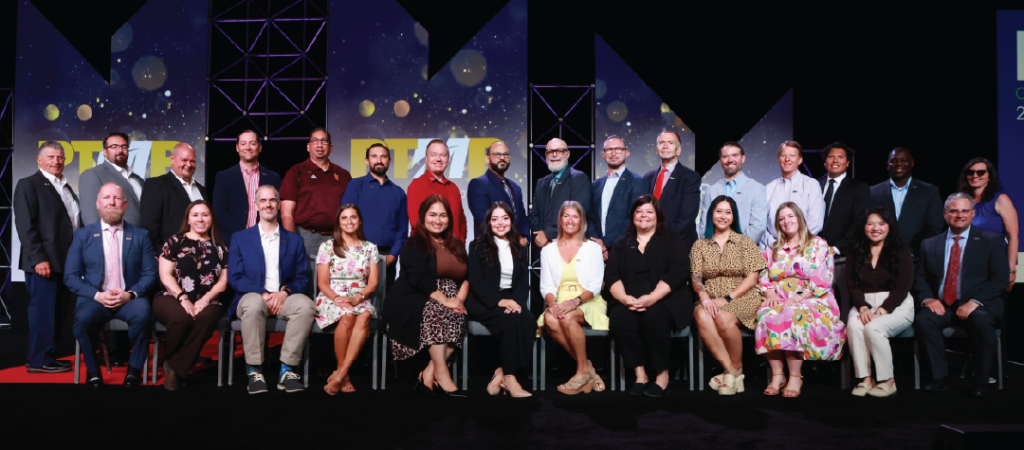
Accredited Parking Organization (APO) is a designation for parking, transportation, and mobility organizations that have achieved a comprehensive standard of excellence.
We are so glad you are here.
The International Parking & Mobility Institute (IPMI) is the largest community for parking, transportation, and mobility professionals in the world. We welcome you to our community, where you will have access to best-in-class learning, a powerful network, and tools you need for success.
Thought Leadership
Membership
IPMI members maximize their access to our unparalleled network and community of parking, transportation, and mobility professionals and organizations.
With cutting edge-research and publications, members gain the information and expertise they need to streamline and advance their operations.
Learning opportunities include in-person events like the annual Conference & Expo and Leadership Summit, live virtual events, a comprehensive library of on-demand courses, and certificates and credentials.
2026 ipmi

conference & expo
Early-Bird registration is open
Education & Events
Open to all airport operations professionals as well as off-site airport parking operators, consultants, and suppliers serving the airport segment.
Join staff and current APOs in exploring the program. Discuss the application process, best practices for success in achieving the designation, and the positive effects that APOs have realized as a result of their accreditation.
Register for IPMI’s members-only roundtable dedicated to finding the balance and prioritizing competing stakeholder groups in dynamic, high-demand environments. Our discussion will zero in on residential parking needs and programs, especially where they are in fierce competition with other patron segments in both municipal and academic settings.
Hartford, CT – Propark Mobility announced that the company has acquired Pittsburgh Valet, a premier valet service provider serving Western Pennsylvania and surrounding areas. “Pittsburgh Valet has earned a respected reputation in Western Pennsylvania by focusing on people and delivering a consistently strong guest experience,” said David Schmid, Chief Executive Officer of Propark Mobility. “Their commitment to professionalism and service aligns closely with our own values, and we’re excited to welcome their team to Propark and support their continued success across the region.” With more than 20 years of experience, Pittsburgh Valet provides valet service for a wide range of clients, including full-service hotels, medical centers, restaurants, residential and corporate facilities, sporting venues, and private events. The company is known for a polished, guest-friendly approach and tailors its parking service to the needs of each venue. “Pittsburgh Valet has always been about taking pride in our people and the experience we deliver,” said Rich Nerone, Owner of Pittsburgh Valet. “Partnering with Propark allows us to build on the service our clients and guests already count on. With added technology and systems support, we can bring even more consistency and convenience while staying true to our local roots.” This acquisition continues Propark Mobility’s growth in key U.S. markets and strengthens the company’s ability to support hospitality-driven service across a broader geographic footprint, including added technology and operational resources for clients in Western Pennsylvania. To learn more about Propark’s acquisition process, visit www.propark.com/acquisitions. About Propark Mobility Propark Mobility is a national, innovation-driven parking management company that provides full-service parking and mobility services for over 1,000 hospitality, healthcare, commercial, and off-airport locations in over 250 cities across the United States. For more information, please visit www.propark.com.
The Town of Breckenridge, one of the busiest ski resort towns in the US, has launched a comprehensive parking study to evaluate existing parking conditions and develop long-term, data-driven strategies that balance quality of life for residents with a high-quality visitor experience. The study is being led by DJ&A as prime consultant, with Parkalytics providing specialized parking data collection and analytics support. Parkalytics’ role in the study focuses on delivering high-resolution parking utilization data across a large geographic area. The firm has already completed two 14-hour parking counts in December, capturing peak winter holiday conditions. Additional data collection efforts are planned for spring and summer to ensure the study reflects a full range of demand scenarios. “DJ&A is pleased to lead the Breckenridge Parking Study, supported by the data collection capabilities and analytical expertise of Parkalytics,” said Bill Delo, Senior Project Manager and Transportation Planner at DJ&A. “As project lead, our focus is on identifying strategies to optimize use of the Town’s parking infrastructure through evaluation of existing parking patterns and development of forward-thinking recommendations. The integration of Parkalytics’ specialized data collection approach and analytics is integral to our analysis, providing the data and visualizations to inform our recommendations to enhance the parking program in Breckenridge.” “Resort towns like Breckenridge present some of the most challenging parking environments in the industry, with large geographic footprints, extreme seasonal swings, and competing demands from residents, employees, and visitors,” said Peter Richards, CEO of Parkalytics. “We are proud to support DJ&A and the Town of Breckenridge by providing the hard-to-collect data that makes meaningful, data-driven decisions possible. Our role is to complement DJ&A’s planning expertise with detailed analytics and visualizations that help turn complex conditions into clear, actionable insights.” “The Town of Breckenridge is excited to be working with Parkalytics, through project principal DJ&A, to utilize their innovative technology and analysis to better understand parking patterns across the over 4,000 parking stalls spread across multiple surface lots and on-street offerings,” said Matt Husley, Assistant Public Works Director – Mobility, Sustainability, and Parking for the Town of Breckenridge. “We are confident that this technology will allow staff to make recommendations to Town Council on how best to deploy our limited parking resources in one of the United States most popular mountain resort communities. Balancing the needs of our locals, workforce, and visitors is imperative to creating the friendly and welcoming environment Breckenridge is known for.” See a 360 degree drone video of Breckenridge on the Parkalytics YouTube channel: https://youtu.be/BMtE260Xfek?si=Yc1tld1B4Z4TuzvM About Parkalytics Parkalytics is a drone parking data collection and software company, providing space by space analysis across cities and surface parking lots. Parkalytics determines parking utilization, vehicle turnover, and parking duration at scale, all without collecting any personally identifiable information. Learn more at https://www.parkalytics.com/
Arrive’s, 2026 Urban Mobility Compass’ is a collection of insights from experts and leaders across the industry. This report maps out the key trends across major sectors of the mobility landscape, highlighting the expanding role of data in creating connected, smarter services that will help define the future of urban mobility. The 2026 Urban Mobility Compass covers key industry areas including parking, public transport, the digital in-car experience, as well as areas which impact multiple sectors including payments, AI and data-driven insights. The compass includes insights from Arrive CEO, Cameron Clayton, and leaders for the company’s business units including Parking, Automotive & Data, Transport, Payments, Data & AI, Insights and Security & Cyber Resilience. Key trends covered in the Urban Mobility Compass 2026 include: The increasing use of AI across the mobility industry brings opportunities to ease friction Drive for a more cohesive in-car experience for both private and fleet drivers The integration of parking management systems, creating an easier to navigate landscape for cities How growing digitization in public transport ticketing and insights gathering for cities is unlocking easier multi-modal journeys and a better understanding of transport patterns The rise of the open market for Mobile Parking Payment apps as cities move away from the current tender based procurement model to provide better consumer choice For the full overview of what to expect in urban mobility in 2026, you can find the full 2026 Urban Mobility Compass, here. Press Contact: Contact us at: mediarelations@arrive.com Follow Arrive in our newsroom: https://news.cision.com/arrive About Arrive Arrive is a leading global mobility platform with the mission to ease movement in cities. Through its family of brands, including EasyPark, Flowbird, RingGo, ParkMobile and Parkopedia, the company is present in more than 20,000 cities across 90 countries, helping people and decision-makers make smarter choices about urban travel. Arrive makes cities more livable through delivering core competencies from smart payments and optimizing parking solutions, to data-driven traffic reduction measures and refining public transport networks. For more information and news, visit arrive.com.
Professional Development
Accredited Parking Organization (APO) is a designation for parking, transportation, and mobility organizations that have achieved a comprehensive standard of excellence.
IPMI offers industry-leading certification that places those who earn the designations as the leaders of the profession. The PTMP credential is respected worldwide as the leading parking and mobility credential.
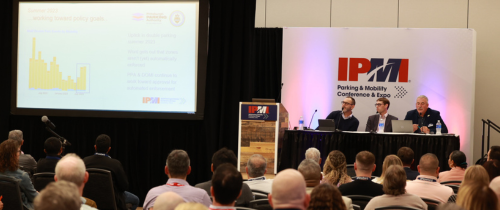
The IPMI Conference & Expo brings together professionals representing every level of experience and segment of the parking, transportation, and mobility industry. The event delivers four days of exceptional education, the largest display of parking- and mobility-specific technology and innovations, networking, and the opportunity to connect with a global community – to advance the industry.
Employees are an organization’s most valuable asset. An investment in staff training and education brings a high rate of return in job performance and satisfaction. IPMI offers custom, agency-specific trainings on these topics for your staff. Our training team is made up of industry veterans who can help your organization soar.
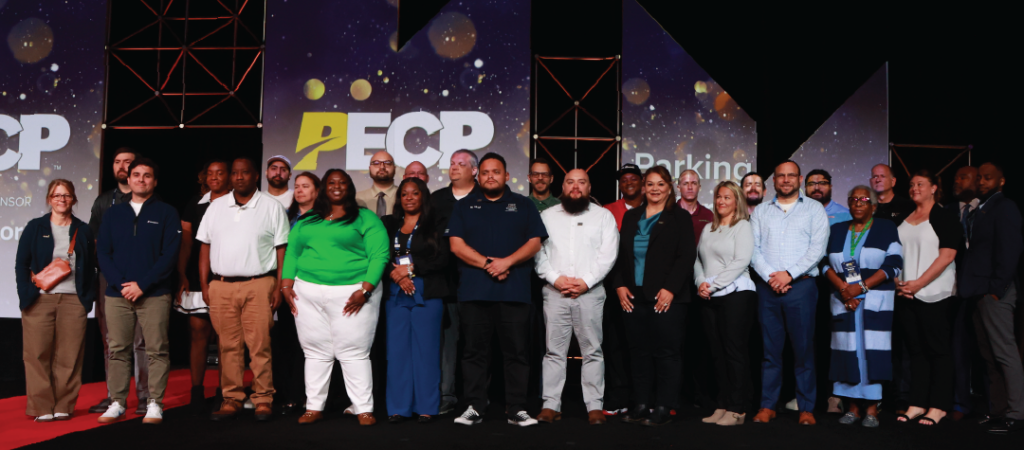
Parking Enforcement & Compliance Professional™ (PECP) is the next step in your career path as a parking enforcement professional.
Virtual education includes live online training in the form of webinars, Frontline training , and instructor-led learning courses. IPMI also offers a robust online library for on-demand learning.
Enhance your visibility and increase your bottom line with IPMI’s publications, platforms, and events.
Work with the IPMI team to create a customized package to reach your target audience and exceed your sales goals.
Your competition is here, are you?
Relevant Resources
When I tell people I run operations for a parking authority, I get that look, the polite smile, the raised brow, and the unspoken, “Wait… really? Parking?” Fair question. For over 20 years, I was deep in healthcare construction, overseeing $85 million expansions, building out senior living campuses (complete with their own utility plants), and managing environments where failure was never an option. So how did I end up managing curbs, license plate readers, and debates about whether people should back into spaces? Simple: I said yes. Yes to a new challenge. Yes to an industry most people overlook. And yes to discovering that parking isn’t just about asphalt and meters, it’s about movement. It’s about infrastructure, logistics, and how cities actually breathe. At my first IPMI convention in Louisville, somewhere between a smart mobility panel and a tasting table (it was Kentucky, after all), I realized: this isn’t a detour. It’s a new lane entirely, one that blends engineering with community trust, operations with real human behavior. I even found myself explaining why you can’t throw a rooftop party on a parking deck (people move around more than 4,000-pound vehicles). That’s parking: where physics meets people, and strategy gets tested by reality. So if you’ve ever wondered whether your skills can leap industries, here’s your sign. Sometimes, the best opportunities don’t shine. Sometimes, they just look like a parking spot. Mark Toro, PTMP, is the Deputy Director of Allentown Parking Authority. Mark can be reached at mtoro@allentownparking.com.
We obtained our first mobile LPR system in 2021 with the intention of going permitless after the first year of working out all the bugs, kinks and nuisances that having virtual permits brings. The uncertainty of budget constraints related to the pandemic and the turnover of staff delayed the roll out by several years. We made the decision that 2026 is the year to go permitless at Kent State! Some initial thoughts to help make the transition smooth include the following. We’re planning to implement slowly with targeted user groups initially. We’ll start with students first, then faculty and staff, vendors and contractors, visitors, then events. This should allow us time to work through any issues that might arise and eliminate the largest group of permits initially to provide the greatest efficiency upfront. We plan to engage our university marketing and communications team to provide a roll out platform to inform our stakeholders prior to implementation. We envision a social media campaign and email marketing to raise awareness. The most difficult groups to capture and what we foresee being the biggest challenge to permitless operations is the one-time visitors and events. We’re currently analyzing different solutions to see what is the most cost effective and user-friendly options for our guests to campus. These groups have been our biggest hangup because we don’t know quite how to handle them yet in a permitless environment. We’re looking forward to the efficiencies that LPR provides, but we also know that this will be a big change for our campus community. Meredith Garrett, PTMP, is the Assistant Director of Public Safety, Parking & Transit Services for Kent State University. Meredith can be reached at mgarre12@kent.edu.
“The university is a series of individual entrepreneurs held together by a common grievance about parking.” Clark Kerr’s observation from his time as Chancellor of the University of California, Berkeley still rings true. Decades later, parking remains one of the most persistent sources of frustration on college and university campuses. Students circle lots looking for spaces, faculty want reliable access near offices and classrooms, visitors struggle to understand where they can park, and administrators are left balancing competing needs with limited resources. What has changed since Kerr’s era is the technology available to manage parking. Yet many universities still rely on physical permits, spreadsheets, and manual processes that no longer align with the expectations of modern campus communities. Parking has become part of the daily campus experience, and outdated systems can undermine that experience before the day even begins. University parking is inherently complex. Faculty, staff, resident students, commuters, athletes, and event attendees all have different needs, usage patterns, and expectations. Managing these demands fairly with legacy tools almost guarantees confusion and dissatisfaction. Cloud-based digital parking management platforms are built to handle this complexity. They provide flexible tools that adapt to different user groups and demand patterns, while offering online self-service for permits, payments, and renewals. Automation reduces errors, eliminates the cost and waste of physical permits, and frees parking staff from routine administrative work. Financial oversight improves as well, with automated reporting and account-level tracking across departments or campuses. Rutgers University’s digital parking management program illustrates the impact of this shift. By moving to a modern cloud-based system, the university was able to combine permit types, enable online transactions and system-wide access, improve event and guest parking, and gain real-time data for planning and pricing. Compliance improved, complaints declined, and parking became more predictable for users. For many people, parking is their first interaction with campus. Digital parking management helps ensure that experience is efficient, transparent, and far less frustrating, turning a long-standing grievance into a strategic operational advantage. Click here to read the Parking & Mobility magazine article. Chris Perry, PTMP, is the Senior Vice President of Parking Base. He can be reached at chris.perry@parkingbase.com.
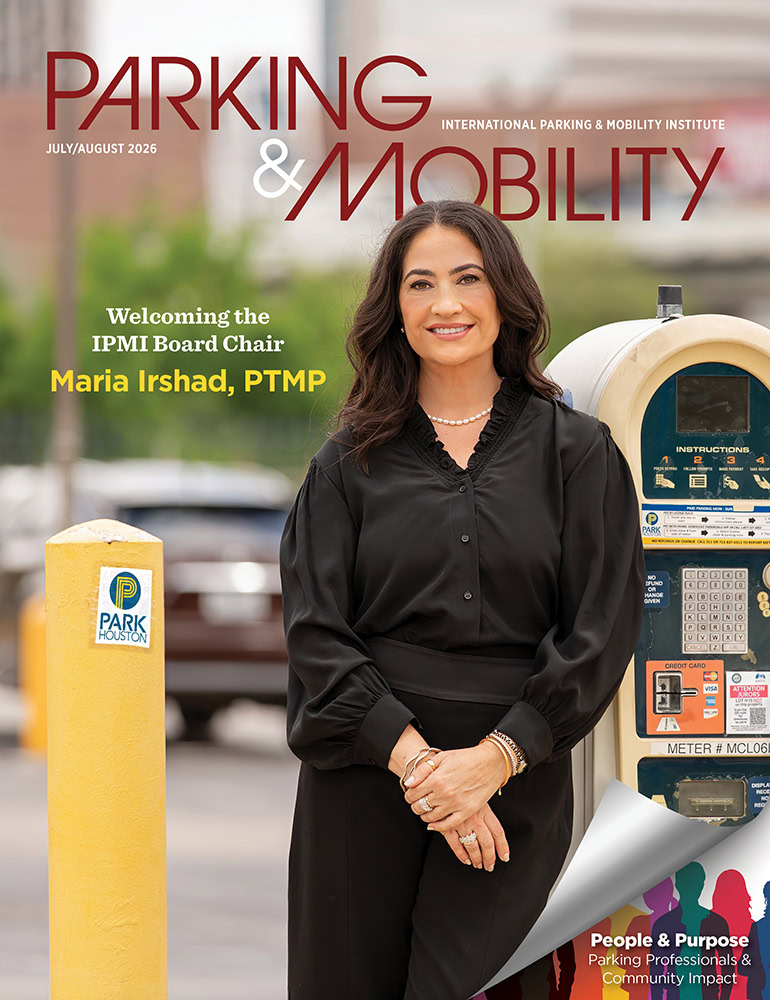
If the past several years revealed anything about urban mobility, it’s that the curb has quietly become one of the most politically charged, economically valuable, and publicly visible pieces of city infrastructure. Leaders from Austin, Los Angeles, and Washington, D.C. participated in IPMI’s Building Blocks webinar, where they shared how curb space has transformed from simple parking real estate into a multi-use frontline for transportation, commerce, and public life in their cities. In the not-so-distant past, the curb was a brief pause. A moment between where we were and where we were going. We parallel parked the car, checked for signs, maybe paid a meter, then went on to our destination. Much has changed. The once quiet edge of the street is now a full-blown stage for rideshare zones, sidewalk cafes, e-commerce deliveries, bike lanes, EV charging, micromobility, and bus priority projects. As Ken Hustings noted, curb space has become so valuable that a meter rate increase in Los Angeles was not only acceptable; it helped the city preserve staff positions during a fiscal crisis. The public’s relationship with the curb shifted in a very real way during the pandemic. As downtowns emptied and front doors became loading docks, people noticed just how much work the curb was doing behind the scenes. Take-out, package deliveries, and temporary restaurant patios all depended on it, and when it wasn’t managed well, the impacts were hard to ignore. David Lipscomb, Washington, D.C.’s curbside manager, recalled that this moment was eye-opening for residents. A minor inconvenience had quickly become a safety and access issue as delivery vehicles stacked up, cafe tables spilled onto sidewalks, and curb space was pushed to its limits. The public began paying attention to what mobility professionals had long understood: unmanaged curb space creates chaos. Awareness is just the first step. Turning that awareness into better outcomes requires updated policies and a different kind of leadership. Today’s parking and mobility professionals aren’t just managing assets; they’re also storytellers, educators, and coalition builders. Joseph Al-Hajeri, Austin’s Park Enterprise Manager, described his role as “getting the public to nerd out” about curb management using data, pilots, and transparent communication so that complex policy becomes shared understanding. In today’s rapidly evolving mobility landscape, the curb has become the new City Hall: a high-stakes, high-visibility arena where decisions play out block by block. And those who manage the curb are emerging as some of the most influential communicators shaping urban policy and public understanding. Maria Irshad, PTMP, MPA, is the Deputy Director for The City of Houston (ParkHouston). Maria can be reached at Maria.Irshad@houstontx.gov.
We received so many great responses to the January/February 2026 question that we wanted to share them all!
Stay up to Date
Didn’t find what you’re looking for?