Leadership

IPMI & Member News

IPMI Logo
IPMI & Member News Leadership

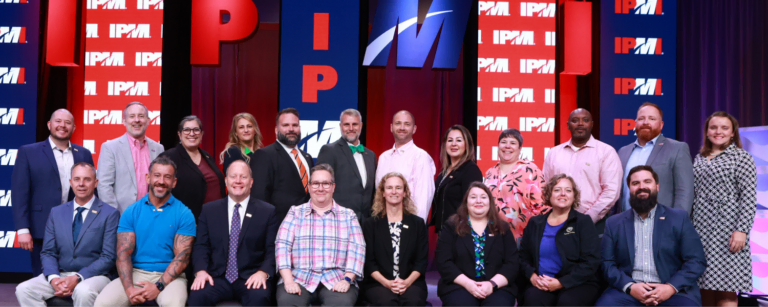
IPMI Announces 2025-2026 Board of Directors

FREDERICKSBURG, VA: The International Parking & Mobility Institute (IPMI) is pleased to announce its 2025-2026 Board of Directors. The association held elections in April 2025. The 2025-2026 board will begin their term at the conclusion of IPMI’s 2025 Parking & Mobility Conference & Expo in Louisville, Kentucky, June 8-11. The Executive Committee will begin the second year of their two-year appointments: Alejandra “Alex” Argudin, PTMP, Chief Executive Officer, Miami Parking Authority, as Board Chair; Maria Irshad, PTMP, Deputy Director, ParkHouston, as Chair-elect; Marlene Cramer, PTMP, Director of Transportation and Parking Services, California Polytechnic State University, as Treasurer; and Gary Means, PTMP, Executive Vice President of Pivot Parking, as Past Chair. One newly elected board member will serve for the next two years: Julie Dixon, President, Dixon Resources Unlimited. Re-elected board members who will serve an additional term through 2026 include: Josh Cantor, PTMP, George Mason University, Director of Parking & Transportation; Carmen Donnell, PTMP, Managing Director, North America, PayByPhone; Irma Henderson, PTMP, Director of Transportation Service, University of California, Riverside; Shawn McCormick, Director, Parking Enforcement and Traffic, San Francisco Municipal Transportation Agency (SFMTA); and Gabe Mendez, PTMP, Director of Transportation Operations, University of Wisconsin-Madison. The entire 2025-2026 IPMI Board of Directors, effective June 11, 2025, is: Chair: Alejandra “Alex” Argudin, PTMP, Chief Executive Officer, Miami Parking Authority, Miami, FL. Chair-elect: Maria Irshad, PTMP, Deputy Director, ParkHouston, Houston, TX. Treasurer: Marlene Cramer, PTMP, Director of Transportation and Parking Services, California Polytechnic State University, San Luis Obispo, CA. Past Chair: Gary Means, PTMP, Executive Vice President, Pivot Parking, Frankfort, KY. Josh Cantor, PTMP, Director of Parking & Transportation, George Mason University, Fairfax, VA. Julie Dixon, President, Dixon Resources, Fullerton, CA. Carmen Donnell, PTMP, Managing Director, North America, PayByPhone, Vancouver, British Columbia, CN. Robert Ferrin, PTMP, Senior Project Manager, Kimley-Horn, Columbus, OH. Irma Henderson, PTMP, Director of Transportation Services, University of California, Riverside, Riverside, CA. Casey Jones, PTMP, Senior Director of Customer Success, FLASH, Boise, ID. Alex MacIsaac, PTMP, Director, University of Toronto Transportation Services, Toronto, ON. Shawn McCormick, Director, Parking Enforcement and Traffic, San Francisco Municipal Transportation Agency (SFMTA), San Francisco, CA. Gabe Mendez, PTMP, Director of Transportation Operations, University of Wisconsin, Madison, WI. JC Porter, PTMP, Director of Commuter Services/TDM, Arizona State University, Tempe, AZ. Josh Stone, PTMP, Executive Director, Parking and Transportation, Virginia Commonwealth University, Richmond, VA Shawn Conrad, CAE, CEO, International Parking & Mobility Institute, Fredericksburg, VA. About IPMI The International Parking & Mobility Institute (IPMI) is the world’s largest association of professionals in parking, mobility, and transportation. IPMI works to advance the parking and mobility profession through professional development, certification, research and data collection, advocacy, and community building. With experts worldwide in dozens of specialties, IPMI helps parking, mobility, and transportation function efficiently so people, businesses, and communities can keep moving.
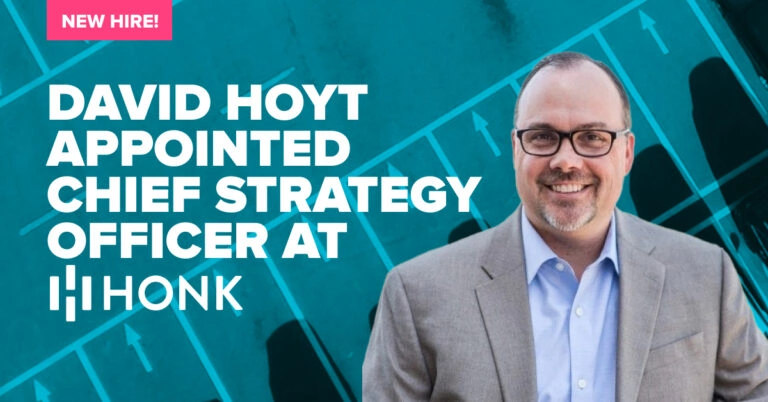
David Hoyt Appointed Chief Strategy Officer at HONK
IPMI & Member News Leadership Vendors/Products

David Hoyt Appointed Chief Strategy Officer at HONK

Orlando, FL – HONK, North America's leading provider of contactless payments for parking and mobility, is pleased to announce the appointment of David Hoyt as Chief Strategy Officer (CSO). A seasoned executive with over 20 years in parking, mobility, and transportation tech, Hoyt will lead strategic efforts across emerging markets, product innovation, partnerships, and M&A. Hoyt brings a strong track record of results-oriented leadership, having driven significant revenue and market growth as Chief Revenue Officer, and later as Managing Director, North America, at ParkMobile. He previously held leadership roles at T2 Systems and SP Plus Corporation (Standard Parking), giving him a broad perspective across both software and field operations. “We’re thrilled to welcome David to the HONK executive team,” said Michael Back, HONK Founder and CEO. “He brings deep industry knowledge, a sharp strategic mind, and a strong track record of driving growth. David’s leadership will play a pivotal role as HONK enters its next phase of innovation and expansion, focusing even more on what sets the company apart: making parking and mobility easier for everyone, from drivers to asset owners.” HONK continues to scale rapidly, recently earning a spot on Canada’s Top Growing Companies list for 2024. As demand rises for frictionless, software-based mobility solutions, HONK remains at the forefront with a vertically integrated platform that unifies advanced payments, permitting, third-party integrations, and data insights. “I’m excited to join HONK at such a transformative moment,” said Hoyt. “The team has built a reputation for agility, innovation, and strong client relationships. I look forward to contributing to its continued growth by identifying new opportunities, building meaningful partnerships, and advancing the way people access and experience mobility.” As CSO, Hoyt will focus on identifying and capitalizing on new market trends, expanding HONK’s strategic footprint, and working closely with the leadership team to support sustainable, scalable growth.

Parking Enforcement Officers help with traffic control and public safety
Enforcement IPMI Blog Leadership

Parking Enforcement and Customer Service

Parking Enforcement Customer Service. Does the word “enforcement” go hand in hand with customer service? Yes, it certainly does, and it can be demonstrated daily in both big and small ways. I want to speak more about this and how a servant leader can positively impact an enforcement team to serve their community and show this toward each other in internal customer service, leading to employee retention and a positive and happy workplace. What is customer service? The Oxford dictionary defines it as “the assistance and advice provided by a company to those people who buy or use its products or services.” But it means so much more than this because it can create a feeling and attitude of support and motivate an individual to help others, bringing satisfaction and gratitude to both the giver and the receiver. Customer Service involves using various tools, including listening, empathy, understanding, and problem-solving, while feeling empowered to help. In my seven years as a parking enforcement supervisor with the City of Boulder, we always work hard to demonstrate the city values of Respect, Collaboration, Innovation, Integrity, and Customer Service. This shows up daily with anyone we cross paths with. However, the value of customer service involves more than just doing a job. It often goes beyond what’s expected. Whether changing someone’s tire, jumping someone’s dead battery, providing directions, or being there for someone in a time of need, we can always find ways to show excellent customer service. This cannot be just a simple expectation but must come from somewhere more than a policy. It’s seeing a community or customer as family. It comes from a heartfelt desire to help as if this person is a family member in a time of need. I look forward to hearing your thoughts about this. Leo Pelle, PTMP, is a Parking Enforcement Supervisor for the City of Boulder, Colorado. Leo can be reached at pellel@bouldercolorado.gov.

John Peveradas Headshot
IPMI Blog Leadership

John Peverada’s Legacy of Integrity and Innovation in Parking

As John Peverada officially retires after more than 30 years of dedicated service to the City of Portland and the parking industry, it’s an honor to reflect on the incredible legacy he leaves behind. For the past six years, I’ve had the privilege of working alongside John as Client Success Principal at Passport. During that time, I’ve come to know him as not only a thoughtful and visionary leader but also as a person of unwavering integrity. His approach to solving complex challenges with humility and fairness has shaped Portland’s parking operations into a model for cities across the country. Initially joining the City during a downturn in the real estate market, John anticipated a brief tenure. But he quickly became captivated by the field’s challenges, from technology and garage maintenance to budgeting, staffing, and customer service. As Parking Director, he led with autonomy and intention. A former NEPC Board Member, John consistently emphasized professional development, networking, and staying ahead of trends. In his words, it’s “more about substance than style.” Among many accomplishments, John led Portland’s transition from over 100,000 hand-written citations per year to a modern, cloud-based ticketing system with digital permitting and LPR. He also embraced mobile payments early on, accounting for nearly 80% of meter revenue. John approaches partnerships with thoughtfulness and strategy. Our work together has always been collaborative and focused on serving Portland’s community. And he never forgets the human side. “Get out on the street,” he says, “listen to customers and employees, and most of all, be fair.” His advice to newcomers? Stay informed, join industry groups, explore new tech, and always listen. Now entering retirement, John looks forward to family, travel, and the outdoors. His legacy of innovation, integrity, and leadership will continue to guide the industry for years to come. Congratulations, John, and thank you. Tydus Kira Mana is the Client Success Principal for Passport. Tydus can be reached at tydus.mana@passportinc.com.

One climber helping the other get to the top of a mountain
IPMI Blog Leadership Mental Health

Motivation – What Moves Us

There has been some chatter amongst our San Francisco group recently related to what motivates and inspires us individually to show up, day in and day out, and do what we do. For some, an easy answer, for others a little self-reflection and introspection is needed to coax out a more developed response. One of the main responses, is to set an example – for one’s children or family, for the employees we lead. There is a sense that what we do is meaningful in that we can provide not only sustenance but also life guidance for those we love and support, to nurture the human kindness in others. That we can demonstrate peer to peer connection. For some, the acceptance of a certain role holds great responsibility, and we feel a duty to uphold the position in which we provide leadership. We want to see others succeed and we will do all in our power to support others in accomplishing shared goals, both large and small. Personal ambition and drive to find meaning in work and life is also a great motivator. Some folks are driven to complete any task at hand with energy and passion. Whatever the answer is, there is a basis to nurture and lead others as best as we can. Our goals often align and a group can thrive when we consider both personal and shared success as meaningful. Adam Feller, PTMP, is an Operations Manager for LAZ Parking. Adam can be reached at Afeller@lazparking.com.

High Resolution Leadership Concept
IPMI Blog Leadership

Leadership Without Boundaries: Managing the Expectations of Your Employees with Your Operational Needs

In today’s world, effective leadership is important for balancing operational needs with employee satisfaction. But how can we achieve this in a world where employee needs are constantly evolving and we face ongoing challenges in recruiting and retaining top talent? Without addressing this question, our organizations risk becoming the next casualty of turnover. The answer is simple! Balance the needs of your operations! Leadership is not a one-size-fits-all strategy but a tool we must use to find a way to balance the needs of all our stakeholders.  Here are a few suggestions on how to do this in our operations:  First and foremost, practice empathy and open communication! As Leaders, we should actively listen to employees and understand their concerns while clearly communicating operational needs. We can do this by having regular check-ins and team meetings to maintain a two-way dialogue!  Second, flexibility works! As the industry evolves, we must adapt our polices and procedures. Offering flexible hours or shift-swapping are a few options that will help us meet operational needs while also giving our team a higher work- life balance. The majority of our operations run 24/7, and having adequate coverage is necessary!  I also recommend that you align your organization's goals with your employees' needs. Our teams need to understand how they contribute to the bigger picture! It's simple! Provide professional development opportunities, such as training or leadership programs, to help them grow while preparing our operations for future challenges.  Finally, lead by example! Leaders should model positive behavior daily! Make choices that support a healthy balance between dedication to the company and employee well-being! Show your team it’s ok to balance hard work and self-care in the workplace.  Dr. George J. Mclean, MPA, DBA, PTMP, is the Senior Business Analyst for Miami Parking Authority. Geoge can be reached at gmclean@miamiparking.com.

Football coach giving pep talk to team in locker room before game. Intense and motivational atmosphere preparing players for competition
Frontline Leadership Magazine

Goals or Systems?

As you consider sustainability programs and the frontline, I suggest focusing on systems instead of goals.

Young pretty businesswoman juggling business items while balancing on a tightrope over a city
Leadership Magazine

Leading a Culture of Agility

While Maintaining Strategic Discipline

IPMI PTMP group photo
Certification Community IPMI Blog Leadership Training/Education

PTMP™: The Certification We Need Right Now

The evolution of Certified Administrator of Public Parking (CAPP) into Parking, Transportation & Mobility Professional™ (PTMP™) isn’t a gimmick—it’s growth. It isn’t just a rebrand—it’s a recognition that our industry continues to transform. CAPP was needed and right for its time. Times are different now, and it’s time for a credential that captures our diverse, dynamic work across the parking, transportation, and mobility sectors.

Speak Less Listen More Sign Getty
Leadership Training/Education

On-Demand Education: Conflict Resolution

This self-paced eLearning course intends to educate anyone who interacts with customers in the parking, transportation, and mobility industry. This course was designed to offer basic conflict resolution knowledge to front line personnel, managers who interact with or manage those that interact with peers, co-workers, and customers.

Different Leadership Styles listed on a blackboard.
IPMI Blog Leadership Planning

Changing Leadership Styles: Is It Too Late?

As leadership dynamics shift within workplaces, many experienced managers wonder if it’s too late to change their leadership style. The answer is simple: it’s never too late. Leadership is a skill, not a fixed trait, and it can evolve throughout your career. Why Change? The traditional, top-down leadership style is no longer as effective in a world that values collaboration, transparency, and empathy. Today’s leaders are expected to inspire, empower, and adapt. If you’ve been leading a certain way for years, it may feel daunting to shift styles. But making small changes can enhance your leadership and improve team engagement. The First Step: Self-Reflection Before making changes, take time for self-reflection. Ask yourself: How do I handle feedback? How do I engage with my team—do I empower or direct? How do I manage conflict? Identifying areas for improvement will help you focus on where change is needed. Reflection is key to unlocking your potential for growth. Overcoming the Fear of Change Many leaders fear that changing their style will disrupt their team's dynamics. But the truth is, small adjustments can have a huge impact. Start by delegating more, actively listening, and building trust. Your team will appreciate your willingness to evolve. Practical Steps for Overcoming your Fear Seek Feedback: Regularly ask for input from your team to guide your growth. Invest in Learning: Read leadership books or attend workshops to gain new insights. Lead by Example: Show your team that change is possible by modeling the behavior you want to see. Be Patient: Change takes time, so be kind to yourself as you evolve. In conclusion, it’s never too late to improve your leadership style. Leadership is a journey, and every step you take to grow will help you become a more effective, authentic leader. Authentic is the goal! Tavris Parker, CAPP, is a Parking Operations Manager for the City of Virginia Beach. Tavris can be reached at TParker@vbgov.com.

Unlock the potential of data ownership with glowing key surrounded by network of interconnected nodes symbolizing security and access
Leadership Magazine Technology

The Vital Role of Data Ownership

stock.adobe.com / Quality One There is no doubt about it, the parking management industry is rapidly evolving,and I’m really excited to be part of the business at the moment. We see more and more new technological developments that are designed to improve efficiency, improve the user’s experience, enhance revenue, minimize expenses, and, importantly, provide actionable insights into parking policy and decision-making. If you know me, you’ll likely already know this, but there’s one aspect at the heart of this transformation that I feel very passionate about. It’s a hugely valuable asset that’s often overlooked: data ownership. Look, I cannot say this enough—the principle of ensuring that you retain full ownership of your data is foundational to future-proofing business strategies and maintaining control over operations. I read a white paper a while ago by the World Economic Forum that clearly articulated the immense value of data and how it has singularly become the most valuable resource in the world due to its immense economic and strategic value. I will say it again; I am a huge advocate for businesses never having to compromise on data ownership. Why Data Ownership Matters Data is the lifeblood of most modern operations. For the parking industry, this may mean understanding who is using your facilities, when they are coming, how long they are staying, who is or isn’t paying for their parking, and so on. Ownership of this data allows businesses to make informed choices, create customized experiences, and plan for the future with a real-time understanding of patterns and behaviors. Losing control over such valuable information is basically losing control over a fundamental part of your business. Imagine a situation where, after investing time and resources into building a data-rich parking system, your technology provider decides to hold your data hostage, making you renew contracts just to keep access. This approach not only locks you into a provider’s ecosystem but also limits your ability to leverage insights freely. The Dangers of Data Dependence Many companies in this industry leverage a “lock-in” type model that’s based on data dependence. This model can lead to issues with both flexibility and independence. With data locked away, any strategy shift or transition to a new system can be challenging. If I’ve heard it once, I’ve heard it a million times in a variety of ways—in essence, changing providers can feel impossible when data ownership becomes involved. Make sure that you are checking the fine print and not locking your data into one of these types of models. Inspiring Confidence Through Data Freedom When you own your data, you also own the ability to change, grow, and build upon it in ways that best serve your objectives. This kind of autonomy is critical to long-term success. Data freedom means just that. Your business is future-ready and unencumbered by data restrictions. This allows you unrestricted access to data, you can confidently strategize and adapt, unburdened by concerns of losing critical information to outdated contracts or parking systems. The Future of Parking Management Begins Here The future of parking management is bright, especially for those who place value on data ownership. It’s an era where technology and insights power business success without compromise, and where owners and operators can expect true autonomy over the information they rely on daily. Because in the end, it’s not just about parking cars; it’s about empowering businesses to steer their own course, build on their data, and shape their future with confidence. So, the next time you go to “sign on that dotted line” maybe you should double check the data ownership provisions. Because ultimately, owning your data or owning your future success. ◆