
Blogs

IPMI & Member News

The Milwaukee skyline sits behind the view of the Milwaukee River
Airports IPMI Blog Municipal/Cities Parking Facilities

The Largest Building in Wisconsin Might Surprise You

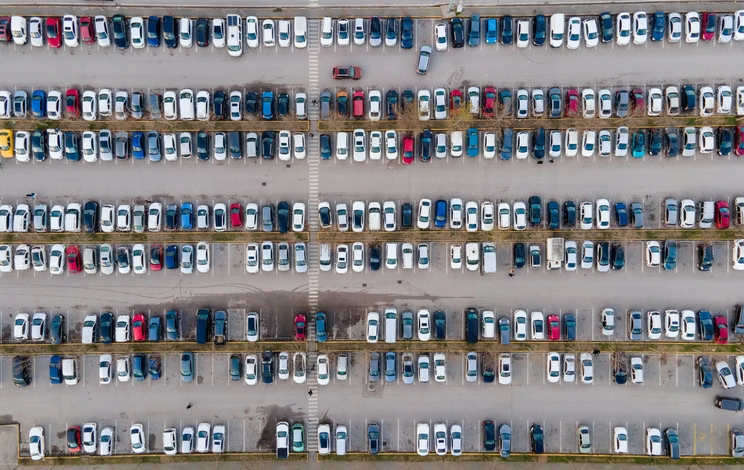
When you think of the largest buildings in any city, your mind probably goes to soaring skyscrapers, massive stadiums, or sprawling airports. But in Wisconsin, the largest building by square footage isn’t a tower or arena—it’s actually the Parking Garage at Milwaukee Mitchell International Airport. This six-story, 8,000-space post-tensioned (P/T) structure was built in three phases. The Red Section, closest to the terminal, was originally constructed in 1977. A 1989 expansion, known as the Blue Section, added 126,000 square feet per floor along the western edge, and a 2002 expansion, the Yellow Section, extended the garage along the northern side, adding another 209,000 square feet per floor. Altogether, the garage covers more than 3.5 million square feet, making it the largest building—by square footage—in the entire state of Wisconsin. For comparison: U.S Bank Center (Milwaukee): Tallest building in Wisconsin – 42 stories, 1,077,607 sq ft Northwestern Mutual Tower and Commons (Milwaukee): 32 stories, 1,100,00 sq ft Clinical Services Center at University of Wisconsin-Madison: 1,897,439 sq ft Lambeau Field (Green Bay): 1,900,000 sq ft During these expansions, a total of six elevators were added: two in the 1989 section and four more in the 2002 expansion. The 2002 project also introduced an enclosed pedestrian skywalk on the third level, featuring two sets of moving walkways. This climate-controlled corridor connects the garage to the terminal, offering comfort and convenience for travelers during Wisconsin’s hot summers and frigid winters. For most of the year—aside from peak travel periods like Spring Break—this massive structure has ample capacity to accommodate nearly all travelers who choose to park there. So next time you’re planning to park at MKE, choose the garage and take a moment to look around and appreciate the sheer scale of this remarkable facility. You can proudly say, “I’m standing in the largest building in Wisconsin!” Vincent Campagna, PTMP, is a Manager, Parking & Ground Transportation for Milwaukee Mitchell International Airport. Vincent can be reached at vcampagna@mitchellairport.com.

Two college students unloading belongings from a car trunk, excitedly moving into a new apartment and starting their independent lives
Data IPMI Blog Planning University

New Resident Student Move-in 2025

Every fall a new group of incoming students move into their dorms and call campus their home. We were approached by University Housing to assist them this past year with the logistics of parking and traffic control for the move-in of 4,500 new incoming students over the course of two days for the fall of 2025. In the past few years since COVID, the approach has been hands off from a parking standpoint. With occupancy of resident students increasing over the last few years traffic congestion, parking demand outpacing supply and frustrated drivers led to the need for a controlled and welcoming move-in experience. Thoughtful and strategic planning would be essential to our move-in experience success. Initial planning began with a high-level overview of what University Housing’s overall vision would be. Some of their needs included one-way traffic around the most populated dorms, express unloading zones, signage recommendations, and staffing of parking attendants to direct parking. Move-in 2025 was ultimately a success and there was positive feedback from those new students and families. Some key takeaways for success were planning logistically and communication. We started our logistics planning internally in February. This allowed enough time to decide what resources, signage and external parties were needed to be successful. We started communicating with stakeholders early in the process. We wanted the campus community to have realistic and clear expectations when students were moving in. University Housing took on the heavy lift of communicating plans through emails, meetings and social media. The week of move-in we started our setup with signage and barricades. This was a visual reminder for stakeholders as well. The last, and arguably the most important step in our planning process was to debrief and discuss lessons learned to improve the process. We met internally and with University Housing to discuss. Overall, move-in 2025 was a positive experience for those new students and their families and we are ready to start planning for 2026! Meredith Garrett, CAPP, is the Assistant Director of Public Safety, Parking & Transit Services for Kent State University. Meredith can be reached at mgarre12@kent.edu.

Close-up of police body camera
Enforcement IPMI Blog Technology

Wearable Cameras for Safety and Efficiency in the Field

In recent conversations with three different parking enforcement officers who recently started utilizing wearable cameras, a harsh reality became clear: there is a void in the existing toolset that officers face when trying to do their job while documenting interactions and staying safe while doing it. Increasingly, officers find themselves stuck in the middle of two groups of people: those who are verbally and physically aggressive or confrontational, and those who make accusations of rudeness or harassment. While radio reports and written reports can provide a starting point, organizations are finding that POV video offers an objective view into what officers face in the field every day. Organizations and Municipalities are shaping the future of safety and efficiency in the industry via: Video with audio transcription – an exact recounting of interactions to cut out the question, “What did they say and how did you respond?” Livestream for supervisors to tap into emergency situations from anywhere, anytime. Safety highlights – real time alerts to see critical situations as they occur. Reporting – standardization of incident reporting through the use of a wearable camera. If you work in an office, you most likely have tools that record video meetings, take notes while you’re speaking to people, and organize your day using technology. Making the same essentials easy and accessible to field workers through wearable technology is proving to be an avenue that provides them with the confidence to do their job while staying as safe as possible. Henry Broback is the Director of Strategic Partnerships for Plix AI Body Cameras. Henry can be reached at henry@plix.ai.

Full Parking Lot
Events IPMI Blog Parking Lots University

Low-Cost Way to Digitalize Event Management

Event management has been a struggle to keep everyone on the same page since I stepped into my role in 2024. We would receive multiple requests for event parking each day through a variety of different avenues. Phone calls and emails to different people within the department, never any consistency. Sometimes multiple phone calls AND emails for the same event! The ability to be able to charge for special event parking and offering a variety of options (hangtags, dashboard permits, do not enforce a lot) was also a hurdle I was up against. I needed a solution and fast, because I was spending an exorbitant amount of time on phone calls and emails just for events. I was ready to start exploring vendor options, but I knew I would really have to make a strong case in order to implement an event management system. That’s when I started exploring the possibility of working with our university events and conference services. They already had a system in place to receive requests and then bill. They were able to easily add parking as an option for any event request. Parking event requests went live in July 2025 through our events and conference services. I now receive all parking requests in one system where I can approve or deny the request. Revenue that was once not captured for event parking is now efficiently charged along with whatever other expenses the customer incurs for their event. Bonus, the university is capturing all events for the university calendar because of the demand for parking when previously only large events were scheduled. Meredith Garrett, CAPP, is the Assistant Director of Public Safety, Parking & Transit Services for Kent State University. Meredith can be reached at mgarre12@kent.edu.

October Ask the Experts Blog photo, multiple headshots
Curb Management Digital Parking Tech IPMI Blog Leadership Technology

October's Ask the Experts - More Great Answers!

The October Ask the Experts column featured some great responses from IPMI thought leaders, but there is never enough space for all the great answers! Here are more thought-provoking responses.  How can large-scale parking operations (education, healthcare, airports, business parks, retail centers, etc.) leverage emerging technologies to improve both parking management and the overall mobility experience?   Scott Petri, President, Mobility Parking Advisors  “Analyzing gaps in existing technology or identifying best-in-class technologies for operational functions provides efficiencies, potential revenue, enhancements, and greater customer satisfaction, particularly when viewed from community needs and customer surveys.”   Cameron Lang, Sales Manager US, HotSpot Parking, a Product of Arcadis  “Cities and large-scale parking operations can use new technologies like curbside data, mobile apps, and automated payment systems to make parking easier and more efficient. These tools help maximize parking space usage, simplify entry and payment processes, and reduce paperwork. They also improve the overall traveler's experience by offering real-time updates on available spaces and connecting parking systems with other transportation options for seamless travel.”   Katherine Beaty, PTMP, President, Beaty Solutions  “When parking works well, people do not notice it.  Leveraging the right tech is what makes us invisible, and really, that is the goal.   For example, airports can sync with return flight information, allowing travelers to come back to a seamless handoff when using a valet.”   Erik Nelson, PCIP, Principal, Walker Consultants  “Large-scale operations need to carefully plan for the implementation of emerging technologies. Pilot programs are a good way to test functionality, but they can’t demonstrate a system’s ability to scale. That requires careful coordination with the vendor and stress tests of their system prior to broader rollout.”   Chris Phenner, VP of Business Development, Flash, Inc.  “Creating Digital Locations within platforms like Apple Maps, Google Maps, Ticketmaster, and TomTom can drive millions of dollars in bookings annually, and this channel is growing faster than expected.”   Brett Wood, PE, PTMP, President, Wood Solutions Group  “With an abundance of technologies supporting multiple facets of operations and management, we have more data than ever to truly understand user behaviors. Advanced operations are beginning to better utilize this data to better align resources and policies to the needs of the users, helping to better balance demands across all modes of transportation in the mobility spectrum.” 

Shot of car park from above
Airports Finance IPMI Blog Parking Lots

How Onsite Parking Fuels Airport Growth

Most travelers may know that flying out of their local airport helps create demand for airlines, which can lead to more routes and destinations. Many also understand that purchasing food, drinks, or gifts at the airport supports local jobs and drives demand for more concession options. What some may not realize, however, is the significant role that onsite airport parking plays in helping an airport grow—both financially and operationally. Non-Aeronautical Revenue For most airports, parking is the largest single source of non-aeronautical revenue, often accounting for 20–40% of that total. This revenue is critical—it helps fund new runways and taxiways, terminal upgrades, facility maintenance, and infrastructure improvements. It also reduces reliance on airline fees, making the airport more attractive to carriers and encouraging more flight options for travelers. Competitive Advantage and Passenger Convenience Convenient, well-managed parking attracts more travelers and encourages repeat visits. It builds brand loyalty and keeps passengers parking onsite rather than offsite or choosing alternative transportation. Since parking is often a traveler’s first and last interaction with the airport, a smooth experience enhances overall satisfaction and strengthens the airport’s reputation. In turn, this supports higher passenger traffic, attracts new airline routes, and drives spending in retail and dining areas. Encouraging Off-Peak Travel Accessible onsite parking also supports off-peak travel. When travelers know they can park easily for early morning or late-night flights, they’re more likely to book those times. This helps airlines optimize schedules, reduces congestion, and spreads airport activity more evenly throughout the day. More Than Just a Parking Spot Choosing to park onsite isn’t only about convenience—it’s an investment in your airport’s future. Onsite parking provides easy access to terminals, added security, and a smoother overall travel experience. At the same time, the revenue it generates helps fund improvements that benefit every passenger. So next time you fly, consider parking onsite—not just for your own peace of mind, but to help support your airport’s continued growth, efficiency, and service to the community. Vincent Campagna, PTMP, is a Manager, Parking & Ground Transportation for Milwaukee Mitchell International Airport. Vincent can be reached at vcampagna@mitchellairport.com.

Artificial Intelligence Processor Concept. AI Big Data Array
IPMI Blog Leadership Planning Technology

ChatGPT is a Tool, Not a Talent Strategy

In a world where generative AI tools have become so prevalent, they now serve a multitude of purposes, from writing emails to setting reminders to creating presentations. Yet a concerning and growing trend has emerged among organizations both large and small. Instead of prioritizing employee development, many have become dangerously obsessed with leveraging AI as a replacement rather than a supplement for their human capital workforce. This is where it becomes alarming at the organizational level, and why we must raise awareness before it spirals out of control. Employee development and generative AI are two distinct tools that serve very different purposes in our daily operations. Too often, I meet with leaders who say, “I’ll just have AI do it,” or “We can let ChatGPT come up with something,” when discussing new ideas or projects. The first question that comes to my mind is simple: Do you have anyone on staff who can actually move this project forward? Using AI is valuable, but eventually you will hit a roadblock, and that is where projects stall. More importantly, where is your next generation of talent coming from? Over reliance on AI breeds stagnation in the workforce, erodes institutional knowledge, and risks leaving organizations without the human capacity to innovate, adapt, and lead. The solution is not to reject AI but to use it responsibly. Instead of relying solely on AI, I suggest you exploit it through a simple framework: Integrate: Use AI to streamline routine, low-value tasks such as scheduling, document drafting, or data summarization. Invest: Reinvest the time and cost savings from AI into employee development programs. Innovate: Encourage teams to co-create with AI rather than outsource entirely to it. Leaders who strike this balance will future-proof their organizations while empowering the workforce that drives lasting success. Dr. George J. Mclean, MPA, DBA, PTMP, is the Senior Operations and Data Insights Manager for Miami Parking Authority. George can be reached at gmclean@miamiparking.com.

Allyship & Equity group of diversity
DEI IPMI Blog

The ROI of Diversity

Diversity and inclusion aren’t just moral goals; they’re revenue levers and public service musts. Companies with diverse leadership teams innovate faster and achieve higher returns. Public agencies produce better policies and have increased community trust.  A McKinsey study showed companies in the top quartile of diversity efforts were 36% more likely to outperform their peers in profitability, and those with gender-diverse leadership had a 25% higher likelihood of above-average profitability. BCG ties diverse workforces to 19% higher revenue due to increased innovation. Study after study asserts that investment in diversity provides high ROIs.  In government, inclusion strengthens operations and trust. A 2022 report by the Partnership for Public Service and Deloitte showed that federal agencies with higher inclusivity and engagement scores had stronger workforce performance, better retention, and more effective service delivery. When institutions mirror their communities, they craft fairer policies, enhance public trust, and make better product and service decisions. Diversity is broader than gender and race: it spans military status, age, education, religion, physical and cognitive abilities, language, parental status, and socioeconomic background—differences that fuel diversity of thought. In parking and mobility, this looks like alternate and phone payments, pay-by-cell, Accessible Pedestrian Signals, multilingual signage, citation payment plans, video hearings, and reduced fees for veterans. Talent markets demand this. Glassdoor finds 76% of candidates value a diverse workforce. Deloitte links inclusion to 2.3 times higher cash flow per employee, greater change-readiness, and lower attrition.  The takeaway is clear. Diversity is a revenue driver, risk mitigator, and competitive edge, and embracing it is simply smart business.  Click here to read the Parking & Mobility magazine article. Madison Huemmer is the Head of Market Transformation for ParkMobile by Arrive. Madison can be reached at madison.huemmer@arrive.com.

Encountering a frustrated customer
Frontline IPMI Blog

The Frontline Struggle is Real!

Who you gonna call? Parking Busters! Don’t you wish! But that’s who you may feel like calling when you have the occasional run-ins that take a lot out of you. As a parking administrator and a pastor, I know what it’s like to be on the frontline of someone else’s emotions. I have had to turn the other cheek a few times and pray. As an administrator, I found my kindness sometimes wanting to take a backseat to what I saw as the customer’s shenanigans. Nothing would grate my nerves more than a customer who claimed they did not, or could not read signs posted, rules handed to them at the beginning of the year, or warnings given to them. Add to that some parents who felt their children were entitled to breaking the rules, and I really did want to call “Parking Busters.” I learned over the years and through the process that someone had to keep a cool head and there was a reason I was in that position.  It is those lessons I wanted to provide in The Frontline Struggle is Real! Article. Remember your WHY. Why are you the person at the counter? What skills and gifts do you bring to the operation? Knowing your why and the skills and gifts you bring to your position will give you value and should motivate you to do your job well. Find out more by checking out IPMI onsite training team member, Vanessa R. Cummings’ article, and reach out to her with any questions at Ms. V Consulting, LLC. Vanessa R. Cummings, PTMP, is the CEO/Chief Consultant for Ms. V Consulting, LLC. Vanessa can be reached at parkingmsv@gmail.com.

Compliance Related Words Written on Wood Blocks Sitting on Wood Surface
IPMI Blog Municipal/Cities Policy TDM Technology Transit

Policy Corner

How does parking policy align with the goals of a growing, multimodal city? And how can cities densify without overwhelming their parking systems? These questions have been central in Columbus, Ohio—the Midwest’s fastest-growing city. 2024 was pivotal. In November, Central Ohio voters approved a new transit sales tax to fund a Bus Rapid Transit system. Months earlier, Columbus City Council adopted Phase 1 of “Zone In,” a zoning overhaul creating new districts to spur housing and walkable, transit-oriented development. A major feature: eliminating minimum parking requirements in these new districts. In recent years, cities like Minneapolis, Austin, and Denver have repealed parking minimums to support affordability and transit-oriented growth. Yet, as any parking professional knows, residents are often vocal about street parking access. Columbus was no exception. In response, the City established a new Parking Impact Study process, giving the Division of Mobility and Parking Services authority to evaluate potential spillover from new developments. Studies document on-street occupancies, estimate demand, and determine whether mitigation is needed. If impacts are modest, projects commit to Transportation Demand Management (TDM) measures—such as subsidized transit passes, carshare, rideshare, or bike/scooter share—that reduce driving needs. Larger impacts trigger layered mitigations plus a parking management fee, designed to fund new permit zones or other operational tools to protect neighborhood parking access. One year in, only a handful of projects have required studies, and none have yet triggered fees. Still, the policy is already considered a win. Columbus successfully removed parking barriers to new housing—an urgent priority for city leadership—while establishing safeguards to protect residents and manage curb demand. The Columbus model may not fit every city, but its lesson is broader: parking concerns need not block goals around housing affordability or transit-oriented development. With creativity and community dialogue, parking can shift from being a barrier to becoming part of the solution. Justin Goodwin, AICP, PTMP, is the Mobility and Parking Services Administrator for the City of Columbus. Justin can be reached at jmgoodwin@columbus.gov.

Parking lot flood
IPMI Blog Parking Facilities Parking Lots University

Public Safety at the Forefront of Robust Parking Operations

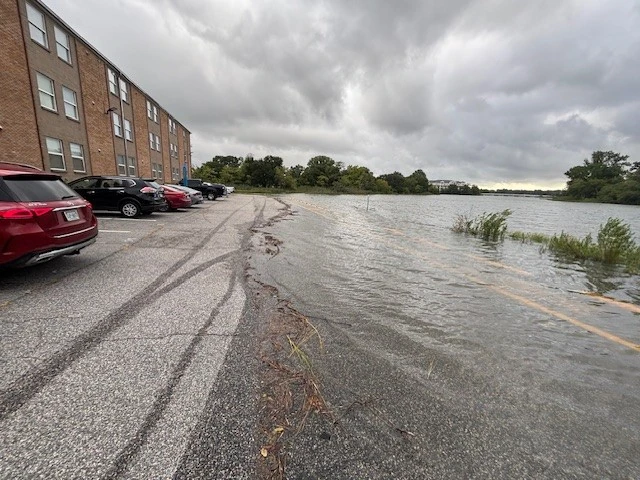
Attractive and attentive parking and transportation management techniques will display public safety initiatives best servicing our communities by providing dependable access in well maintained facilities. Safe parking destinations demonstrate consistent cleaning and equipment upkeep, lighting functionality, clear wayfinding signage and pedestrian paths, and surveillance. As it relates to transportation, safe bus stops are defined by strong visibility, clear sidewalks, positioning out of direct vehicular traffic, and signage providing the user real time tracking. Depending on location, many of us in the industry experience periodic or routine disruptive weather events, and lack of preparation can cause for costly and potential disastrous situations. We find ourselves frequently adjusting lot restrictions and transportation programming at Old Dominion University, a University in the coastal city of Norfolk, Virginia, facing severe sea level rise and constant tidal flooding.  This past August with the effects of Hurricane Erin and flooding, the department closed a popular residential lot and large portions of a prime commuter lot and dedicated specific garages on campus for University community use during the impact. Communication through social media in tandem with departmental updates assisted with providing this information in a relatively short time frame, as well as any updates to transit routes and timing. I’ve found since last Spring through involvement with the neighborhood civic league within a portion of our University blueprint increases relations with the surrounding business and residential community. Highland Park is a diverse neighborhood described as residential, commercial, industrial, and educational, with the part of campus containing our Arts District, a 9,500 multipurpose event venue, and active restaurants. In these meetings with collaboration from Old Dominion University Police, I’ve been able to share updates around University facilities, upcoming events with increased traffic through the neighborhood, changes to programming with permitting and enforcement, field questions, and work towards solutions. This is an invaluable experience aimed to better our community and provide transparency between the University and neighborhood. Zach Pearce, PTMP, is an Associate Director of Operations for Old Dominion University. Zach can be reached at zpearce@odu.edu.

Traffic cone /pylon on a brand-new parking place.
Finance IPMI Blog Parking Facilities Parking Lots

Low-Cost and No-Cost Ways to Improve Parking Lot Safety

Parking lot safety is at the top of many parking professional’s priority list—and for good reason. However, addressing safety concerns can often be challenging, time-consuming, and expensive. As parking professionals, we're expected to find smart, effective solutions that improve safety, enhance customer satisfaction, and—ideally—increase revenue. And if we’re being honest, we’re often asked to do it on a tight budget... and with a deadline of “tomorrow.” With that reality in mind, here are some low-cost or no-cost ideas to help you improve the safety of your parking facility—without breaking the bank. No-Cost Conduct a Safety Walkthrough Schedule monthly or quarterly walkthroughs of the parking facility. Bring colleagues—more eyes mean more issues caught. Use a simple checklist to document issues such as: Burnt-out or misaligned lights Potholes or cracked pavement Leaking pipes, spalling concrete, or drainage problems Faded line striping or signage Obstructions or tripping hazards Take photos and record observations, then present findings—along with recommendations and estimated costs—to building ownership as a value-added service. Maximize Existing Conditions Conduct a nighttime lighting review to check for dark spots; re-aim fixtures if needed. Clean light fixture lenses to improve brightness—dust, cobwebs, and grime reduce output. Remove and put away any cones, barricades, or objects that may cause tripping or confusion. If entrance mats or carpet runners are used, ensure your team regularly checks for bunching or curling, which can be hazardous. Trim overgrown bushes or landscaping that obstruct visibility or create blind spots. Implement Staff Training Develop and maintain site and job-specific safety training for all staff. Train team members to: Identify and report potential hazards immediately Monitor for loitering and suspicious activity Understand site-specific emergency protocols Reinforce safety as part of daily operations—not just during incidents. Strengthen Communication with Building Security & Ownership Establish clear protocols with building security or management for incident reporting and hazard response. Coordinate with tenants to share seasonal or situational “Safety Tips” (e.g., winter driving, walking safely at night). Keep tenants and staff informed about any changes in traffic flow or parking closures to avoid confusion and reduce risk. Low-Cost Re-stripe and Re-mark the Facility Refreshing pavement markings is one of the most effective and affordable ways to improve safety, traffic flow and parking compliance. Offer or recommend low-cost restriping services for: Parking stalls Pedestrian crosswalks Stop bars and directional arrows Use high-visibility paint along pedestrian walkways, curbs, and any area where there’s a change in elevation to help reduce trip-and-fall incidents—especially in dimly lit or high-traffic zones. Update or Replace Signage Well-maintained signage is essential for safety and customer guidance: Audit all signage on-site and replace any faded, outdated, or damaged signs. Ensure signs reflect current information, such as: Contact numbers Hours of operation Instructions for getting assistance Add temporary “Caution: Slippery Surface” signs at entrances or near stairwells during rain, snow, or cleaning events. Post “This Area Is Under Surveillance” signs at key entry and exit points—even if cameras aren’t installed—as a visual deterrent to crime or misconduct. Improving safety in a parking facility doesn’t always require a large budget—just a proactive approach, attention to detail, and a commitment to continuous improvement. By implementing these low-cost and no-cost strategies, we can significantly enhance the safety, usability, and overall experience for every customer who uses the facility. As a parking professional, we’re not only tasked with managing day-to-day operations, but also to add value through smart, cost-effective solutions that prioritize both safety and service. Vincent Campagna, PTMP, is a Manager, Parking & Ground Transportation for Milwaukee Mitchell International Airport. Vincent can be reached at vcampagna@mitchellairport.com.