May/June's Ask the Experts - More Great Answers!
We received so many great responses to the May/June 2026 question that we couldn’t fit them all in one place!
IPMI & Member News
We received so many great responses to the May/June 2026 question that we couldn’t fit them all in one place!
Independent Software Vendors (ISVs) face a web of new challenges in facilitating payments: Merchant expectations are rising, payment environments are getting more complex, and software platforms are under pressure to deliver more connected, secure and value driven commerce experiences. These challenges require ISVs to sharpen their focus on what’s most important to succeed in the current environment. For 2026, we advise ISVs to concentrate on three key goals. These represent the biggest opportunities to strengthen competitive position, deepen merchant relationships and unlock new revenue.
The Learning Lab focused on applying game day best practices to campus-wide events. Moderated by Drew Lee (JustPark), the session featured Brian Riggs (University of Notre Dame) and Brett Litterell (Ohio State/CampusParc), who shared insights from managing large-scale concerts and third-party events. They emphasized key differences from football operations, including a higher volume of first-time visitors at concerts. Discussion topics included real-time data management, pre-event communication, and coordinating simultaneous events across campus. The panel also covered challenges like parking capacity, cashless payments, traffic control, and integrating platforms such as JustPark and Ticketmaster, along with considerations for towing, rideshare, and medical staffing.

I like to think I’m tech savvy. I love geeking out on systems thinking, automation, and leveraging technology to work smarter. In many ways, I’m very excited about what AI can do. At the same time, the proliferation of AI slop, occasionally frustrating shortcomings of the tools, and the sheer ubiquity of the topic in our personal and professional lives sometimes leaves me thinking “enough with the AI already…”.
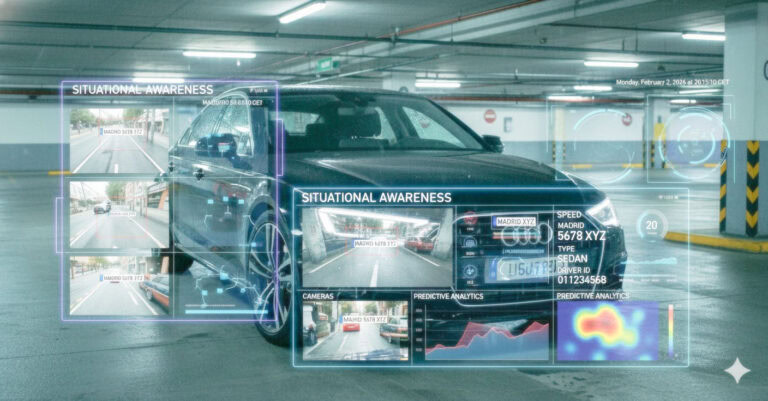
I’ve stood in poorly lit parking garages on both sides of the Atlantic, and the feeling is exactly the same. That instinctive shift in awareness — keys ready, pace quickened, a quick text to let someone know you’ve arrived safely. It doesn’t matter whether I’m in a UK multi-storey or a parking garage Stateside. The experience is universal.
Workplace accidents are very common, even in the parking industry. But should it be? Workplace injuries are in the tens of thousands each year. Economically, over 50 billion dollars is lost each year in accidents. Human factors are the cause in a vast majority of cases. But often there is a connection between human factors and other causes. Understanding how people work and creating safeguards (rules, safety plans and supervision) can go a long way to prevent deaths and injuries if applied correctly.
One of the most impactful decisions you will ever make is where to cast your hotel loyalty (tongue in cheek). As a frequent flyer, I’m Southwest all day long as that Companion Pass is the best perk in the travel industry. Many years ago, I chose Hilton, despite Paris. Many a high school spring break was brought to the Pinyot family courtesy of Hilton Honors points, and my Lifetime Diamond achievement.
A few months ago, my college, Schoolcraft College, hosted a business pitch competition. Intrigued by the opportunity, I immediately opened the Notes app on my phone -- where I had been collecting ideas for years -- and began revisiting one concept that had stuck with me: an interoperability platform for parking.
License Plate Recognition is entering a new phase. As parking, mobility, and access systems become fully automated, the license plate is no longer just a reference point; it is the transaction key tied directly to revenue, access rights, compliance, and customer experience. And that raises an important question: Is one identifier enough?
Parkonomics has published a five-part investigative series examining the transportation infrastructure investments tied to the 2028 Los Angeles Olympic Games. The series, co-authored by Andrew Sachs, CAPP and Kevin Bopp with original interviews featuring Frank Ching of LA Metro, applies a mobility economics framework to evaluate whether LA's $26 billion in Olympic-adjacent transportation spending will produce lasting value or follow the pattern of past host cities.
One of the unique aspects of the parking and mobility industry is how relationship-driven it is. Over time, professionals begin to see the same people across conferences, committees, and industry discussions. In many ways, the industry functions as a close professional community where reputation and relationships travel quickly.
The presenters focused on the modernization of their parking enforcement technology and programs. They shared how their organization transformed from generating $450,000 annually in enforcement revenue to over $8.5 million through the implementation of digital enforcement tools, multiple mobile payment apps, and data-driven dispatch systems.