University

IPMI & Member News

Modernizing Campus Parking, Phone, Parking Lot
Data Digital Parking Tech IPMI Blog University

Modernizing Campus Parking

“The university is a series of individual entrepreneurs held together by a common grievance about parking.” Clark Kerr’s observation from his time as Chancellor of the University of California, Berkeley still rings true. Decades later, parking remains one of the most persistent sources of frustration on college and university campuses. Students circle lots looking for spaces, faculty want reliable access near offices and classrooms, visitors struggle to understand where they can park, and administrators are left balancing competing needs with limited resources. What has changed since Kerr’s era is the technology available to manage parking. Yet many universities still rely on physical permits, spreadsheets, and manual processes that no longer align with the expectations of modern campus communities. Parking has become part of the daily campus experience, and outdated systems can undermine that experience before the day even begins. University parking is inherently complex. Faculty, staff, resident students, commuters, athletes, and event attendees all have different needs, usage patterns, and expectations. Managing these demands fairly with legacy tools almost guarantees confusion and dissatisfaction. Cloud-based digital parking management platforms are built to handle this complexity. They provide flexible tools that adapt to different user groups and demand patterns, while offering online self-service for permits, payments, and renewals. Automation reduces errors, eliminates the cost and waste of physical permits, and frees parking staff from routine administrative work. Financial oversight improves as well, with automated reporting and account-level tracking across departments or campuses. Rutgers University’s digital parking management program illustrates the impact of this shift. By moving to a modern cloud-based system, the university was able to combine permit types, enable online transactions and system-wide access, improve event and guest parking, and gain real-time data for planning and pricing. Compliance improved, complaints declined, and parking became more predictable for users. For many people, parking is their first interaction with campus. Digital parking management helps ensure that experience is efficient, transparent, and far less frustrating, turning a long-standing grievance into a strategic operational advantage. Click here to read the Parking & Mobility magazine article. Chris Perry, PTMP, is the Senior Vice President of Parking Base. He can be reached at chris.perry@parkingbase.com.

Technology helping other connect in the parking & mobility world.
Digital Parking Tech Events Technology University

Free Virtual Learning Lab Presented By HONK: Thinking Outside the Lines: How HONK and UC Davis Are Redefining Campus Parking

Join us for a live interview where Kacey Siskind, SVP of Account Management at HONK, sits down with Linda Braak, Director of Customer Care & Planning at UC Davis, to discuss what UC Davis has learned since redefining its permit parking program and why working with HONK has made a difference.

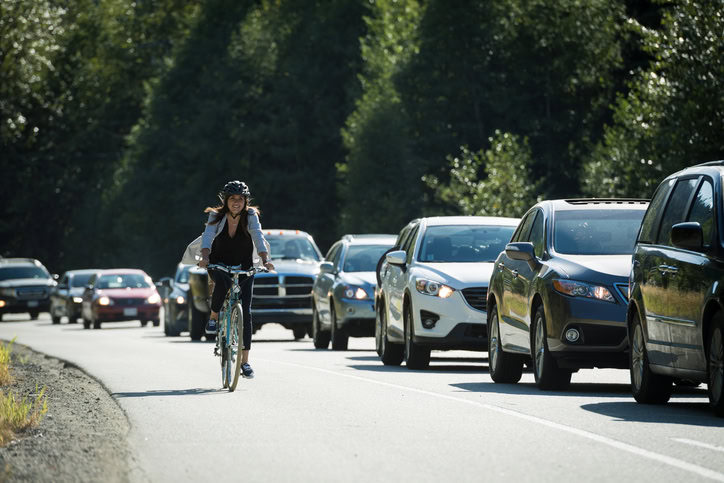
Woman commutes by bicycle past traffic, Whistler, B.C.
IPMI Blog Micro Mobility University

What Do You Mean Bikes Don’t Have to Stop at Stop Signs?

In 2023 my home state of Minnesota adopted the “Safety Stop” or “Idaho Stop” for bicycles.  This allows bicycles to treat a stop sign like a yield sign.  So if no one is coming, the bike can roll through the intersection.  It was interesting to hear the feedback from regular vehicle commuters who’s first reaction was often along the lines of, “That can’t be safe.  Why do bicycles get to break the law?”  While there is a good amount of data to show that overall this is safer for cyclists, another advantage is better flow for regular vehicles.   When presenting information to groups of people that you are trying to convince it is helpful to frame it with the benefits to the individual person.  Someone that hasn’t commuted on a bicycle and maybe hasn’t ridden one since childhood probably doesn’t think much about how traffic flows with bicycles.   So the next time someone says bikes should obey all of the traffic laws of a car, ask them to think about a situation where they are behind a bike. With a safety stop, the bike is able to proceed through the intersection and is out of their way before they need to navigate the intersection.  They don’t need to wait behind the bike as it stops, then gets going again, possibly a little more wobbly for a few feet until they are out of the way and you are able to navigate the intersection. For thoughtful motorists, understanding the positive benefits to themselves and overall traffic flow can help turn them into allies. Ben Schnabel, PTMP, is an Assistant Director for Parking Operations at the University of Minnesota. Ben can be reached at schna015@umn.edu.

University parking lot and a parking app on a mobile device in close proximity to a parking kiosk
Magazine University

Modernizing Campus Parking

Why Digital Parking Management is the Future of University Parking

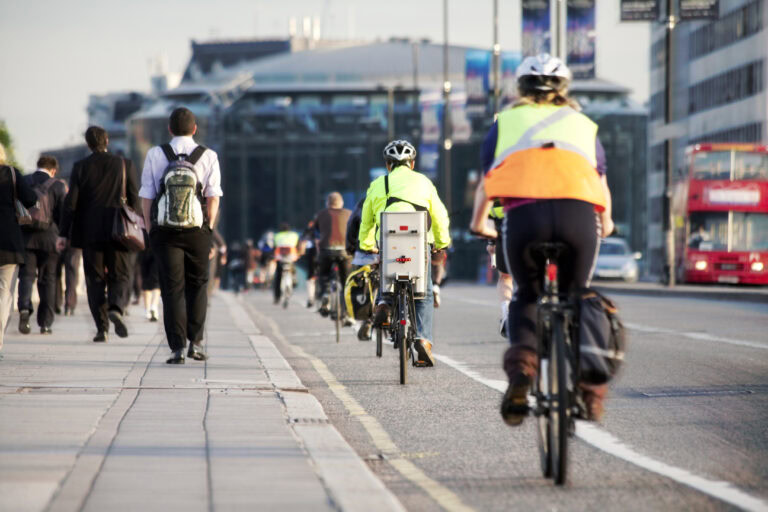
Commuters on the sidewalk, bikers on the biking lane, double decker bus in the background
IPMI Blog Micro Mobility Policy Technology University

Building Responsible Micromobility Programs on Campus

As described by the McKinsey Center for Future Mobility several months ago, micromobility—bikes, scooters, and other personal transport devices—is reshaping transportation. Students appreciate the convenience and sustainability these options provide, but as adoption grows, so do concerns about pedestrian safety and infrastructure gaps. How do we balance innovation with responsibility? Recent studies show accident rates on campuses are climbing, often linked to distracted riding and unclear infrastructure for separating pedestrians and riders. According to a survey published by UPCEA Cener for Research and Strategy, liability and insurance coverage remain gray areas, especially when accidents involve bystanders. Add behaviors like riding under the influence or speeding, and the risks multiply. At Old Dominion University, policy emphasizes pedestrian right-of-way and mandates the responsible operation of micromobility devices in designated areas. Riders must follow traffic rules, maintain safe speeds, and dismount in congested zones. Helmet use is strongly encouraged, and headphones are permitted only on one ear for safety. Other universities have introduced designated lanes and scooter corrals to reduce conflicts - steps worth considering as we design safer systems. As parking, transportation, and mobility professionals, we have an opportunity to lead. What do you think—should universities focus on stronger rules, better infrastructure, or more rider education? What’s been successful on your campus? I would love to hear your ideas and experiences to help create programs that keep everyone safe and make sustainable transportation even easier. I'd like micromobility to become a welcome and respected program in the overall campus community. Lisa Copeland, PTMP, is the Associate Director for Data and Administration at Old Dominion University. Lisa can be reached at lcopelan@odu.edu.

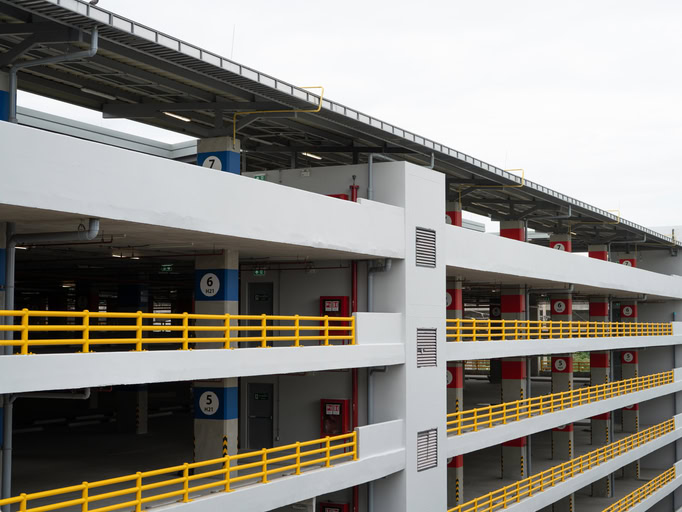
Multi-level parking garage. Indoor car park building. Urban parking structure. Multistory car park. Concrete parking garage. Vehicle parking facility. Building construction. Modern architecture.
Finance IPMI Blog Parking Facilities Transit University

To Build or Not to Build a Parking Deck

To build or not to build a parking deck? Or is the real question, do perspectives need to shift? It’s easy to say, “Build a deck! This will solve all of our parking problems!” and many times, this is the solution that frustrated students give. The question of building a parking deck has come up at our university many times over the years. I have a stack of plans that never came to fruition that I inherited. The last attempt to build a deck was in the spring of 2020. We were in the process of awarding the bid when campus closed due to COVID-19. Financial concerns and enrollment uncertainty scraped those plans, but the question of whether we will build a parking deck continues to come up. We recently received this question from our student senate in a transportation advisory committee meeting. Our university is a suburban campus with a robust public transportation option as well as ample parking on the perimeter of campus and in remote lots. We have plenty of parking spaces for everyone; we just don’t have everyone’s ideal parking area. Parking in these areas requires people to take another method of transportation, whether it’s biking, walking or taking public transportation to reach their destination. This requires a shift in perspective for many people that are not familiar with public transportation or are used to parking close to where they need to be. We explained to the student senate the costs associated with parking decks and how that would directly impact permit prices. We also explained that there is ample parking, so justifying the cost of building a deck and in turn raising permit prices is counterproductive and not fiscally responsible.

Parking Base logo - Parking Base Integrates with Google to Permit Drivers to Reserve Parking with Google Maps and Google Search
Data IPMI & Member News Mobility Technology University Vendors/Products

Parking Base Edge and University of Cincinnati Partner to Advance AI-Powered Parking Management Systems

Cincinnati, OH — Parking Base Edge, the applied research and innovation initiative of Parking Base, announced the launch of its first partnership with the University of Cincinnati’s Master of Science in Information Systems (MSIS) program. The collaboration merges UC’s academic rigor with Parking Base’s deep parking industry expertise to explore the next generation of AI-powered mobility and automation systems. This partnership combines academic rigor and research depth with Parking Base’s real-world expertise and technology platform. Under the guidance of UC faculty and Parking Base engineers, graduate students are helping research: AI-powered business intelligence dashboards that reveal operational trends and performance indicators. Predictive models to support smarter planning and decision-making. Dynamic pricing models will allow operators to test scenarios and forecast how rate changes impact demand and revenue. This partnership creates a unique collaboration between academia and the parking industry, focused on helping operators apply AI to make smarter, data-driven management decisions. “AI is already transforming mobility, and its use in parking and mobility is still in its infancy,” said (?) University of Cincinnati representative. “Through this collaboration with Parking Base, we’re helping the next generation of parking and mobility leaders not just understand the extraordinary power of AI-powered systems, but to harness that knowledge to create new systems to improve parking and mobility.” The Parking Base Edge initiative is designed to accelerate the adoption of artificial intelligence, automation, and smart mobility technologies across the parking sector. By combining Parking Base’s real-world operational data and platform capabilities with UC’s research depth and analytical expertise, the partnership enables real-time experimentation and rapid prototyping of advanced digital mobility tools. “This collaboration tools to clients…reflects Parking Base Edge’s mission of pushing the boundaries of what’s possible in parking and mobility through research, innovation, and partnership,” said Ebby Zachariah, CEO of Parking Base. “We believe that by working with leading academic programs like UC’s MSIS, we can shape the intelligent mobility networks of the future.” Parking Base and UC are currently focusing on building scalable models that can adapt to real-world conditions, from airport and university campuses to downtown districts and mixed-use developments. The goal is to redefine how parking systems interact with vehicles, people, and city infrastructure in the era of intelligent mobility. About the University of Cincinnati MSIS Program The University of Cincinnati’s Master of Science in Information Systems program combines deep technical expertise with applied innovation in AI, automation, and smart systems. The program prepares students to partner with leading organizations to develop transformative digital solutions for tomorrow’s connected world. About Parking Base Parking Base is the leading company offering cloud-based parking management solutions to handle all aspects of parking operations. Its comprehensive suite of products includes Permit Manager, Valet Manager, Destination Manager, and Access Manager, and it delivers a seamless and customizable digital, cloud-based solution in a single platform. Parking Base’s tools are designed to optimize efficiencies for parking owners and operators, while enhancing the customer experience. For more information about Parking Base, please visit www.parkingbase.com.

Member Roundtable chats
Events Training/Education University

Free Higher Education Member Roundtable: Preparing Your Campus and Team for 2027: Anticipating Trends and Challenges

Open to members from academic institutions. Register for the free higher education members-only roundtable and ask for advice about your own situation, offer your expertise, and connect with others facing similar challenges.

Member Roundtable chats
Events Training/Education University

Free Higher Education Member Roundtable: Transportation Demand Management (TDM): Behavioral Strategies to Reduce Single-Occupancy Vehicle Use

Open to members from academic institutions. Register for the free higher education members-only roundtable and ask for advice about your own situation, offer your expertise, and connect with others facing similar challenges.

Member Roundtable chats
Events Training/Education University

Free Higher Education Member Roundtable: Achieving Operational Excellence: Best Practices for Campus Parking Professionals

Open to members from academic institutions. Register for the free higher education members-only roundtable and ask for advice about your own situation, offer your expertise, and connect with others facing similar challenges.

Member Roundtable chats
Events Training/Education University

Free Higher Education Member Roundtable: Communicating and Working with Students

Open to members from academic institutions. Register for the free higher education members-only roundtable and ask for advice about your own situation, offer your expertise, and connect with others facing similar challenges.

Member Roundtable chats
Events Municipal/Cities Training/Education University

FREE Event: That’s My Spot: When Residents, Businesses, and Schools Fight for the Same Space

Register for IPMI's members-only roundtable dedicated to finding the balance and prioritizing competing stakeholder groups in dynamic, high-demand environments.  Our discussion will zero in on residential parking needs and programs, especially where they are in fierce competition with other patron segments in both municipal and academic settings.