University

IPMI & Member News

Commuters on the sidewalk, bikers on the biking lane, double decker bus in the background
IPMI Blog Micro Mobility Policy Technology University

Building Responsible Micromobility Programs on Campus

As described by the McKinsey Center for Future Mobility several months ago, micromobility—bikes, scooters, and other personal transport devices—is reshaping transportation. Students appreciate the convenience and sustainability these options provide, but as adoption grows, so do concerns about pedestrian safety and infrastructure gaps. How do we balance innovation with responsibility? Recent studies show accident rates on campuses are climbing, often linked to distracted riding and unclear infrastructure for separating pedestrians and riders. According to a survey published by UPCEA Cener for Research and Strategy, liability and insurance coverage remain gray areas, especially when accidents involve bystanders. Add behaviors like riding under the influence or speeding, and the risks multiply. At Old Dominion University, policy emphasizes pedestrian right-of-way and mandates the responsible operation of micromobility devices in designated areas. Riders must follow traffic rules, maintain safe speeds, and dismount in congested zones. Helmet use is strongly encouraged, and headphones are permitted only on one ear for safety. Other universities have introduced designated lanes and scooter corrals to reduce conflicts - steps worth considering as we design safer systems. As parking, transportation, and mobility professionals, we have an opportunity to lead. What do you think—should universities focus on stronger rules, better infrastructure, or more rider education? What’s been successful on your campus? I would love to hear your ideas and experiences to help create programs that keep everyone safe and make sustainable transportation even easier. I'd like micromobility to become a welcome and respected program in the overall campus community. Lisa Copeland, PTMP, is the Associate Director for Data and Administration at Old Dominion University. Lisa can be reached at lcopelan@odu.edu.

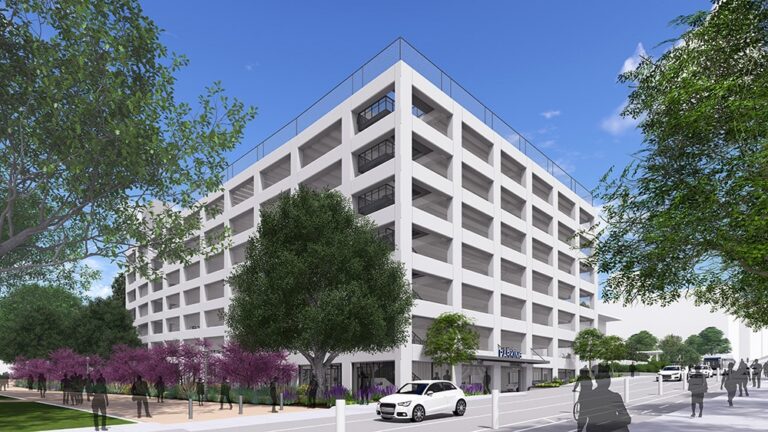
Multi-level parking garage. Indoor car park building. Urban parking structure. Multistory car park. Concrete parking garage. Vehicle parking facility. Building construction. Modern architecture.
Finance IPMI Blog Parking Facilities Transit University

To Build or Not to Build a Parking Deck

To build or not to build a parking deck? Or is the real question, do perspectives need to shift? It’s easy to say, “Build a deck! This will solve all of our parking problems!” and many times, this is the solution that frustrated students give. The question of building a parking deck has come up at our university many times over the years. I have a stack of plans that never came to fruition that I inherited. The last attempt to build a deck was in the spring of 2020. We were in the process of awarding the bid when campus closed due to COVID-19. Financial concerns and enrollment uncertainty scraped those plans, but the question of whether we will build a parking deck continues to come up. We recently received this question from our student senate in a transportation advisory committee meeting. Our university is a suburban campus with a robust public transportation option as well as ample parking on the perimeter of campus and in remote lots. We have plenty of parking spaces for everyone; we just don’t have everyone’s ideal parking area. Parking in these areas requires people to take another method of transportation, whether it’s biking, walking or taking public transportation to reach their destination. This requires a shift in perspective for many people that are not familiar with public transportation or are used to parking close to where they need to be. We explained to the student senate the costs associated with parking decks and how that would directly impact permit prices. We also explained that there is ample parking, so justifying the cost of building a deck and in turn raising permit prices is counterproductive and not fiscally responsible.

Parking Base logo - Parking Base Integrates with Google to Permit Drivers to Reserve Parking with Google Maps and Google Search
Data IPMI & Member News Mobility Technology University Vendors/Products

Parking Base Edge and University of Cincinnati Partner to Advance AI-Powered Parking Management Systems

Cincinnati, OH — Parking Base Edge, the applied research and innovation initiative of Parking Base, announced the launch of its first partnership with the University of Cincinnati’s Master of Science in Information Systems (MSIS) program. The collaboration merges UC’s academic rigor with Parking Base’s deep parking industry expertise to explore the next generation of AI-powered mobility and automation systems. This partnership combines academic rigor and research depth with Parking Base’s real-world expertise and technology platform. Under the guidance of UC faculty and Parking Base engineers, graduate students are helping research: AI-powered business intelligence dashboards that reveal operational trends and performance indicators. Predictive models to support smarter planning and decision-making. Dynamic pricing models will allow operators to test scenarios and forecast how rate changes impact demand and revenue. This partnership creates a unique collaboration between academia and the parking industry, focused on helping operators apply AI to make smarter, data-driven management decisions. “AI is already transforming mobility, and its use in parking and mobility is still in its infancy,” said (?) University of Cincinnati representative. “Through this collaboration with Parking Base, we’re helping the next generation of parking and mobility leaders not just understand the extraordinary power of AI-powered systems, but to harness that knowledge to create new systems to improve parking and mobility.” The Parking Base Edge initiative is designed to accelerate the adoption of artificial intelligence, automation, and smart mobility technologies across the parking sector. By combining Parking Base’s real-world operational data and platform capabilities with UC’s research depth and analytical expertise, the partnership enables real-time experimentation and rapid prototyping of advanced digital mobility tools. “This collaboration tools to clients…reflects Parking Base Edge’s mission of pushing the boundaries of what’s possible in parking and mobility through research, innovation, and partnership,” said Ebby Zachariah, CEO of Parking Base. “We believe that by working with leading academic programs like UC’s MSIS, we can shape the intelligent mobility networks of the future.” Parking Base and UC are currently focusing on building scalable models that can adapt to real-world conditions, from airport and university campuses to downtown districts and mixed-use developments. The goal is to redefine how parking systems interact with vehicles, people, and city infrastructure in the era of intelligent mobility. About the University of Cincinnati MSIS Program The University of Cincinnati’s Master of Science in Information Systems program combines deep technical expertise with applied innovation in AI, automation, and smart systems. The program prepares students to partner with leading organizations to develop transformative digital solutions for tomorrow’s connected world. About Parking Base Parking Base is the leading company offering cloud-based parking management solutions to handle all aspects of parking operations. Its comprehensive suite of products includes Permit Manager, Valet Manager, Destination Manager, and Access Manager, and it delivers a seamless and customizable digital, cloud-based solution in a single platform. Parking Base’s tools are designed to optimize efficiencies for parking owners and operators, while enhancing the customer experience. For more information about Parking Base, please visit www.parkingbase.com.

Member Roundtable chats
Events Training/Education University

Free Higher Education Member Roundtable: Preparing Your Campus and Team for 2027: Anticipating Trends and Challenges

Open to members from academic institutions. Register for the free higher education members-only roundtable and ask for advice about your own situation, offer your expertise, and connect with others facing similar challenges.

Member Roundtable chats
Events Training/Education University

Free Higher Education Member Roundtable: Transportation Demand Management (TDM): Behavioral Strategies to Reduce Single-Occupancy Vehicle Use

Open to members from academic institutions. Register for the free higher education members-only roundtable and ask for advice about your own situation, offer your expertise, and connect with others facing similar challenges.

Member Roundtable chats
Events Training/Education University

Free Higher Education Member Roundtable: Earth Month Conversation: What’s New in Transportation Sustainability for Campus Communities

Celebrate Earth Month with a dynamic virtual roundtable designed exclusively for higher education leaders shaping the future of campus parking and mobility. Join peers from across the country to explore innovative approaches to Transportation Demand Management (TDM), sustainable parking strategies, and emerging mobility solutions that reduce environmental impact while enhancing the campus experience. This interactive session invites open dialogue, idea-sharing, and real-world insights on what’s working, what’s not, and what’s next.

Member Roundtable chats
Events Training/Education University

Free Higher Education Member Roundtable: Communicating and Working with Students

Open to members from academic institutions. Register for the free higher education members-only roundtable and ask for advice about your own situation, offer your expertise, and connect with others facing similar challenges.

Member Roundtable chats
Events Municipal/Cities Training/Education University

FREE Event: That’s My Spot: When Residents, Businesses, and Schools Fight for the Same Space

Register for IPMI's members-only roundtable dedicated to finding the balance and prioritizing competing stakeholder groups in dynamic, high-demand environments.  Our discussion will zero in on residential parking needs and programs, especially where they are in fierce competition with other patron segments in both municipal and academic settings.  

amano-mcgann-2025-TagMasterCT45Integration-Graphics
Airports Health Care IPMI & Member News Municipal/Cities Technology University Vendors/Products

TagMaster NA’s CT-45 LPR Camera Enhances and Expands the Amano ONE LPR Ecosystem

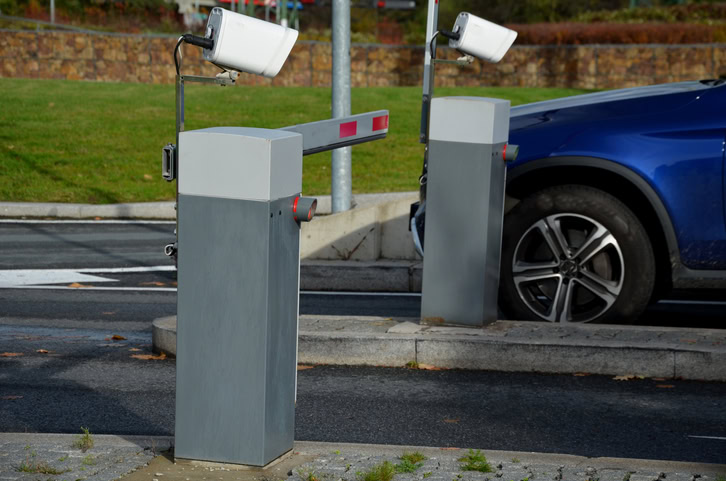
Tacoma, WA –  Nine months after its introduction, the integration of Amano McGann’s Amano ONE Parking Access and Revenue Control System (PARCS) with TagMaster North America’s CT-45 License Plate Recognition (LPR) camera is delivering proven value for operators across airports, municipalities, universities, hospitality, and commercial parking environments. Amano ONE has quickly become one of the industry’s most flexible and forward-looking PARCS platforms. With its open-architecture approach, Amano ONE seamlessly integrates with leading LPR providers to give operators the freedom to choose the right solution for their site-specific needs. This commitment to innovation ensures simplified operations, improved patron experience, and long-term investment protection. As part of this ecosystem, the TagMaster CT-45 brings advanced, field-tested reliability to vehicle identification. Its compact, all-in-one design reduces hardware and installation costs, while varifocal dual-sensor imaging (infrared + color) delivers accurate plate reads in low light, inclement weather, and challenging conditions. With onboard AI processing, the CT-45 eliminates the need for external servers, lowering complexity while boosting performance. Fully TAA/NDAA compliant, the CT-45 is ideally suited for airports, municipalities, government facilities, and other environments with strict security requirements. “Since the launch of the TagMaster integration earlier this year, we’ve seen momentum from operators looking to tailor their parking technology stack,” said Ryan Nester, VP of Sales & Marketing at Amano McGann. “By expanding our LPR ecosystem with proven, best-in-class technologies, Amano ONE gives clients the flexibility to choose the solution that fits their operations best while ensuring a frictionless experience for their parking patrons.” “At TagMaster North America, our mission has always been to deliver reliable, innovative, and easy-to-deploy solutions that drive measurable value for operators,” said Ali Khaksar, President of TagMaster North America. “The CT-45 was designed with that in mind — providing unmatched accuracy, simplicity, and compliance. Seeing these results come to life within the Amano ONE platform reinforces the strength of our partnership and the impact it’s having for customers across the industry.” For hospitality clients, Amano ONE’s Auto-Enroll feature further enhances efficiency.  When paired with a hotel’s Property Management System (PMS), guest licenseplate data is automatically registered at check-in, granting seamless access throughout the stay. This not only simplifies the guest experience but also reduces administrative workloads for hotel staff. With real-world deployments proving the value of Amano ONE and TagMaster North America together, operators are realizing greater flexibility, operational efficiency, and revenue capture. Amano McGann and TagMaster NA continue to lead the way in delivering powerful, scalable, and reliable parking solutions. To learn more about Amano ONE, email insidesales@amanomcgann.com To learn more about TagMaster North America, Inc., email sales@tagmasterna.com About Amano McGann  Amano McGann, Inc. is a member of the Amano Group, a worldwide organization with annual revenues in excess of $1 billion. As world leaders in the manufacturing and distribution of hardware and software solutions for the parking industry, Amano McGann distributes nationally through branch offices and an authorized distribution network and provides a level of service and experience unmatched in the industry. For more information about Amano McGann’s integrated solutions visit www.amanomcgann.com. About TagMaster North America With nearly two decades of proven deployments across North America, TagMaster North America (TMNA) is a trusted leader in vehicle identification and mobility technology. As a premier provider of both long-range RFID and advanced License Plate Recognition (LPR) solutions, TMNA delivers reliable, field-tested platforms that enhance security, streamline operations, and promote sustainability across parking, security, and transportation markets. From airports and municipalities to universities, healthcare campuses, and commercial facilities, TMNA solutions are designed to scale, adapt, and provide long-term value in even the most complex environments. For more information, visit www.TagMasterNA.com.

Two college students unloading belongings from a car trunk, excitedly moving into a new apartment and starting their independent lives
Data IPMI Blog Planning University

New Resident Student Move-in 2025

Every fall a new group of incoming students move into their dorms and call campus their home. We were approached by University Housing to assist them this past year with the logistics of parking and traffic control for the move-in of 4,500 new incoming students over the course of two days for the fall of 2025. In the past few years since COVID, the approach has been hands off from a parking standpoint. With occupancy of resident students increasing over the last few years traffic congestion, parking demand outpacing supply and frustrated drivers led to the need for a controlled and welcoming move-in experience. Thoughtful and strategic planning would be essential to our move-in experience success. Initial planning began with a high-level overview of what University Housing’s overall vision would be. Some of their needs included one-way traffic around the most populated dorms, express unloading zones, signage recommendations, and staffing of parking attendants to direct parking. Move-in 2025 was ultimately a success and there was positive feedback from those new students and families. Some key takeaways for success were planning logistically and communication. We started our logistics planning internally in February. This allowed enough time to decide what resources, signage and external parties were needed to be successful. We started communicating with stakeholders early in the process. We wanted the campus community to have realistic and clear expectations when students were moving in. University Housing took on the heavy lift of communicating plans through emails, meetings and social media. The week of move-in we started our setup with signage and barricades. This was a visual reminder for stakeholders as well. The last, and arguably the most important step in our planning process was to debrief and discuss lessons learned to improve the process. We met internally and with University Housing to discuss. Overall, move-in 2025 was a positive experience for those new students and their families and we are ready to start planning for 2026! Meredith Garrett, CAPP, is the Assistant Director of Public Safety, Parking & Transit Services for Kent State University. Meredith can be reached at mgarre12@kent.edu.

Double long bus with a "Go Texans" banner on the front marquis, on a summer day with green trees in the background
Accessibility DEI Magazine Municipal/Cities University

Transportation Equity in Motion

Why Parking Matters

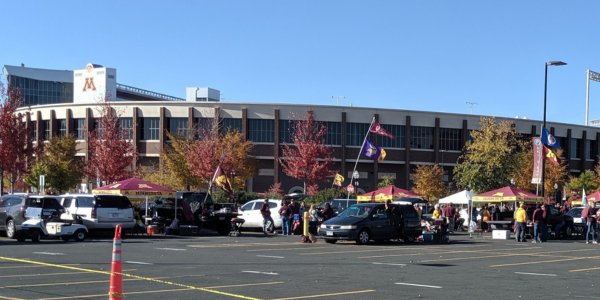
Full Parking Lot
Events IPMI Blog Parking Lots University

Low-Cost Way to Digitalize Event Management

Event management has been a struggle to keep everyone on the same page since I stepped into my role in 2024. We would receive multiple requests for event parking each day through a variety of different avenues. Phone calls and emails to different people within the department, never any consistency. Sometimes multiple phone calls AND emails for the same event! The ability to be able to charge for special event parking and offering a variety of options (hangtags, dashboard permits, do not enforce a lot) was also a hurdle I was up against. I needed a solution and fast, because I was spending an exorbitant amount of time on phone calls and emails just for events. I was ready to start exploring vendor options, but I knew I would really have to make a strong case in order to implement an event management system. That’s when I started exploring the possibility of working with our university events and conference services. They already had a system in place to receive requests and then bill. They were able to easily add parking as an option for any event request. Parking event requests went live in July 2025 through our events and conference services. I now receive all parking requests in one system where I can approve or deny the request. Revenue that was once not captured for event parking is now efficiently charged along with whatever other expenses the customer incurs for their event. Bonus, the university is capturing all events for the university calendar because of the demand for parking when previously only large events were scheduled. Meredith Garrett, CAPP, is the Assistant Director of Public Safety, Parking & Transit Services for Kent State University. Meredith can be reached at mgarre12@kent.edu.