Transit

IPMI & Member News

Ocra And TrackMyShuttle Partner
Airports Data IPMI & Member News Technology Transit Vendors/Products

Ocra and TrackMyShuttle Partner to Eliminate “Pre-Airport Transit Anxiety” for Travelers and Unlock Ancillary Revenue for Hotels

Chicago, IL & Leesburg, VA – Ocra, the first AI-powered Revenue Management System (RMS) and Global Distribution System (GDS) for hotel parking assets, and TrackMyShuttle, a leading real-time fleet visibility and operations platform for hotels, airports, and parking operators, announced a strategic partnership to transform the airport hotel parking experience. By combining Ocra’s purpose-built parking revenue management platform with TrackMyShuttle’s transparency-focused transit technology, the two companies provide a "white-glove" solution to the multi-billion dollar airport parking and ground transportation sector.

Streetline Expands AI-Powered Smart Truck Parking Availability System to I-5 Corridor in the State of Washington
Fleets IPMI & Member News Mobility Technology Transit Vendors/Products

Streetline Expands AI-Powered Smart Truck Parking Availability System to I-5 Corridor in the State of Washington

San Francisco, CA — Streetline, a leader in intelligent transportation systems, announced the deployment of its advanced Truck Parking Information Management System (TPIMS) and ParkerTruck mobile application in cooperation with the Washington State Department of Transportation along Interstate 5 in the state of Washington, one of the nation’s busiest freight arteries.

T2 Systems Logo
Curb Management IPMI & Member News Municipal/Cities Transit Vendors/Products

Two-Thirds of City Drivers Waste up to 15 Minutes Searching for Parking, T2 Systems Study Finds

Indianapolis, IN — A new study from T2 Systems finds that the time city drivers spend searching for a parking space is causing many to choose rideshare or public transit to avoid parking challenges. In some cases, frustration over limited parking availability is escalating, contributing to conflict.

Drone Point View of City Street Crossing
IPMI Blog Micro Mobility Mobility Planning Transit

Pedestrian Infrastructure Critical for all Transportation Modes

As communities across the country work to deliver improved and integrated transportation systems, pedestrian infrastructure remains a challenge to develop at a level which allows the overall transportation network to operate optimally. For public transportation, areas with higher densities and interconnected pedestrian facilities provide a network to allow people to move around more easily without relying on a vehicle. These robust pedestrian facilities not only allow promote more use of non-vehicle modes of mobility, but make the entire transportation system safer and more efficient thereby reducing conflicts between vehicles and pedestrians. For those of us who drive, walk, bicycle or use scooters, we know first-hand the different perspective you have when peering out the car windshield compared to walking or biking near and around vehicular traffic. Well-designed pedestrian facilities reinforce that walking and biking are viable options that can get you where you want to go with the hassle of dealing with driving, congestion and parking. Unfortunately, pedestrian facilities still lag behind in many communities where lack of priority and funding hampers their development. Since there can be various governmental jurisdictions involved with streets and right-of-way, it’s imperative for localities to have a structure in place to ensure pedestrian facilities can be planned and executed in a coordinated manner.  By championing best practices involving a multi-modal complete streets design approach, progress can be made to greatly enhance a community’s overall transportation system. Mark Hairr, PTMP, is an Executive Director for Wave Transit. Mark can be reached at mhairr@wavetransit.com.

City of Alexandria’s DASH -electric-buses partners with ABM PR Graphic
Electric Vehicles Fleets IPMI & Member News Municipal/Cities Transit Vendors/Products

City of Alexandria’s DASH Partners with ABM to Support EV Bus Charging Infrastructure

New York - ABM (NYSE: ABM), a leading provider of energy infrastructure and facility solutions, has been selected by the Alexandria, Virginia, Transit Company (DASH), to deliver critical EV charging infrastructure that supports the growing electrification of the city's public bus fleet. Under the agreement, ABM provided and installed an in-route pantograph charger, accompanying power cabinets, electrical infrastructure, and civil foundation work. The solution enables DASH buses to charge while in service, expanding route flexibility and supporting uninterrupted operations for Alexandria’s fast-growing electric fleet. “This project represents a forward-thinking investment in clean, reliable transit,” said Mark Hawkinson, President of Technical Solutions, ABM. “We’re proud to help DASH take this important step in expanding their electric bus capabilities and enhancing service for the Alexandria community.” A Milestone in Fleet Electrification The installation is part of the first phase of a broader electrification plan for DASH, transporting more than 15,000 riders daily and over 5.3 million riders annually. By enabling in-route charging, the project helps extend operational range, reduce downtime, and lower greenhouse gas emissions—all while supporting a better rider experience. The milestone was completed through the EV Charging Station Equipment and Services cooperative purchasing agreement under NASPO ValuePoint, a national cooperative purchasing program that allows public entities to streamline the procurement of high-quality, vetted infrastructure solutions. Rider-Centered Benefits DASH riders will directly benefit from this upgrade as it enhances operational flexibility, keeps buses on schedule, and ensures a reliable service experience. For the agency, it provides a scalable solution as electrification expands and further in-route or depot charging assets are deployed in future phases. About ABM ABM (NYSE: ABM) is one of the world’s largest providers of integrated facility, engineering, and infrastructure solutions. Every day, our over 100,000 team members deliver essential services that make spaces cleaner, safer, and more efficient—enhancing the overall occupant experience. ABM serves a wide range of market sectors including commercial real estate, aviation, education, mission critical, and manufacturing and distribution. With over $8 billion in annual revenue and a blue-chip client base, ABM delivers innovative technologies and sustainable solutions that enhance facilities and empower clients to achieve their goals. Committed to creating smarter, more connected spaces, ABM is investing in the future to meet evolving challenges and build a healthier, thriving world. ABM: Driving possibility, together. For more information, visit www.abm.com. MEDIA CONTACT: Michael Valentino media@abm.com

Metropolis Announces Partnership with Joby Aviation logos
Airports IPMI & Member News Mobility Technology Transit Vendors/Products

Joby, Metropolis Announce Partnership to Develop 25 Vertiport Sites Across the U.S.

Santa Cruz, CA & Los Angeles, CA – Joby Aviation, Inc. (NYSE:JOBY), a company developing electric air taxis for commercial passenger service, announced a partnership with Metropolis Technologies, Inc., a leader in applied AI for the real world, to develop 25 vertiports across the United States utilizing Metropolis’ extensive network of parking locations. The partnership will incorporate Metropolis’ AI-based recognition technology, as well the company’s extensive footprint across aviation and baggage services. Following its $1.5 billion acquisition of SP+, and $1.6 billion Series D financing, Metropolis is the largest parking network and operator in North America, operating more than 4,200 parking locations, as well as aviation services in over 350 locations. The planned vertiports will be strategically selected across Metropolis’ portfolio in early electric air taxi markets and use Metropolis’ computer vision technology; the companies will be evaluating both new and existing facilities for the integration of vertiports. “For air taxis to deliver on their promise of seamless urban travel, they must connect directly with the existing ground transportation ecosystem,” said JoeBen Bevirt, CEO and founder of Joby. “By leveraging existing parking infrastructure to create mobility hubs, we can deliver on our vision of seamless connectivity for our customers and also maximize the value of those sites without needing to build infrastructure from scratch.” The companies plan to leverage Metropolis’ world-class technology, including biometrics, broader computer vision and services like baggage handling, to accelerate Joby’s efforts to integrate its air taxi service directly into existing ground transportation hubs and deploy compact, high-throughput vertiport designs that satisfy safety and regulatory standards. Under its Bags Inc. subsidiary, Metropolis will initially bring its Bags VIP service to Joby’s Blade Urban Air Mobility, which provides flights between Manhattan and JFK or Newark airports in five minutes, bypassing up to two hours of traffic and eliminating common airport pain points. By providing baggage handling to Blade passengers in the New York City area, this partnership will remove friction and allow more people to take advantage of Blade’s service without needing to worry about luggage requirements. Metropolis already operates parking, advanced luggage logistics, remote check-in and in-terminal guest services that streamline the traveler experience across more than 350 airports in North America. Metropolis CEO, Alex Israel, commented on the partnership, “The real world is the next frontier for AI, and our partnership with Joby marks a critical first step in expanding the Metropolis platform into true mobility hubs to deliver remarkable value for Members and partners alike. This transformational partnership is the very definition of Applied AI in the physical world. We are taking the data and recognition capabilities we've built in our network and extending it to air travel, creating the seamless, personalized, and magical experience that is the foundation of the Recognition Economy.” About Joby Joby Aviation, Inc. (NYSE:JOBY) is a California-based transportation company developing an all-electric, vertical take-off and landing air taxi. Joby intends to both operate its fast, quiet, and convenient air taxi service in cities around the world and sell its aircraft to other operators and partners. To learn more, visit www.jobyaviation.com. About Metropolis Metropolis is an artificial intelligence company for the real world. Its Computer Vision platform eliminates friction from daily life, powers checkout-free payments and unlocks seamless, predictive and personalized experiences everywhere consumers transact. Metropolis is pioneering the Recognition Economy, transforming physical spaces into responsive environments with an Intelligence Layer that understands presence, anticipates needs and personalizes moments. Leveraging AI, Metropolis’ platform understands, adapts and responds to Members in real time. Adding more than 1 million Members each month, it is one of the fastest-growing technology companies in the United States and envisions a future where transacting in the real world is even easier than online. Following its take-private acquisition of SP+, Metropolis is now the largest parking network in the United States, with 4,200+ locations and operations in 40 countries worldwide. Its proprietary AI technology touches 50 million customers and processes over $5 billion in payments annually. To learn more, please visit www.metropolis.io. Forward-Looking Statements This release contains “forward-looking statements” within the meaning of the “safe harbor” provisions of the Private Securities Litigation Reform Act of 1995, including but not limited to, statements regarding our business plan, objectives, goals and market opportunity; plans for, and potential benefits of, our strategic partnerships, including our partnership with Metropolis, our plan to develop 25 vertiports across the US and the planned partnership between our Blade Urban Air Mobility subsidiary and Bags VIP; and our current expectations relating to our business, financial condition, results of operations, prospects, capital needs and growth of our operations. You can identify forward-looking statements by the fact that they do not relate strictly to historical or current facts. These statements may include words such as “anticipate”, “estimate”, “expect”, “project”, “plan”, “intend”, “believe”, “may”, “will”, “should”, “can have”, “likely” and other words and terms of similar meaning in connection with any discussion of the timing or nature of future operating or financial performance or other events. All forward looking statements are subject to risks and uncertainties that may cause actual results to differ materially, including: our ability to launch our air taxi service and the growth of the urban air mobility market generally; our ability to produce aircraft that meet our performance expectations in the volumes and on the timelines that we project; the competitive environment in which we operate; our future capital needs; our ability to adequately protect and enforce our intellectual property rights; our ability to effectively respond to evolving regulations and standards relating to our aircraft; our reliance on third-party suppliers and service partners; uncertainties related to our estimates of the size of the market for our service and future revenue opportunities; and other important factors discussed in the section titled “Risk Factors” in our Annual Report on Form 10-K, filed with the Securities and Exchange Commission (the “SEC”) on February 27, 2025, our Quarterly Reports on Form 10-Q filed with the SEC on May 8, 2025 and August 7, 2025, and in future filings and other reports we file with or furnish to the SEC. Any such forward-looking statements represent management’s estimates and beliefs as of the date of this release. While we may elect to update such forward-looking statements at some point in the future, we disclaim any obligation to do so, even if subsequent events cause our views to change. Contacts: Metropolis Media Contact Lizzy Levitan Metropolis@hunt-gather.com Joby Media Contact Charles Stewart press@jobyaviation.com Joby Investor Contact investors@jobyaviation.com

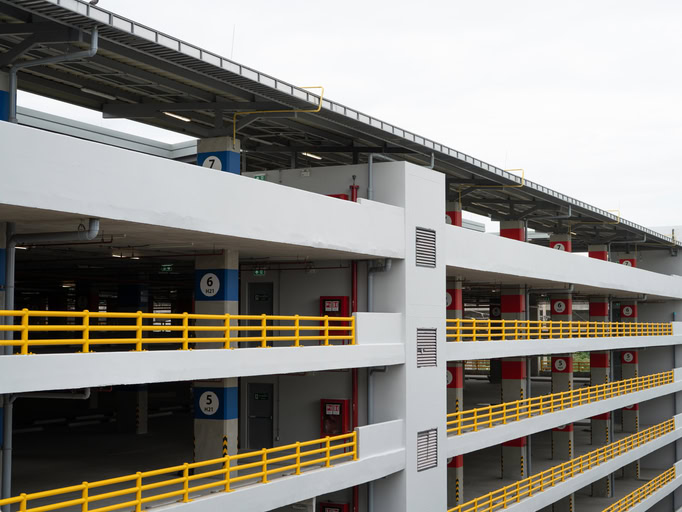
Multi-level parking garage. Indoor car park building. Urban parking structure. Multistory car park. Concrete parking garage. Vehicle parking facility. Building construction. Modern architecture.
Finance IPMI Blog Parking Facilities Transit University

To Build or Not to Build a Parking Deck

To build or not to build a parking deck? Or is the real question, do perspectives need to shift? It’s easy to say, “Build a deck! This will solve all of our parking problems!” and many times, this is the solution that frustrated students give. The question of building a parking deck has come up at our university many times over the years. I have a stack of plans that never came to fruition that I inherited. The last attempt to build a deck was in the spring of 2020. We were in the process of awarding the bid when campus closed due to COVID-19. Financial concerns and enrollment uncertainty scraped those plans, but the question of whether we will build a parking deck continues to come up. We recently received this question from our student senate in a transportation advisory committee meeting. Our university is a suburban campus with a robust public transportation option as well as ample parking on the perimeter of campus and in remote lots. We have plenty of parking spaces for everyone; we just don’t have everyone’s ideal parking area. Parking in these areas requires people to take another method of transportation, whether it’s biking, walking or taking public transportation to reach their destination. This requires a shift in perspective for many people that are not familiar with public transportation or are used to parking close to where they need to be. We explained to the student senate the costs associated with parking decks and how that would directly impact permit prices. We also explained that there is ample parking, so justifying the cost of building a deck and in turn raising permit prices is counterproductive and not fiscally responsible.

Bendheim logo
IPMI & Member News Mobility Parking Facilities Technology Transit Vendors/Products

Bendheim Launches Groundbreaking GripGlaze™ Exterior Glass System

New York, NY  — Bendheim, a global leader in specialty and sustainable architectural glass solutions, announced the introduction of  GripGlaze™, a groundbreaking low-profile glass compression clip system that expedites and simplifies the canopy installation process. Specifically engineered to elevate aesthetics and simplify canopy installations, the innovative new clip system requires no special tools to lock in large, expansive glass panels. Without any need for notches or holes, Bendheim’s no-drill canopy glass system is non-penetrating, with clips mounting directly to the steel structure. “This technology is perfect for parking facilities and other mobility infrastructure,” said Said Elieh, Bendheim’s Vice President of Innovation. “Canopies are important design features for parking structures, ride share waiting areas, and pick-up and drop-off areas at airports, transit, and other transportation hubs where users often need protection from the elements. This groundbreaking technology dramatically lowers the cost of building protective canopies, while also reducing the amount of time required to build them.” A breakthrough in design and performance, GripGlaze™ is precise, secure, and fully tested — and installs in a fraction of the time and at a fraction of the cost compared to traditional glazing methods. Up until now, when working on canopy projects, glaziers often have to operate with incomplete or missing specifications. In order to fulfill the job, they have to develop their own approaches, which leads to confusion and inconsistency, and affects a project’s aesthetics and pricing. Drastically reducing installation efforts and expenses, GripGlaze™  is set to replace traditional canopy installation methods, such as spider fittings, glass stand-offs, and point-supported systems. For more information about GripGlaze™, please visit https://bendheim.com/system_product/gripglaze-canopy-system/ About Bendheim Bendheim is one of the world’s foremost resources for specialty architectural glass. Founded in New York City in 1927, the family-owned company offers a virtually unlimited range of customizable glass solutions for interior and exterior building applications. Through its commitment to Building a Clear Future, Bendheim is actively engaged in promoting sustainable practices in architecture and design. Bendheim develops, fabricates, and distributes its products worldwide. The company maintains production facilities in New Jersey and a design lab in New York City. For additional information, please visit Bendheim.com. PRESS CONTACT: Bill Smith Smith Phillips Strategic Communications (603) 491-4280 bsmith@smith-phillips.com

LPR, Park Loyalty Press Release
Enforcement IPMI & Member News Technology Transit Vendors/Products

Park Loyalty Expands Transit Portfolio with Long Island Rail Road Deployment

Park Loyalty has expanded its footprint in the transit sector with the launch of Enforce Pro and Process Pro at seven Long Island Rail Road (LIRR) commuter parking locations. The LIRR is the busiest commuter railroad in North America, transporting nearly 250,000 passengers every weekday. For many riders, the journey begins and ends in a commuter lot, placing great importance on efficient and connected parking management in creating a convenient travel experience. Smart Enforcement Designed for Transit Agencies This deployment reflects Park Loyalty’s continued ability to deliver omnichannel enforcement solutions that adapt to any type of parking agency, from municipalities to universities, operators, and major transit authorities. It also builds on Park Loyalty’s work with another leading transit authority, SEPTA (Southeastern Pennsylvania Transportation Authority), where our enforcement system has already helped streamline their parking operation. [SEPTA case study] As part of the LIRR rollout, Park Loyalty introduced an additional way to validate vehicles: in addition to license plate recognition, Enforce Pro can now scan the New York State registration stickers that are displayed on every windshield. This feature provides multiple options for compliance validation, while also auto-populating detailed vehicle information such as make, model, color, and VIN, adding speed and accuracy to the enforcement process. The deployment also integrates with T2 Systems meters and Parking Base for permits and scan-to-pay, providing a connected ecosystem that simplifies operations for the LIRR and improves the parking experience for commuters. Park Loyalty thanks the Long Island Rail Road and our integration partners for their collaboration on this successful launch, which underscores our role as a trusted partner in delivering smart enforcement and processing solutions across the parking industry.

Beautiful large gothic mansion on a hill in winter
Magazine Planning Transit University

Lehigh’s Auxiliary Experience Program

“Secret Shopping”: The Transit & Parking Experience

Compliance Related Words Written on Wood Blocks Sitting on Wood Surface
IPMI Blog Municipal/Cities Policy TDM Technology Transit

Policy Corner

How does parking policy align with the goals of a growing, multimodal city? And how can cities densify without overwhelming their parking systems? These questions have been central in Columbus, Ohio—the Midwest’s fastest-growing city. 2024 was pivotal. In November, Central Ohio voters approved a new transit sales tax to fund a Bus Rapid Transit system. Months earlier, Columbus City Council adopted Phase 1 of “Zone In,” a zoning overhaul creating new districts to spur housing and walkable, transit-oriented development. A major feature: eliminating minimum parking requirements in these new districts. In recent years, cities like Minneapolis, Austin, and Denver have repealed parking minimums to support affordability and transit-oriented growth. Yet, as any parking professional knows, residents are often vocal about street parking access. Columbus was no exception. In response, the City established a new Parking Impact Study process, giving the Division of Mobility and Parking Services authority to evaluate potential spillover from new developments. Studies document on-street occupancies, estimate demand, and determine whether mitigation is needed. If impacts are modest, projects commit to Transportation Demand Management (TDM) measures—such as subsidized transit passes, carshare, rideshare, or bike/scooter share—that reduce driving needs. Larger impacts trigger layered mitigations plus a parking management fee, designed to fund new permit zones or other operational tools to protect neighborhood parking access. One year in, only a handful of projects have required studies, and none have yet triggered fees. Still, the policy is already considered a win. Columbus successfully removed parking barriers to new housing—an urgent priority for city leadership—while establishing safeguards to protect residents and manage curb demand. The Columbus model may not fit every city, but its lesson is broader: parking concerns need not block goals around housing affordability or transit-oriented development. With creativity and community dialogue, parking can shift from being a barrier to becoming part of the solution. Justin Goodwin, AICP, PTMP, is the Mobility and Parking Services Administrator for the City of Columbus. Justin can be reached at jmgoodwin@columbus.gov.

Shot of car park from above
Airports IPMI Blog Parking Lots Transit

Trunk to Terminal:  How MKE Reimagined Its Economy Parking

Before the pandemic, Economy parking at MKE worked just as travelers expected: guests would pull into the large surface lot, park wherever they liked, and walk to the nearest bus shelter. The complimentary shuttle service, helpful drivers, and quick five-minute ride to the terminal were all appreciated. It was a familiar, efficient system — and as the saying goes, “if it’s not broken, don’t fix it.” The Pandemic Shift Then the pandemic hit, and demand for parking virtually disappeared. The once-busy lots became eerily empty. With so few travelers, guests had plenty of space to park and spread out. Yet shuttles still made their full rounds through the 1,700-space lots, stopping at every shelter — often for just a handful of passengers per hour. It was inefficient and unsustainable. With parking revenue diminishing and increasing competition from off-site providers, the MKE parking team recognized the need to reinvent the guest experience. That’s when MKE’s first “Trunk-to-Terminal Service” was introduced. Launching Trunk-to-Terminal Service To provide a more personalized, high-touch experience, an ambassador was stationed at the lot entrance to greet each arriving guest and offer a warm welcome. The ambassador directed guests to an available parking stall and communicated their location to the shuttle driver in real time. The shuttle then pulled up directly behind the parked vehicle, where the driver assisted with luggage and loaded it onto the shuttle. Guests received a wallet-sized card noting their parking lot and stall number — a thoughtful touch to help locate their car upon return. This service eliminated the need for guests to walk to a shelter and added a layer of convenience and hospitality — all while maintaining shuttle headways and enhancing safety by eliminating slip-and-fall risks during inclement weather A Lasting Success The service was a hit. Guests appreciated the elevated level of customer service and the ease of the experience. Four years later, MKE continues to receive glowing reviews from Economy Lot guests who use the complimentary Trunk-to-Terminal Service and value the friendly, personal interactions with both ambassadors and shuttle drivers Why it Works? Convenience Meets Care What makes Trunk-to-Terminal stand out is its simplicity and attention to detail, achieved with minimal investment. With added signage and locator cards, the experience is especially seamless for families, travelers with mobility challenges, or anyone juggling luggage and kids. There’s no guesswork, no waiting at remote shelters, and no long walks in unpredictable weather. Simply park, hop on, and go. It’s airport parking reimagined—affordable, effortless, and customer-focused. Even Economy parking feels like a first-class experience, transforming the traveler journey from beginning to end. Vincent Campagna, PTMP, is a Manager, Parking & Ground Transportation for Milwaukee Mitchell International Airport. Vincent can be reached at vcampagna@mitchellairport.com.