Transit

IPMI & Member News

An aerial view of Benjamin Franklin Bridge and Philadelphia skyline on colorful sunset sky background
Enforcement IPMI & Member News Technology Transit Vendors/Products

Case Study: Southeastern Pennsylvania Transportation Authority (SEPTA)

The Southeastern Pennsylvania Transportation Authority (SEPTA) is one of the largest transit systems in the U.S., serving nearly four million people across five counties in the Philadelphia region, with connections to Delaware and New Jersey. SEPTA operates an extensive network of regional rail, subway, trolley, and bus services, making it a critical mobility provider. For many commuters, their journey begins and ends at a SEPTA parking lot or garage, making it a crucial touchpoint in their daily routine. A smooth parking experience can be the difference between a stress-free commute and a missed train. As part of its mission to deliver safe, accessible, and dependable transportation, SEPTA manages parking at 138 facilities, including three garages and, with recent additions, 99 paid surface lots. Prior to 2024, SEPTA faced longstanding challenges in its commuter parking operations. Aging infrastructure, cash-only payments, and manual enforcement using slot boxes created long lines, limited compliance, and ultimately, revenue loss. While these issues predated the COVID-19 pandemic, they were further entrenched by a four-year moratorium on parking fees, which suspended revenue collection and delayed the necessary upgrades. As a result, a significant financial gap emerged. Today, revenue from paid parking and enforcement citations is helping to close that gap by supporting SEPTA’s core transit services, contributing to the upkeep of parking facilities, and reinforcing the agency’s broader goal of delivering reliable regional mobility. A 4-Year Moratorium, Manual Processes, and No Technology Prior to its upgrade initiative, SEPTA’s parking program lacked modern payment kiosks, mobile payment, enforcement technology, and real-time, integrated data: components that define today’s most efficient parking ecosystems. Without them, operations were slow, disconnected, and frustrating for both commuters and staff, resulting in missed revenue and a poor parking experience. The system relied on cash-only slot boxes at 84 lots, charging $1 per day. Enforcement officers issued citations manually and lacked the real-time evidence that technology provides to help determine when issuing a violation was appropriate. Meanwhile, administrative staff had no visibility into compliance levels, officer activity, or lot-by-lot performance, limiting their ability to monitor, support, or improve the program. Ken Kalczewski, SEPTA’s Director of Project Integration, helped lead the transition away from this outdated system. “From no enforcement technology, slot boxes, and no metrics to a high-tech enforcement system with Park Loyalty, it’s been a dramatic shift for us,” he said. Enforcement Modernization with Park Loyalty In 2024, SEPTA launched a comprehensive parking modernization initiative beginning with a competitive RFP process. The awarded vendor, Flowbird (now Arrive), was tasked with delivering a complete parking management ecosystem. As part of the integrated solution, Park Loyalty partnered with Flowbird and SEPTA to provide enforcement and citation processing technology through its Enforce Pro® and Process Pro® platforms. This combination equipped SEPTA’s team with the tools needed to issue citations efficiently in the field, supported by a back-office system for citation processing, compliance tracking, appeals, and payment resolution. The entire system was rolled out under the SEPTA Park brand, with phased deployment beginning in Fall 2024 and full enforcement operational by November. Officers were equipped with mobile handheld devices running the Enforce Pro application with integrated license plate recognition (LPR) technology to verify plate status in real time. Officers gained access to tools for digital chalking, image capture, GPS tagging, and on-the-spot validation of payment data. These features allowed officers to issue tickets with greater confidence and consistency, while also capturing the supporting evidence required for compliance and appeals. “The system is extremely user-friendly, and our officers were able to pick it up and master the application quickly. The efficiency gains have far exceeded expectations. Officers are writing tickets in around 27 seconds!”— Ken Kalczewski, Director of Project Integration, SEPTA On the back end, Process Pro manages citation data flow from the field through to resolution. This included automated notice generation, online adjudication, and payment portals. Together, the systems replaced SEPTA’s previously manual, fragmented approach with an integrated enforcement lifecycle. Park Loyalty’s team supported the rollout with on-site training, documentation, and timely responses throughout implementation. Their responsiveness, even to questions beyond the original scope, helped build trust and keep the project moving. “Marc and Kristen were fantastic,” says Ken. “Very professional and always responsive. When a problem arises, they’re on it immediately.” Challenge 4-year moratorium halted enforcement revenue collection Manual citation process and paper-only appeals No real-time data for enforcement or operations Little to no evidence to support citations or resolve disputes Manual reconciliation and slow, paper-based workflows Limited staffing and risk of slow system adoption Solution Enforce Pro and Process Pro implemented Mobile handhelds, printers, and online motorist portal Cloud-based back office with dashboards and reporting Photos, LPR matching, GPS tagging and timestamps Automated notices and online adjudication Phased rollout, on-site training and responsive support Impact Over $4M in parking and citation revenue collected in 7 months Tickets issued in ~27 seconds; most tickets resolved online Real-time insight into officer activity, lot performance Evidence capture improves accuracy and appeal outcomes Faster turnaround with fewer delays and simpler workflows Officers mastered tools quickly, full rollout in

July 2025 Cover of Parking & Mobility Magazine by the International Parking & Mobility Industry
Electric Vehicles Leadership Magazine Mobility Sustainability Technology Training/Education Transit

July 2025 | Evolution of the Parking Professional

How are the built environment experts shaping the future of parking and mobility?

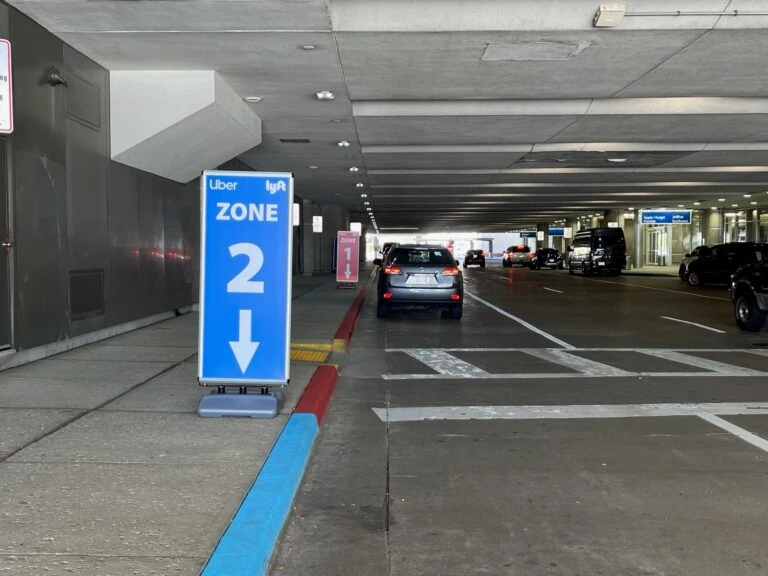
Pickup Zone 2
Airports Curb Management IPMI Blog Transit

Inside MKE Airport’s Rideshare Overhaul for the RNC: How Smart Planning Cut Wait Times and Reduced Congestion

At airports across the country, rideshare operations are essential – but increasingly difficult to manage. Limited curb space and high passenger volumes—especially during peak travel times—often lead to severe congestion, roadway backups, and long wait times for travelers. Without proper planning and infrastructure, rideshare pickups can quickly turn into a logistical headache for both airports and guests.

ABM logo - Getting What You Want from Your Parking RFP: SmartParking Presented by ABM
Airports Data IPMI & Member News Transit Vendors/Products

ABM Selected to Provide Parking and Shuttle Transportation at Orlando International Airport

Orlando, FL - ABM (NYSE: ABM), a leading provider of facility, engineering, and infrastructure solutions, has been awarded a new contract by the Greater Orlando Aviation Authority (GOAA) to provide parking and employee shuttle services at Orlando International Airport (MCO). With this 10-year agreement valued at approximately $300 million, ABM is now the trusted partner delivering both parking and shuttle transportation services at MCO, one of the busiest and fastest-growing airports in the United States. The MCO shuttle program will be enabled with ABM Vantage™, ABM’s advanced mobility intelligence platform which will deliver real-time data and analytics to improve fleet visibility, operational efficiency, and rider experience. “This partnership reinforces ABM’s leadership in managing large-scale transportation programs at major U.S. airports,” said Sean Bromfield, President of Aviation at ABM. “By pairing our proven transportation expertise with our industry-leading tech and data capabilities, we’re delivering smarter, safer, and more efficient shuttle experiences for millions of travelers and airport employees. We’re proud to support GOAA’s innovation-forward vision at MCO.” As part of the partnership, ABM will oversee the procurement, maintenance, and operation of a new fleet of 61 modern transit buses, bringing next-generation capability and rider comfort to both parking and employee shuttle operations. For the first time in MCO’s history, the responsibility for capital investment and fleet maintenance will be fully managed by the contractor—reflecting GOAA’s confidence in ABM’s operational strength and financial stability. For more information on ABM’s parking and transportation services, visit www.abm.com/solutions/service-family/parking-transportation. About ABM ABM (NYSE: ABM) is one of the world’s largest providers of integrated facility, engineering, and infrastructure solutions. Every day, over 100,000 ABM team members deliver essential services that make spaces cleaner, safer, more efficient, and more comfortable. ABM serves a wide range of industries including aviation, commercial real estate, education, manufacturing, and transportation infrastructure. With more than $8 billion in annual revenue, ABM partners with clients to optimize operations and enable long-term success. ABM: Driving possibility, together. For more information, visit www.abm.com. MEDIA CONTACT: Michael Valentino ABM media@abm.com

June 2025 Parking & Mobility Cover banner for International Parking & Mobility Institute
Electric Vehicles Magazine Mobility Smart Cities Sustainability Technology Transit

June 2025 | Real Estate, Planning, Design, & Construction

How are the built environment experts shaping the future of parking and mobility?

Online education e-learning internet lessons Seminar via online website Studying abroad, distance conferencing, online education technology, teaching videos and internet lessons.
Data Digital Parking Tech Events IPMI Blog Parking Facilities Parking Lots Transit University

Webinar Key Takeaways: Parking Mitigation Strategies

How did Princeton evolve to meet the new demand for parking? With a multi-pronged approach, they integrated cutting-edge technology, incentivized alternative commutes, and rolled out transit programs, all while maintaining operations on a 275+ year-old campus amidst major construction. Join the Princeton University team as they showcase how data can drive smarter decisions, ease parking stress, reduce congestion, and ultimately improve the campus experience. 

Parking & Mobility Future Trends & Technology Banner, May 2025
Electric Vehicles Magazine Mobility Smart Cities Sustainability Technology Transit

May 2025 | Future Trends & Technology

What does the future hold for parking, transportation, and mobility?

City of Sacramento Logo
Enforcement IPMI & Member News Municipal/Cities Technology Transit Vendors/Products

Sacramento Leads the Nation with First-Ever Bus-Mounted Technology for Automated Bike Lane Enforcement

Sacramento, CA – The City of Sacramento and Sacramento Regional Transit (SacRT) are partnering to launch automated bike lane enforcement, making Sacramento the first city in California – and in the United States – to enforce bike lanes using technology installed on transit buses. This initiative expands upon SacRT’s automated bus stop enforcement program, which currently equips 100 SacRT buses with camera systems to identify and report vehicles illegally parked along bus stops. Now, that same technology will also target illegal parking in bike lanes — a move by the City of Sacramento to protect vulnerable road users and improve roadway safety citywide. Why this program is essential When vehicles park illegally in bike lanes, cyclists are forced into traffic, putting them at greater risk of serious injury or worse. By keeping bike lanes clear, this program enhances safety and predictability for everyone on the road — whether they are walking, biking, driving, or riding transit. How this program works One hundred SacRT buses are equipped with front-facing cameras powered by machine learning and artificial intelligence (AI) from Hayden AI. These cameras detect and record instances of illegal parking in Sacramento bus stops and bike lanes. When a violation occurs, the system captures a short video and a photo of the vehicle’s license plate, and the exact time and location of the incident. This information is then sent to the City of Sacramento for review and violation processing. As of Monday, April 14, 2025, drivers illegally parked in Sacramento bike lanes will receive warning notices in the mail. Violations with an accompanying fine will be issued starting Friday, June 13, 2025. This program is made possible by Assembly Bill 361 (AB 361), which authorizes California cities to use forward-facing cameras for enforcing parking violations in bike lanes and transit zones — a vital legislative step toward making streets safer for everyone. Key details for drivers: Notification start date: Monday, April 14, 2025, began a 60-day grace warning period. Violation start date: Violations with fines will be issued starting Friday, June 13, 2025. Violation process: If a vehicle is detected obstructing a bike lane, a parking violation will be mailed to the registered owner. “We’re proud to be the first city in the country to use this technology to help keep our bike lanes clear,” said Staci Hovermale, Parking Services Manager for the City of Sacramento. “This tool helps us enforce existing parking rules more effectively, improving safety for cyclists and ensuring everyone shares the road responsibly.” “Keeping bike lanes clear is an important part of making Sacramento a place where everyone can thrive,” said SacRT General Manager/CEO Henry Li. “This program will help improve safety and travel times for everyone on Sacramento roads, no matter how you travel around.” California-based Hayden AI is providing the automated bus stop and bike lane enforcement camera systems for SacRT buses, and Duncan Solutions is providing the violation processing software. All evidence packages of parking violations detected by the camera systems are reviewed and ultimately approved or rejected by parking enforcement officers with the City of Sacramento. “We’re honored to support Sacramento in leading the way for bike lane safety,” said Lisa Schule, Executive Chairwoman of Hayden AI. “Using AI technology to protect bike lanes is a transformative shift for urban mobility and safety.”

Parking & Mobility Sustainable Parking, Transportation & Mobility Banner, April 2025
Electric Vehicles Magazine Mobility Smart Cities Sustainability Technology Transit

April 2025 | Sustainable Parking, Transportation, & Mobility

Rethinking Urban Mobility

Two men riding bicycles on a sidewalk near a bus in the street
Enforcement Magazine Transit Transportation Equity

Reclaiming Bus and Bike Lanes

Using Automated Parking Enforcement to Boost Urban Mobility

Parking & Mobility Smart Cities, Rethinking Urban Mobility Banner, March 2025
Electric Vehicles Magazine Mobility Smart Cities Technology Transit

March 2025 | Smart Cities

Rethinking Urban Mobility

Bike lane for only Bikers to ride in Berlin, Germany
IPMI Blog Municipal/Cities Parking Lots Transit

Inter-City Transportation, Is It Your Cup Of Tea?

If you are reading this, chances are, you are involved in the parking or transportation industry. What do you think about inter-city transportation in your city? Is it useful or unusable? What are some of the hardships of public transportation? In our city we have a wide and well-funded public transportation system, yet somehow, it is often late and unused. We are a beachside tourist destination and find that rental cars and beach cruisers often trump the amount of public transportation used. This is great for our local parking resources but at what cost? Why have such a well funded transportation system when beach cruisers and pedestrians are running rampant across the city during our peak season? We have found in our city specifically that people are choosing to stay away from public transportation due to the stories they have heard regardless of the amount of marketing our public transportation system is putting out. With the amount of marketing and advertising the city is using to push the public transportation system, why are we not moving that funding into bettering our sidewalks and bicycle lanes? The people have spoken, and we would like to focus on a more eco friendly focus on inter city transportation! Tate Misiaszek, CAPP is a Project Manager for LAZ Parking. You can reach Tate at TMisiaszek@lazparking.com.