Parking Facilities

IPMI & Member News

Entrance to an indoor parking garage
Health Care Magazine Parking Facilities Parking Lots Planning

Catalyzing the Transformation of Parking Operations

Miami’s Public Hospital Uplifts Patients and the Community

gtechna logo - Insights on how Galveston Established a Precedent in Texas State Laws Presented by gtechna
Enforcement Municipal/Cities Parking Facilities Technology

Curb the Chaos: LPR and Ticket-by-Mail Innovations in Hallandale Beach Presented by gtechna

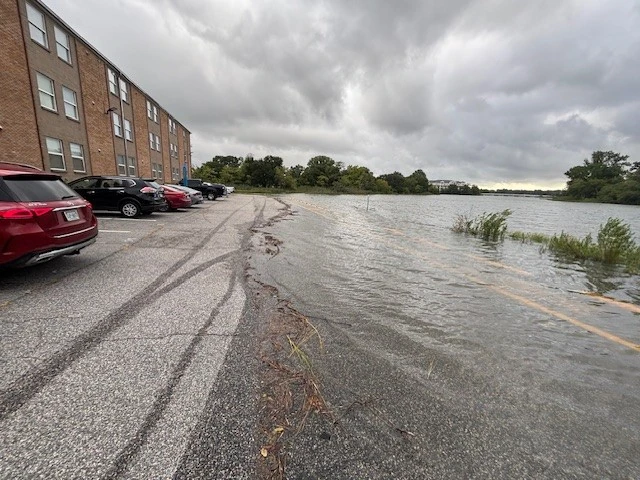
Parking lot flood
IPMI Blog Parking Facilities Parking Lots University

Public Safety at the Forefront of Robust Parking Operations

Attractive and attentive parking and transportation management techniques will display public safety initiatives best servicing our communities by providing dependable access in well maintained facilities. Safe parking destinations demonstrate consistent cleaning and equipment upkeep, lighting functionality, clear wayfinding signage and pedestrian paths, and surveillance. As it relates to transportation, safe bus stops are defined by strong visibility, clear sidewalks, positioning out of direct vehicular traffic, and signage providing the user real time tracking. Depending on location, many of us in the industry experience periodic or routine disruptive weather events, and lack of preparation can cause for costly and potential disastrous situations. We find ourselves frequently adjusting lot restrictions and transportation programming at Old Dominion University, a University in the coastal city of Norfolk, Virginia, facing severe sea level rise and constant tidal flooding.  This past August with the effects of Hurricane Erin and flooding, the department closed a popular residential lot and large portions of a prime commuter lot and dedicated specific garages on campus for University community use during the impact. Communication through social media in tandem with departmental updates assisted with providing this information in a relatively short time frame, as well as any updates to transit routes and timing. I’ve found since last Spring through involvement with the neighborhood civic league within a portion of our University blueprint increases relations with the surrounding business and residential community. Highland Park is a diverse neighborhood described as residential, commercial, industrial, and educational, with the part of campus containing our Arts District, a 9,500 multipurpose event venue, and active restaurants. In these meetings with collaboration from Old Dominion University Police, I’ve been able to share updates around University facilities, upcoming events with increased traffic through the neighborhood, changes to programming with permitting and enforcement, field questions, and work towards solutions. This is an invaluable experience aimed to better our community and provide transparency between the University and neighborhood. Zach Pearce, PTMP, is an Associate Director of Operations for Old Dominion University. Zach can be reached at zpearce@odu.edu.

Portier VISION Parking Guidance System
Data IPMI & Member News Municipal/Cities Parking Facilities Technology Vendors/Products

City of Passaic Installs Portier VISION Parking Guidance System in New Municipal Garage

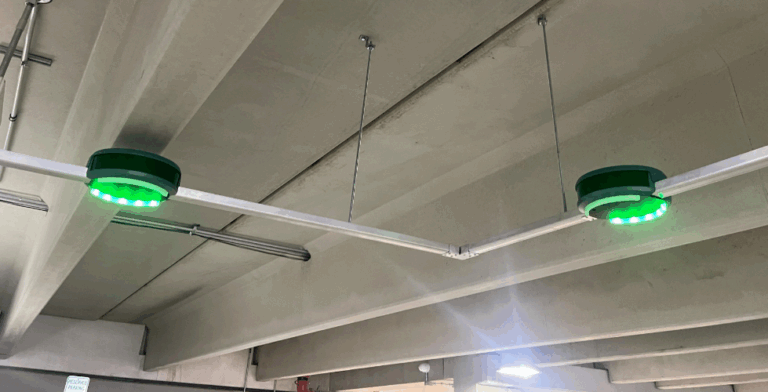
Portier, a global leader in intelligent parking guidance and smart mobility solutions, is pleased to announce the successful installation of its Portier VISION camera-based parking guidance system at the newly opened Passaic Municipal Garage, a major infrastructure investment by the City of Passaic, New Jersey to ease parking congestion and support downtown growth. The system was delivered and installed by Portier’s U.S. integration partner, Precision Technology Solutions (PTS), known for deploying scalable, high-performance parking technologies nationwide. Located at Passaic and State Streets in the heart of downtown, the 300-space parking facility was designed to serve city government staff, commuters, and visitors to nearby shops, restaurants, and the soon-to-be-built bus depot. The garage features EV charging stations, designated short- and long-term parking areas, and enhanced security features. A key innovation is the implementation of real-time parking guidance powered by Portier VISION. The Portier VISION system uses advanced camera-based sensors to detect occupancy and guide drivers to open spaces using overhead LED indicators and dynamic digital signage. This technology significantly reduces the time drivers spend circulating in search of parking, easing traffic flow in and around the garage and enhancing the overall visitor experience. For this project, the installation includes both indoor and outdoor camera units – all integrated into a single, seamless user experience. At the core of the solution is Portier HOST, Portier’s powerful cloud-based management and analytics platform. Portier HOST gives the City of Passaic full visibility into garage activity, including space utilization, dwell time, and turnover, empowering city officials to make informed decisions and optimize parking operations over time. The platform is accessible from any device and allows for remote system management, automated reporting, and integration with third-party systems such as mobile apps or payment platforms. "By combining Portier VISION with the HOST platform, the City of Passaic gains a modern, data-driven approach to managing parking in a high-demand area," said Steve Gorski, Vice President of Portier USA. "It’s a great example of how smart parking infrastructure can contribute to smoother mobility and better urban experiences." Passaic mayor Hector C. Lora stated, “I’m excited about the introduction of this new technology in this state-of-the-art parking facility that will bring great benefits for those who work and visit the city. We deeply appreciate Portier VISION for collaborating with the City of Passaic to address parking concerns in an innovative and practical way. We look forward to incorporating this technology in future projects to come.” This installation is part of a broader effort by city officials to enhance downtown accessibility and support economic development, made possible through a mix of state funding, municipal bonds, and innovative parking policies. The garage also includes future-ready design features, such as prefabricated components and mixed-use retail space on the ground level. To learn more about Portier’s parking guidance solutions and the Portier HOST platform, visit www.portier.host. For more information on Precision Technology Solutions, visit https://www.precisiontimesystems.com/.

Traffic cone /pylon on a brand-new parking place.
Finance IPMI Blog Parking Facilities Parking Lots

Low-Cost and No-Cost Ways to Improve Parking Lot Safety

Parking lot safety is at the top of many parking professional’s priority list—and for good reason. However, addressing safety concerns can often be challenging, time-consuming, and expensive. As parking professionals, we're expected to find smart, effective solutions that improve safety, enhance customer satisfaction, and—ideally—increase revenue. And if we’re being honest, we’re often asked to do it on a tight budget... and with a deadline of “tomorrow.” With that reality in mind, here are some low-cost or no-cost ideas to help you improve the safety of your parking facility—without breaking the bank. No-Cost Conduct a Safety Walkthrough Schedule monthly or quarterly walkthroughs of the parking facility. Bring colleagues—more eyes mean more issues caught. Use a simple checklist to document issues such as: Burnt-out or misaligned lights Potholes or cracked pavement Leaking pipes, spalling concrete, or drainage problems Faded line striping or signage Obstructions or tripping hazards Take photos and record observations, then present findings—along with recommendations and estimated costs—to building ownership as a value-added service. Maximize Existing Conditions Conduct a nighttime lighting review to check for dark spots; re-aim fixtures if needed. Clean light fixture lenses to improve brightness—dust, cobwebs, and grime reduce output. Remove and put away any cones, barricades, or objects that may cause tripping or confusion. If entrance mats or carpet runners are used, ensure your team regularly checks for bunching or curling, which can be hazardous. Trim overgrown bushes or landscaping that obstruct visibility or create blind spots. Implement Staff Training Develop and maintain site and job-specific safety training for all staff. Train team members to: Identify and report potential hazards immediately Monitor for loitering and suspicious activity Understand site-specific emergency protocols Reinforce safety as part of daily operations—not just during incidents. Strengthen Communication with Building Security & Ownership Establish clear protocols with building security or management for incident reporting and hazard response. Coordinate with tenants to share seasonal or situational “Safety Tips” (e.g., winter driving, walking safely at night). Keep tenants and staff informed about any changes in traffic flow or parking closures to avoid confusion and reduce risk. Low-Cost Re-stripe and Re-mark the Facility Refreshing pavement markings is one of the most effective and affordable ways to improve safety, traffic flow and parking compliance. Offer or recommend low-cost restriping services for: Parking stalls Pedestrian crosswalks Stop bars and directional arrows Use high-visibility paint along pedestrian walkways, curbs, and any area where there’s a change in elevation to help reduce trip-and-fall incidents—especially in dimly lit or high-traffic zones. Update or Replace Signage Well-maintained signage is essential for safety and customer guidance: Audit all signage on-site and replace any faded, outdated, or damaged signs. Ensure signs reflect current information, such as: Contact numbers Hours of operation Instructions for getting assistance Add temporary “Caution: Slippery Surface” signs at entrances or near stairwells during rain, snow, or cleaning events. Post “This Area Is Under Surveillance” signs at key entry and exit points—even if cameras aren’t installed—as a visual deterrent to crime or misconduct. Improving safety in a parking facility doesn’t always require a large budget—just a proactive approach, attention to detail, and a commitment to continuous improvement. By implementing these low-cost and no-cost strategies, we can significantly enhance the safety, usability, and overall experience for every customer who uses the facility. As a parking professional, we’re not only tasked with managing day-to-day operations, but also to add value through smart, cost-effective solutions that prioritize both safety and service. Vincent Campagna, PTMP, is a Manager, Parking & Ground Transportation for Milwaukee Mitchell International Airport. Vincent can be reached at vcampagna@mitchellairport.com.

Blog Photo, QR Code for Paid Parking
Digital Parking Tech IPMI Blog Parking Facilities Parking Lots Policy

Ungated Environments: Best Practices for Parking Payment Providers

Accepting payments, both digital and traditional, in ungated parking environments is commonplace in all parking markets. Traditional notions of payment acceptance become more complicated in new, ungated environments due to the still-evolving regulatory and legal environments. Most reputable ungated service firms will indeed indemnify and protect their operators and landlords from many (not all) of these challenges, but that doesn’t mean the landlord doesn’t have affirmative duties in the ecosystem to uphold. The webinar, article, and white paper, “Ungated Environments: Best Practices for Parking Payment Providers,” aim to unpack the still-developing, complex, and detailed expectations that form the foundation of the modern parking environment. Improper signage (content and style), misalignment between digital and traditional payment methods, lack of consistent policies and processes, misleading consumer journeys, and more are just some of the concerns that this webinar/article/whitepaper seeks to educate on. As authors, we are pleased to share our knowledge and experience with the parking, transportation, and mobility community, much of which was gained through extensive observation of trial and error while operating downstream of all parking operators, landlords, payment providers, and other relevant stakeholders conducting business in a parking facility. Click here to read the Parking & Mobility magazine article. Click here to read the white paper. Click here to purchase and watch the webinar. Michael J. Drow, PTMP, is the CEO of PRRS, Inc. He can be reached at mdrow@prrsparking.com. Todd Tucker, PTMP, is the COO for PRRS, Inc. He can be reached at ttucker@prrsparking.com.

PRRS Launches Autostart
Data Digital Parking Tech IPMI & Member News Parking Facilities Technology Vendors/Products

PRRS Launches Autostart, a Revolutionary AI-Powered Parking Technology That Delivers Precise Payment Management for Gateless Free-Flow Parking on an Open Payment Network

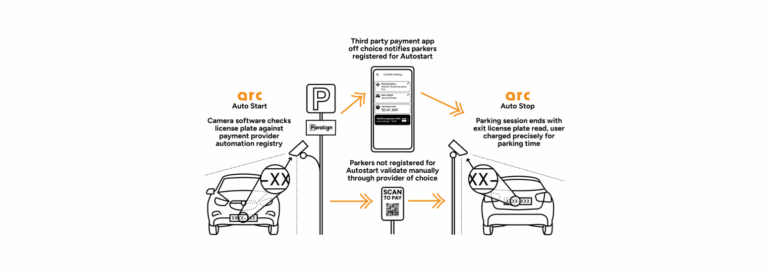
Denver, CO – PRRS, the leading provider of parking compliance solutions, announced the introduction of Autostart, a groundbreaking AI-powered parking management technology designed to transform the way drivers access and pay for parking. Powered by Paralign’s ARCFlex software and leveraging advanced AI vision, Autostart offers an open network, precise payment activation for gateless, free-flow parking facilities, capturing and verifying license plate data the instant a vehicle enters and exits a facility and automatically charging drivers for the exact amount of time that the parking session lasted via your preferred payment platform. Unlike other payment networks serving the parking industry, this is an open network, which allows parking owners and operators to choose their preferred payment provider for collecting parking fees. “Autostart is a game changer when it comes to parking,” said John Conway, Co-Founder and Chief Business Development Officer for PRRS. “Ticketless parking enables a more efficient, cost-effective, and driver-friendly experience, but it has always been challenging to manage payments fairly and accurately. Autostart solves that problem and makes free-flow parking work for any parking facility.” Autostart provides unmatched convenience and accuracy, including: Instant Vehicle Recognition: The system’s AI vision technology automatically detects and verifies license             plate data upon entry and egress with 99.88% accuracy. Effortless Payment: If the driver is pre-registered with the facility’s preferred payment provider, the system  automatically processes the payment—eliminating the need for tickets, cash, or manual check-ins. Flexible Options for All Parkers: Drivers who aren’t registered with the facility’s preferred payment app can still easily register with that app and pay manually. Real-Time Notifications: For registered users, the facility’s payment provider’s app of choice instantly notifies them when a parking session begins. Precision Billing: Upon exit, Autostart reads the license plate again and activates the payment precisely for the duration of their stay via the facility’s preferred payment app. ARCFlex is already integrated with more than 45 parking payment providers and PRRS is migrating payment providers to Autostart, making it one of the most interoperable and user-friendly parking solutions available. “Until the introduction of Autostart, drivers parking in ticketless parking lots and garages had to pre-pay for a set amount of parking,” said Conway. “The problem is that people don’t always know how long they will park. Meetings run long or people just lose track of time. When that happens parking owners have had to treat overstays as an enforcement issue, sending notices for noncompliance fees. Drivers hate receiving notices for $50 or more. Autostart minimizes this unpleasant pain point.” The launch of Autostart underscores PRRS’ commitment to improving the compliance of facility and simplifying the payment process in free-flow parking facilities and reducing the need to issue notices of noncompliance. More information about Autostart can be found here. PRRS’ main focus is making customer journeys and experiences in parking better while improving compliance with facility rules. With Autostart and the facility’s preferred payment provider, parkers have less hassle to perfectly choose parking times, payment providers have more successful payments, and landowners have improved compliant use of their facility. It’s a win-win-win for all parties! About PRRS Parking Revenue Recovery Services (PRRS) is the leading provider of fully-integrated parking compliance and customer support services to the parking and other industries. PRRS today provides services to over 600 parking locations and proudly represents national, regional, and local parking operators throughout the United States. Our client owners and parking operators use our monitoring and compliance services in all types of properties, including commercial lots and garages, municipal facilities, college and university facilities, airports, hospitals, commercial properties, and residential buildings. PRRS creates exceptional value for its parking operator clients through increased overall customer compliance, enhanced visibility into operating activity and usage, while delivering exceptional customer service. For more information, please visit https://prrsparking.com. About Paralign Paralign is a technology leader dedicated to creating smarter, more efficient parking solutions. With a focus on innovation, seamless integration, and user experience, Paralign delivers cutting-edge products that enhance mobility and improve operational performance for parking owners and operators worldwide, including commercial campuses, residential complexes, colleges and universities, industrial sites, resorts, and airports. For more information, please visit https://paralign.co.

An aerial view of the lines of parked cars. Heavy traffic in the parking lot. Searching for spaces in the busy car park. Cruising for parking in dormitory area. Difficulties of parking in the city.
Data Digital Parking Tech Enforcement Finance Legal Parking Facilities Parking Lots Planning Technology

Ungated Environments: Best Practices for Parking Payment Providers

As digital payments surge in ungated parking environments, ensuring clarity, consistency, and compliance has become more vital than ever. This white paper outlines key best practices for parking operators and payment providers to prevent consumer confusion and mitigate legal risk.

parking pay with app, phone in hand, vector icon
Data Digital Parking Tech IPMI Blog Parking Facilities Parking Lots

Rethinking Parking Through Behavior

Parking has long been managed through fixed rules: pay before you stay, don’t exceed the time limit, and expect a citation if you do. But that model rarely reflects how people actually behave. The shift toward behavioral parking is about bridging that gap—creating systems that respond to real usage rather than rigid expectations. At the heart of behavioral parking is one simple idea: charge based on how people actually use the space. Instead of guessing how long they’ll stay or rushing back to feed a meter, drivers park and go about their business. The system tracks their actual behavior—start time, end time, duration—and charges accordingly. This shift solves a long-standing issue: underpayment and non-compliance that doesn’t always come from bad intent, but from confusion, unpredictability, or inflexible systems. Rather than focusing on enforcement and punishment, behavioral models recover revenue by adapting to the parker—not the other way around. In environments like universities, city centers, and hospitality, where stay durations vary widely, this approach offers fairness and financial sustainability. Operators gain more accurate data, fewer disputes, and ultimately, better compliance without increasing friction. Behavioral parking is not just about technology—it’s about trust. When people feel that parking is transparent and reasonable, they're more likely to engage honestly with it. And when systems are built around real-life behavior, everyone benefits….. We’re no longer just managing space. We are managing people…and adjusting to real behavior to reduce violations. Trystan Henry, PECP, is the Vice President of Business Development for ParkEngage. Trystan can be reached at trystan.henry@parkengage.com.

ParkHelp Unveils Tariff Protection Plan (TPP) to Give Parking Owners Project Cost Certainty by Locking in 2025-2026 Project Pricing
Airports IPMI & Member News Parking Facilities Technology Vendors/Products

After 15 Years Guiding Drivers, ParkHelp Renews Trust at Barcelona Airport with 13,000 Spaces Powered by State-of-the-Art Technology

Barcelona — ParkHelp has been awarded the contract to upgrade the parking guidance system in the Terminal 1 and Terminal 2 garages at Barcelona Airport, deploying a unified solution that combines next-generation ultrasonic sensors and camera-based technology across a total of 13,092 parking spaces. ParkHelp’s relationship with the airport began back in 2009, when the original U1 ultrasonic system was installed. Since then, the system has remained fully operational and effective for over 15 years, guiding millions of drivers to free parking spaces with speed and accuracy. The new project marks a significant technological leap forward with the deployment of Ultrasonic 2 (U2) and C2 camera-based units with License Plate Recognition (LPR). Of the 13,092 spaces, 8,362 will be monitored using U2 sensors and 4,730 with the C2 system. ParkHelp’s unique mix-and-match approach allows the most suitable technology to be applied in each area, offering a flexible, scalable solution within one seamless platform. ParkHelp’s solution is fully integrated with the airport’s Parking Access and Revenue Control System (PARCS), allowing users to locate their vehicle directly from the pay station. The system displays the car’s location (level and space number), shows a photo of the vehicle, and provides a map with the exact location of the parking space. This project is part of a complete overhaul of the parking system, which demands the highest technical and operational standards within the airport ecosystem. Alexis Puig, CEO of ParkHelp, stated: “We are extremely proud to have been selected for this iconic project. Successfully passing such a rigorous tender process proves that our technology meets the highest standards of quality, reliability, and innovation demanded in an airport setting. Our ability to combine ultrasonic and camera-based systems in one integrated platform gives us a competitive edge in delivering tailored solutions.” With this renewal, Barcelona Airport strengthens its commitment to innovation, operational efficiency, and continuous improvement of the user experience. ParkHelp is proud to support the airport’s journey toward smarter and more sustainable mobility. About ParkHelp Technologies ParkHelp is one of the world’s leading providers of smart parking solutions, offering a range of innovative products designed to optimize parking management, improve the user experience, promote sustainable urban mobility, and help parking owners generate more revenue. The company manufactures, sells, and services advanced parking guidance systems (PGS), digital guidance signage, license plate recognition (LPR) cameras, and integrated software solutions tailored for diverse environments, including commercial complexes, shopping malls, hospitals, corporate campuses, airports, and municipalities. ParkHelp can be found online at www.parkhelp.com.

Member Roundtable chats
Community Design Development IPMI Blog Parking Facilities Planning

Roundtable Key Takeaways: Designing For Future Operational Flexibility

IPMI’s Planning, Design, and Construction committee hosted a member roundtable focused on parking-related design and construction trends, including commercial real estate market costs and technologies that affect how garages and PARCs systems are designed.

EnSight Technologies Logo
IPMI & Member News Parking Facilities Technology Vendors/Products

EnSight Technologies Chosen to Provide Parking Guidance and Occupancy Management at Salt Lake City’s Largest Mixed-Use Retail Development

San Diego, CA — EnSight Technologies has been selected to implement an advanced AI-based parking guidance and occupancy management system at Salt Lake City’s largest mixed-use development, which features upscale retail, residential, and office spaces. The cutting-edge system will use EnSight’s AI-powered cameras to monitor parking occupancy on each floor and guide tenants and patrons of tenant stores to the best available parking spaces via integrated LED signage. Installation is expected to be completed in the fall of 2025. “We are excited to be providing our industry-leading parking guidance technology to this world-class development,” said Chris Scheppmann, Managing Partner of EnSight Technologies. “This is an extraordinary property and we have designed an elevated parking experience that tenants and patrons of its stores and restaurants are going to love.” The EnSight Technologies parking guidance platform will feature 81 EnSight Vision cameras to monitor parking occupancy in the development’s East and West Garages, each of which offers four levels of underground parking spanning a full city block. The cameras will transmit occupancy data to five exterior and five entry-level signs, letting parkers know where parking is available throughout the garages, as well as 48 interior wayfinding signs informing drivers of how many parking spaces are available on each floor and zone. All of the signs are edge-to-edge LED Variable Message boards, which offer full sign content customizations and high-resolution displays. The system will also feature license plate recognition (LPR) technology to inventory vehicles and monitor how long they park. Cameras at entrances and exits will be capable of monitoring stay durations and identifying vehicles that exit and reenter garages in an effort to misuse the center’s two-hour grace period. “Once implemented, the new EnSight parking guidance solution will be a significant upgrade over the property’s current loop-based count system and old signage,” said Scheppmann. “The technology has advanced by leaps and bounds since the original parking guidance technology was installed, and tenants and guests are going to love this new equipment and the improved parking experience it will provide.” About EnSight Technologies EnSight Technologies is a parking technology company that has set out to simplify parking guidance with smart technology. EnSight’s smart, simple and scalable technology ecosystem provides a cost-effective parking guidance alternative to parking owners and operators of all sizes. The company can be found on the Internet at www.ensight-technologies.com.