
Curb Management

IPMI & Member News

Passport Logo - Passport Issues City Alert to Help Combat Fraud & Protect Consumers
Curb Management Data IPMI & Member News Municipal/Cities Technology Vendors/Products

Passport Shares Top Parking Violations Across U.S. Cities, Offering New Insight Into Curbside Behavior

Charlotte, NC – Street sweeping, expired plates, and overtime parking top the list of the most common on-street parking violations across the U.S., according to new data released today by Passport, the most trusted technology partner for innovative curb management solutions. Analyzing tens of millions of citations from hundreds of cities and private operators across North America, Passport’s data reveals which violations occur most frequently and how cities can use digital enforcement tools to improve transparency, safety, and compliance. “Meaningful parking data goes beyond payment and citation counts, it provides a dynamic view of how people move through and interact with cities,” said Gene Rohrwasser, CTO of Passport. “With our platform, cities can shift from reactive enforcement to proactive curb management, making streets safer and more efficient, all while driving compliance.” The top 5 on-street parking violations nationwide include: Street sweeping - parked during scheduled cleaning. In the City of Denver, 1 in 3 tickets issued in 2024 were for street sweeping infractions. Meter violation – expired or unpaid meter. In the Chicagoland area, expired meters, street cleaning violations, and nighttime parking rule violations were the top three infractions. While Florida beach towns, where parking turnover is critical to accommodate needs, overtime parking is enforced more than meter payments Expired plate – out-of-date vehicle registration No standing zone/tow away – impeding traffic or emergency access No resident permit – unauthorized parking in residential zones Lesser-known infractions also have serious consequences, and data shows that more cities are increasingly focused on violations that affect public safety, such as parking in no-standing zones or ADA spaces. These violations may be fewer in number, but the public safety risks they address are greater. Among other citations issued nationwide, cities are enforcing violations like: “Daylighting” - a new initiative to address visibility and safety at intersections. It usually includes a physical barrier, such as posts or granite blocks, to prevent vehicles from parking next to intersections, and is already happening in cities like Berkeley, CA; Lancaster, PA; Orlando, FL; Portland, OR, and more. Parking too far from the curb  - most common in cities like New York and Chicago Blocking your own driveway  - most frequently enforced in New York City Parking during a "snow emergency" -  which can still be issued in 70°F weather Parking facing the wrong direction  - tickets issued mostly in Texas and California As cities rethink how curbs are used for parking, deliveries, transit, and pedestrians, Passport’s technology provides a single source of truth. By unifying paid parking, digital permitting, enforcement and curbside payment data, municipalities can better allocate resources, improve accessibility, and engage residents more transparently. Passport supports over 800 cities and private operators across North America and has processed more than $3.5 billion in curbside payments to date. With Passport’s platform, cities can attach photo evidence to citations, reducing unnecessary appeals while prioritizing safety violations. For more insights, visit passportinc.com About Passport Passport is the trusted technology partner for over 800 cities and private operators across North America, unifying paid parking, enforcement operations, and payment infrastructure into one platform. By simplifying how municipalities manage and monetize the curb, Passport empowers local leaders to boost compliance, unlock new revenue opportunities, and improve how people move around their communities. Passport helps cities thrive by delivering the tools and insights they need to meet evolving mobility challenges and create community-focused outcomes. Media Contact: Aimee Eichelberger (312) 952-1528 Passport@983group.com

Curb Management Magazine Policy

Meeting the Moment

Policy Building Blocks to Shift the Curbside and Parking Operational Framework

Curb Management Magazine

Curb Management

Bridging On-Street and Off-Street Parking Through Private Sector Collaboration

CurbIQ Logo
Curb Management Data IPMI & Member News Mobility Municipal/Cities Sustainability Vendors/Products

Arcadis Maintains Momentum Deploying CurbIQ Solution Across US Cities with Launch in Los Angeles

Los Angeles, CA – Arcadis, a global leader in design and consultancy for natural and built assets, announced that it will implement CurbIQ, a cutting-edge curbside management solution, for the Los Angeles Department of Transportation (LADOT). Financing from the United States Department of Transportation's Strengthening Mobility and Revolutionizing Transportation (SMART) grant program will fund the project. Creation of a digital inventory of physical curb lane assets in Downtown Los Angeles, covering over 200 curb miles, will lay the groundwork for asset planning and management. Harnessing the power of data-driven insights will evolve curbside management for the city and empower LADOT to make informed planning and operational decisions. CurbIQ’s comprehensive suite of data collection, analysis, and visualization solutions will equip LADOT to dynamically manage the curb inventory in real time. The digital platform integrates surveyed curbside data, demand analysis, and third-party City software data sources. The goal of the project is to reduce congestion and optimize curb use in high-demand areas downtown, leading to better traffic management, more effective use of parking and loading zones, and ultimately a more accessible and efficient urban environment. LADOT has positioned itself as a leader in forward-thinking urban planning by anticipating future needs for large-scale events like the 2026 World Cup and the LA2028 Olympics and taking the initiative to manage curbside access. By integrating demand data, advanced analytics, and dynamic planning capabilities, Arcadis is helping LADOT achieve its goals for the SMART Grant project. The project is currently underway, with Phase 1 slated for completion in December 2025.. Tomas Carranza, the Assistant General Manager and Chief Technology Officer for the Office of Planning & Innovation for LADOT, said: “With its innovative CurbIQ product, Arcadis stands as the ideal partner for LADOT on this transformative journey toward smarter curbside management. Through CurbIQ's advanced analytics and dynamic management platform, we will enhance traffic flow, regulate curbside assets efficiently, and pave the way for a more accessible and organized urban environment. This project marks a significant step toward optimizing curbside management in dense urban areas like Downtown Los Angeles.” Jacob Malleau, Head of Product for CurbIQ at Arcadis, said: “The collaboration between CurbIQ and LADOT exemplifies a commitment to sustainable, resilient, and smart urban infrastructure development. We are excited to see how the data being generated for this project can be used to improve curbside operations in LA, and be a leading example for other cities throughout North America.” Some useful links about this project have been provided below: More info on LADOT’s Coding the Curb Initiative (link) The public facing CurbIQ map of downtown LA’s curb inventory (link) Request page to access the Curb Data Specification data feeds of LA’s curbs (link) Arcadis continues to expand its presence on the West Coast, securing contracts in Seattle, WA, West Hollywood, CA, Kirkland, WA, and numerous other cities across North America. As a trusted curb management solution, Arcadis consistently proves to be the top choice for cities seeking to optimize urban mobility and curbside efficiency. ABOUT ARCADIS Arcadis is the world’s leading company delivering data-driven sustainable design, engineering, and consultancy solutions for natural and built assets. We are more than 36,000 architects, data analysts, designers, engineers, project planners, water management and sustainability experts, all driven by our passion for improving quality of life. As part of our commitment to accelerating a planet positive future, we work with our clients to make sustainable project choices, combining digital and human innovation, and embracing future-focused skills across the environment, energy and water, buildings, transport, and infrastructure sectors. We operate in over 30 countries, and in 2023 reported €5.0 billion in gross revenues. www.arcadis.com

In-Parking-Automotus-Partnership Graphic
Curb Management Data IPMI & Member News Technology Vendors/Products

In-Parking Announces Strategic Integration with Automotus to Enhance Curb and Parking Intelligence

In-Parking, a leading provider of AI-driven parking intelligence, is proud to announce a new strategic integration with automated curb management pioneer Automotus. This collaboration will enable municipalities, airports, campuses, and operators to unlock a new level of real-time visibility, automation, and data-driven decision-making at the curb and beyond. The integration brings together In-Parking’s advanced analytics platform, SIGHT, with Automotus’ curbside computer vision technology to create a powerful, unified system for managing mobility, optimizing space, and improving compliance. With this partnership, customers benefit from seamless access to enriched data streams, performance dashboards, and automated enforcement workflows that improve safety, reduce congestion, and generate measurable returns. “Our mission is to turn every parking asset into an engine for smarter, more efficient communities,” said Santiago Morales, CEO of In-Parking. “Partnering with Automotus means organizations will gain deeper insights at the curb, backed by automation and transparency, that drives better outcomes across the board.” With this integration, municipalities will get visibility into loading zones, bike lanes, and short-term parking activity. Further, parking operators can automate compliance checks and payment processes. Other organizations from airports to college campuses and beyond will be able to manage multiple zones and user types with precision and adaptability. This collaboration reflects a shared commitment to creating smarter infrastructure and empowering stakeholders with data that delivers clarity, accountability, and progress. To learn more about the integration and how it can benefit your operation, visit www.in-parking.com. About In-Parking In-Parking is a leading provider of AI-driven parking intelligence solutions, empowering clients with actionable insights to optimize parking operations. With a commitment to innovation and excellence, In-Parking delivers cutting-edge technologies that transform the way parking assets are managed and utilized. About Automotus Automotus is the leader in automated curb management, working with cities to make our communities safer, healthier, and more accessible by addressing the rise in commercial vehicle congestion and emissions. Automotus has developed a first-of-its-kind computer vision technology deployed at the curb to enable automated Smart Loading Zones, helping cities, airports, fleets and small businesses manage curb activity, make data-driven decisions and incentivize EV adoption—all without the need for a parking app or kiosk.

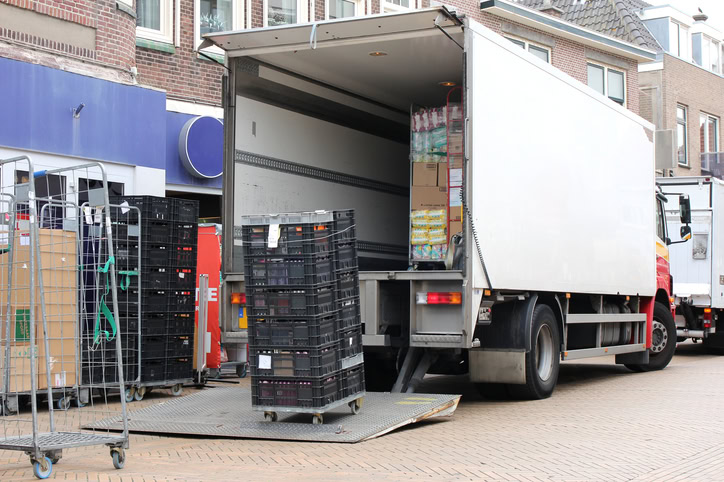
Delivery Truck Being Unloaded
Curb Management Events Mobility Technology

Free Joint Webinar: Smart Curb, Safe Freight – Tackling Truck Parking & Delivery Challenges

The National Operations Center of Excellence (NOCoE) and International Parking & Mobility Institute (IPMI) are joining forces to educate our respective members and communities on the latest research and technology impacting freight parking issues on the highway and at the curb.  This free webinar is open to all interested industry professionals. 

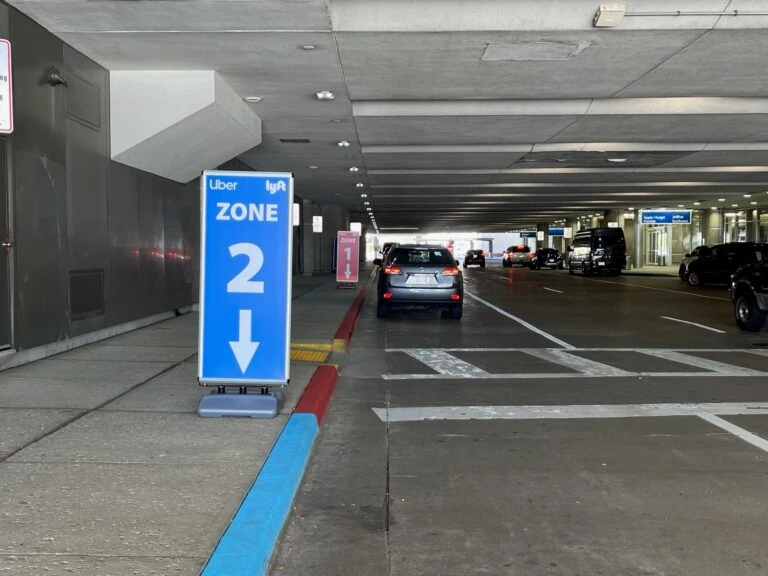
Pickup Zone 2
Airports Curb Management IPMI Blog Transit

Inside MKE Airport’s Rideshare Overhaul for the RNC: How Smart Planning Cut Wait Times and Reduced Congestion

At airports across the country, rideshare operations are essential – but increasingly difficult to manage. Limited curb space and high passenger volumes—especially during peak travel times—often lead to severe congestion, roadway backups, and long wait times for travelers. Without proper planning and infrastructure, rideshare pickups can quickly turn into a logistical headache for both airports and guests.

Umojo Logo
Curb Management Data IPMI & Member News Technology Vendors/Products

Umojo and JD Enterprises Announce Partnership to Provide Technology-Driven Parking, Mobility, and Curb Management Solutions

Chicago, IL – Umojo, the leading provider of smart city technology solutions, and JD Enterprises (JDE), one of the America’s premier parking and mobility consultancies, announced a strategic partnership to provide technology-driven parking, mobility, and curb management solutions. Through this partnership, JDE will offer Municipal leaders and asset ownership parking, loading zone, and mobility planning services using data intelligence provided by Umojo AI-driven software platforms. “Joe Dudek is one of the most respected voices in parking, and Jason Scott brings an equally impressive track record of turning data into actionable strategy,” said Rick Neubauer, CEO of Umojo. “Pairing their team’s deep, boots-on-the-ground expertise with Umojo’s real-time analytics is the ideal recipe for redefining how parking, curb, and mobility plans are built.” This partnership will allow JDE to automate the real-time data collection, analysis and forecasting elements of parking and mobility studies, managing essential parking and mobility planning projects with much greater accuracy and lower costs than traditional methods. Initially, the partnership will focus on: Parking operations and AI-assisted technology audits Parking utilization surveys Transportation Demand Management (TDM) audits Traffic and event parking studies Predictive maintenance planning Theme park guest experience surveys Parking, campus, and curbside safety and security packages Loading zone utilization surveys and compliance plans Micromobility compliance studies Insurance risk-score audits “The parking and mobility industry has become extraordinarily technology driven,” said Joe Dudek, Principal at JD Enterprises. “Smart cameras and analytics have changed the game, and Umojo’s technology is best-in-class. We’re excited to bring these capabilities to our clients.” About Umojo Umojo is a leading platform provider of mobility technology, omnichannel contact center operations, data analytics, and network security to drive operational excellence and superior customer experience for the Mobility Industry. The Umojo Nexus Platform powers the core of all Umojo solutions, and harnesses deep expertise to allow municipalities, parking operators, and businesses to better serve their customers and citizens. Using the most accurate camera AI, and integrations with everyone in the industry, Umojo can provide unmatched insights and controls to on and off-street parking and mobility. Umojo can be found online at www.umojo.com. About JD Enterprises JD Enterprises (JDE) is a national parking and mobility consultancy founded in 2015 to rethink how people interact with parking every day. Led by partners Joe Dudek and Jason Scott, who share more than 50 years of combined industry experience, JDE blends high-level strategy with on-the-ground project execution to deliver data-driven planning, technology integration, and tailored operational programs for cities, campuses, and private owners across the United States. From curb-management policy to garage modernization, the firm’s work has helped modernize and monetize parking assets nationwide. Learn more at www.wearejdse.com.

Compliance Related Words Written on Wood Blocks Sitting on Wood Surface
Curb Management Enforcement IPMI Blog Policy Technology

Policy Corner

The IPMI Policy & Legislative Cohort administered a survey aimed at identifying the most pressing industry policy topics.  Among the top issues are policies around new technologies that could revolutionize parking management by reducing friction. One of the highest friction points in an operation is the ability to consistently facilitate curbside compliance, aka parking enforcement.  As curbside demands have exponentially increased, the parking enforcement tools in our policy toolbox have generally remained the same. I’m not here to write about the legislative barriers to reduce friction in the parking enforcement process (there are many) or the growing number of case studies of cities that have embarked on their automated enforcement journey (that number is growing).  What I’m here to write about today are the policies that your organization should be thinking about when you are able to reduce the friction in your parking enforcement process and move towards automated enforcement.  Before we begin, what do I mean by automated enforcement.  For the purposes of this discussion, automated enforcement is the ability to utilize fixed or mobile camera technology to identify a parking violation and process that parking violation without placing a parking citation on the violating vehicle. Imagine for a minute your organization has the legislative ability to implement automated enforcement.  Would you be able to implement by the end of the week, month, year?  Here are just a few policy topics your organization should think about when moving towards automated enforcement: Violation Types – does it makes sense to automate enforcement for all violation types? Are there more severe safety related parking violations that should be prioritized for an initial rollout of automated enforcement? Payment/Appeal Deadlines – mailing a parking citation to a registered owner adds time to the notification process. Do your payment and appeal deadlines need to shift to accommodate this new process? Violation Fine Structure – cities that have implemented automated enforcement have seen citation issuance increase exponentially. Knowing this may occur, are there opportunities to revise the fine structure for certain violations? This may be an opportunity to introduce first-time warnings, early payment discounts, or progressive pricing for repeat violators. Don’t get me wrong, the legislative framework to allow for automated enforcement is a top priority to enable your organization to leverage new and emerging parking enforcement technologies.  Equally as important is your policy framework for administering an automated enforcement program. Policies matter, and when developed in a comprehensive manner can lead to long-term success for your operation.  Let’s keep the conversation going on Forum Online Community and the dedicated “Policy and Legislation” community. Robert Ferrin, PTMP is a Mobility & Parking Senior Project Manager with Kimley-Horn & Associates, Inc. and is serving his third term on the IPMI Board of Directors.  Robert can be reached at robert.ferrin@kimley-horn.com.

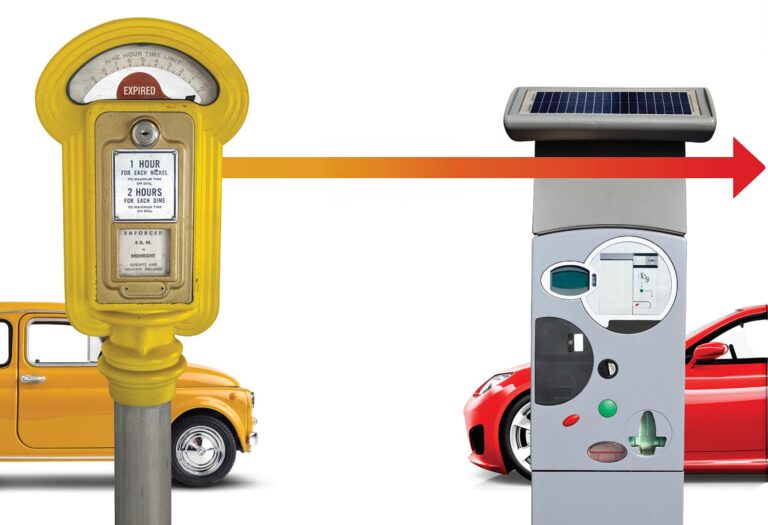
Two views of technology. The first one is an old-time parking meter in front of an older car, both yellow. The second one is new parking meter technology in front of a spiffy red car
Curb Management Digital Parking Tech Electric Vehicles Events Magazine Planning Sustainability Technology

The Evolution of Parking Technology

A Decade in Retrospect—High School Reunion Edition

Curb Management Digital Parking Tech Electric Vehicles Events Magazine Planning Sustainability Technology

The Evolution of Parking Technology

A Decade in Retrospect—High School Reunion Edition

Image of a car parked against a curb with its front tire turned towards the curb
Curb Management Magazine Technology

How Do You Evolve?

Part 2: How to Bring the Curbside to Life