Municipal/Cities

IPMI & Member News

City of Alexandria’s DASH -electric-buses partners with ABM PR Graphic
Electric Vehicles Fleets IPMI & Member News Municipal/Cities Transit Vendors/Products

City of Alexandria’s DASH Partners with ABM to Support EV Bus Charging Infrastructure

New York - ABM (NYSE: ABM), a leading provider of energy infrastructure and facility solutions, has been selected by the Alexandria, Virginia, Transit Company (DASH), to deliver critical EV charging infrastructure that supports the growing electrification of the city's public bus fleet. Under the agreement, ABM provided and installed an in-route pantograph charger, accompanying power cabinets, electrical infrastructure, and civil foundation work. The solution enables DASH buses to charge while in service, expanding route flexibility and supporting uninterrupted operations for Alexandria’s fast-growing electric fleet. “This project represents a forward-thinking investment in clean, reliable transit,” said Mark Hawkinson, President of Technical Solutions, ABM. “We’re proud to help DASH take this important step in expanding their electric bus capabilities and enhancing service for the Alexandria community.” A Milestone in Fleet Electrification The installation is part of the first phase of a broader electrification plan for DASH, transporting more than 15,000 riders daily and over 5.3 million riders annually. By enabling in-route charging, the project helps extend operational range, reduce downtime, and lower greenhouse gas emissions—all while supporting a better rider experience. The milestone was completed through the EV Charging Station Equipment and Services cooperative purchasing agreement under NASPO ValuePoint, a national cooperative purchasing program that allows public entities to streamline the procurement of high-quality, vetted infrastructure solutions. Rider-Centered Benefits DASH riders will directly benefit from this upgrade as it enhances operational flexibility, keeps buses on schedule, and ensures a reliable service experience. For the agency, it provides a scalable solution as electrification expands and further in-route or depot charging assets are deployed in future phases. About ABM ABM (NYSE: ABM) is one of the world’s largest providers of integrated facility, engineering, and infrastructure solutions. Every day, our over 100,000 team members deliver essential services that make spaces cleaner, safer, and more efficient—enhancing the overall occupant experience. ABM serves a wide range of market sectors including commercial real estate, aviation, education, mission critical, and manufacturing and distribution. With over $8 billion in annual revenue and a blue-chip client base, ABM delivers innovative technologies and sustainable solutions that enhance facilities and empower clients to achieve their goals. Committed to creating smarter, more connected spaces, ABM is investing in the future to meet evolving challenges and build a healthier, thriving world. ABM: Driving possibility, together. For more information, visit www.abm.com. MEDIA CONTACT: Michael Valentino media@abm.com

Compliance Related Words Written on Wood Blocks Sitting on Wood Surface
Curb Management IPMI Blog Micro Mobility Mobility Municipal/Cities Policy

Policy Corner

If the past several years revealed anything about urban mobility, it’s that the curb has quietly become one of the most politically charged, economically valuable, and publicly visible pieces of city infrastructure. Leaders from Austin, Los Angeles, and Washington, D.C. participated in IPMI’s Building Blocks webinar, where they shared how curb space has transformed from simple parking real estate into a multi-use frontline for transportation, commerce, and public life in their cities. In the not-so-distant past, the curb was a brief pause. A moment between where we were and where we were going. We parallel parked the car, checked for signs, maybe paid a meter, then went on to our destination. Much has changed. The once quiet edge of the street is now a full-blown stage for rideshare zones, sidewalk cafes, e-commerce deliveries, bike lanes, EV charging, micromobility, and bus priority projects. As Ken Hustings noted, curb space has become so valuable that a meter rate increase in Los Angeles was not only acceptable; it helped the city preserve staff positions during a fiscal crisis. The public’s relationship with the curb shifted in a very real way during the pandemic. As downtowns emptied and front doors became loading docks, people noticed just how much work the curb was doing behind the scenes. Take-out, package deliveries, and temporary restaurant patios all depended on it, and when it wasn’t managed well, the impacts were hard to ignore. David Lipscomb, Washington, D.C.’s curbside manager, recalled that this moment was eye-opening for residents. A minor inconvenience had quickly become a safety and access issue as delivery vehicles stacked up, cafe tables spilled onto sidewalks, and curb space was pushed to its limits. The public began paying attention to what mobility professionals had long understood: unmanaged curb space creates chaos. Awareness is just the first step. Turning that awareness into better outcomes requires updated policies and a different kind of leadership. Today’s parking and mobility professionals aren’t just managing assets; they’re also storytellers, educators, and coalition builders. Joseph Al-Hajeri, Austin’s Park Enterprise Manager, described his role as “getting the public to nerd out” about curb management using data, pilots, and transparent communication so that complex policy becomes shared understanding. In today’s rapidly evolving mobility landscape, the curb has become the new City Hall: a high-stakes, high-visibility arena where decisions play out block by block. And those who manage the curb are emerging as some of the most influential communicators shaping urban policy and public understanding. Maria Irshad, PTMP, MPA, is the Deputy Director for The City of Houston (ParkHouston). Maria can be reached at Maria.Irshad@houstontx.gov.

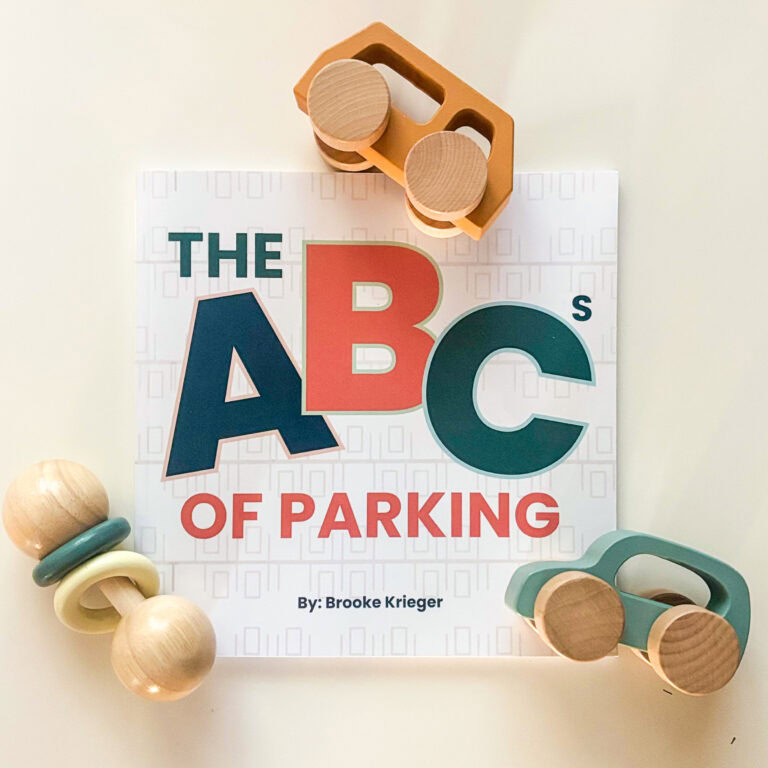
The ABCs of Parking, Brooke Krieger's new book
IPMI & Member News Municipal/Cities Training/Education

New Children’s Book Introduces the Next Generation to the World of Parking and Mobility

Atlanta, GA — Parking and mobility professional Brooke Bustle Krieger, MPA, has released a new children’s book, The ABCs of Parking, designed to introduce young readers to the systems that help cities function and people get where they need to go. Written with simple language and playful rhymes, The ABCs of Parking explores parking concepts from A to Z — including apps, curbs, garages, signage, and yearly permits — making an often-overlooked part of urban life approachable and engaging for children. The book blends early literacy with real-world learning, helping kids understand how parking supports safe streets, organized cities, and shared public spaces. Krieger, who works in the parking and mobility industry, created the book as a way to translate complex infrastructure concepts into ideas children can grasp. “Parking is one of those systems that quietly touches every trip we take,” said Krieger. “This book is about sparking curiosity and helping kids see how cities work and how thoughtful planning helps communities move.” The ABCs of Parking is intended for families, educators, and mobility professionals alike, and serves as a unique bridge between industry expertise and public education. The book is especially relevant for parking and mobility professionals looking for a relatable way to explain their work to children, students, or community audiences. The book is available now on Amazon in paperback format, with Prime shipping available globally. About the Author Brooke Bustle Krieger, MPA is a parking and mobility professional with experience across public policy, urban systems, and transportation technology. She is the author of Parking the Future and is passionate about making complex city systems more accessible through education, storytelling, and thoughtful design.

Fredericksburg Deploys SafetySticks Press Release
Enforcement IPMI & Member News Municipal/Cities Technology Vendors/Products

Fredericksburg Deploys SafetySticks to Protect Fire Lanes and No Parking Zones

The Hill Country destination of Fredericksburg, Texas, may have only about 12,000 residents, but it welcomes roughly 1.5 million visitors a year who come for its wineries, walkable Main Street and small-town charm. With 84 wineries in and around the community and a compact historic downtown, legal curb space is at a premium, especially near tasting rooms, restaurants and hotels. The City of Fredericksburg has installed 11 MPS SafetyStick® devices in some of its most sensitive curbside locations. The initial deployment, completed on August 26, focuses on prohibited parking zones and fire hydrants, where blocked access can slow emergency response and create dangerous conflicts between drivers and pedestrians. With only 37 full-time police officers, city leaders were looking for a way to extend their enforcement reach without pulling officers away from higher-priority calls. The SafetyStick® uses solar power, motion detectors and cameras to monitor no-parking areas and provide clear, time-stamped photo evidence of violations that local authorities can review and act on. “Illegal parking undermines the efforts of those who work hard and follow the rules, signaling that laws can be disregarded,” Lt. Seelig said. “The SafetyStick strengthens our ability to deter illegal parking and enforce compliance with parking regulations.” Fredericksburg selected MPS based on the company’s story and patented innovations in parking enforcement, as well as its track record helping other communities protect critical curb space in no parking zones, at bus stops, in bike lanes and around fire lanes. The SafetyStick® is designed as a force multiplier that supports existing enforcement staff, improves compliance in problem zones and makes it easier for residents, visitors and first responders to move through busy corridors. The new SafetySticks are expected to reduce illegal parking near hydrants and other restricted zones and to free up scarce legal spaces for people who are visiting Main Street, tasting rooms and other attractions. Over time, the Fredericksburg deployment will add another case study to the growing list of tourism destinations that are using smart, solar powered enforcement to keep streets safer and parking fairer for everyone. About Municipal Parking Services (MPS) Municipal Parking Services Inc. (MPS) is a pioneer in AI-driven enforcement and compliance technologies. Since 2013, MPS has leveraged its unique platform to deliver cloud-connected parking and safety solutions that reduce illegal parking, increase compliance, and improve safety outcomes. MPS solutions use embedded AI to automate license plate recognition, dynamic pricing, zone monitoring, and enforcement, creating safer, smarter communities. The company partners with leading safety organizations, including Vision Zero, IPMI, IACLEA, and IACP. Headquartered in Austin, Texas. Learn more at www.mpspark.com.

Automotus logo
Airports Curb Management IPMI & Member News Municipal/Cities Technology Vendors/Products

Curb Management Tech Supplier Automotus Raises $9M

Automotus, a Los Angeles-based software company that sells curb management, traffic and associated payment technology, has raised $9 million in a new funding round. According to Jordan Justus, the company’s CEO and co-founder, the round includes $7.5 million in equity and $1.5 million in credit from a single investor. Total equity funding to date for the company, which traces its roots to 2017 while Justus and co-founder and CTO Harris Lummis were students at Loyola Marymount University, stands at $26 million, Justus said. This funding round included Santa Barbara Venture Partners, Weatherford Capital, BarronKent Ventures, Techstars Ventures, kineo, and other investors, according to a statement. Automotus offers a platform powered by computer vision that cities and airports can use to monitor and control traffic at curbs, including via data analytics and automated payments. The rise of ride hailing along with consumer dependence on retail deliveries help make curbside spaces increasingly busy. An example of the technology in use comes from Lincoln, Neb., where cameras provided by Automotus have helped officials craft parking policies for downtown. Automotus says it has deployed its tech in “dozens of markets across the country.” The fresh capital will go toward deeper product offerings, market expansion and customer support. “Cities and airports are under immense pressure to modernize the curb as commercial traffic surges and they’re forced to grapple with AVs,” Justus said. “This investment allows us to scale our impact and continue delivering technology that makes streets safer, more efficient and more sustainable.”

MPS logo - Municipal Parking Services - Intelligent Infrastructure
Community Enforcement IPMI & Member News Municipal/Cities Technology Vendors/Products

Wilkes-Barre Expands SafetySticks to Keep Safety-Critical Zones Clear

The City of Wilkes-Barre, Pennsylvania is expanding its SafetyStick® program after a successful first year of automated parking enforcement in high-risk curbside locations. What began as a small deployment of 10 devices downtown has grown into one of Municipal Parking Services’ flagship SafetyStick® programs, with the city now operating 42 units and planning to add 20 more in the coming months. The initiative focuses on illegal parking that creates safety hazards rather than routine meter enforcement. SafetySticks monitor handicap spaces, bus stops, fire hydrants, corners, commercial loading zones and other restricted areas where blocked access can put people at risk or slow emergency response. Proven Results in the First Year In a little over a year of operation, Wilkes-Barre’s SafetyStick® program has generated 9,883 citations for parking violations, uncovering the true scale of unsafe, previously under-enforced activity at key locations. Over that same period, the city received $126,135 in revenue from citations issued through the SafetyStick® program. Just as important as the revenue, city leaders report that citation volumes in the earliest deployment zones have begun to drop as drivers change their behavior. Fewer violations in those original locations suggest that motorists are learning to avoid unsafe stopping and parking where SafetySticks are installed, even as new devices are added in other areas. Expanding to School-Adjacent Corridors As the program has grown, Wilkes-Barre has pushed beyond the downtown core to address additional safety priorities and annoyance parking. New SafetySticks are being installed along Old River Road near Kistler Elementary School, where vehicles were previously parking on grassy areas and blocking sight lines when children were arriving and leaving. “By extending automated enforcement to school-adjacent corridors, the city aims to keep pick-up and drop-off zones clear and reduce risky driver behavior during the busiest times of day for pedestrians,” said Robert Sliker, head of parking enforcement. “We have parking enforcement officers, but they can’t be everywhere,” Mayor George Brown said in a recent interview with FOX56. A Safety-First Model for Other Cities Wilkes-Barre’s experience shows how cities can pair automated enforcement with a clear safety narrative to build public understanding and long-term compliance. Key elements of the city’s approach include: Starting with obvious safety hazards such as hydrants, corners, handicap spaces and bus stops to demonstrate why enforcement is needed. Using solar-powered, AI-enabled devices to provide continuous monitoring without major capital projects or added staff. Framing the program as a public safety initiative that protects residents, schoolchildren and emergency responders rather than a purely revenue-driven effort. Expanding in phases as results, community awareness and internal comfort with the technology grow. With dozens of devices already delivering strong results and additional SafetySticks on the way, Wilkes-Barre has become a leading example of how automated enforcement can improve safety, strengthen compliance and support city budgets at the same time. About Municipal Parking Services (MPS) Municipal Parking Services Inc. (MPS) is a pioneer in AI-driven enforcement and compliance technologies. Since 2013, MPS has leveraged its unique platform to deliver cloud-connected parking and safety solutions that reduce illegal parking, increase compliance, and improve safety outcomes. MPS solutions use embedded AI to automate license plate recognition, dynamic pricing, zone monitoring, and enforcement, creating safer, smarter communities. The company partners with leading safety organizations, including Vision Zero, IPMI, IACLEA, and IACP. Headquartered in Austin, Texas. Learn more at www.mpspark.com.

Compliance Related Words Written on Wood Blocks Sitting on Wood Surface
Curb Management IPMI Blog Mobility Municipal/Cities Policy Technology

Policy Corner

Is the curb for parking, deliveries, valet, ride-share, taxis, horse and buggy, or buses?   If I had been asked this question over 20 years ago, I would have said it was for parking and generating revenue to help pay for infrastructure improvements to drive economic growth. But today, the answer is all above! Our industry has changed so much over the decades due to many different needs. But what I do know is that the curb is at capacity! So, the big question becomes, how do we manage it? Today’s technology plays a major role in helping us manage the curb.   I remember what a big deal it was to put solar pay stations on the street that allowed me to remove 12- 14 single space mechanical meters.  But looking at the technology today, you can place a sign with a QR code and that will lead the customer to platform to pay for parking by using the phone.   You do not really need anything else!  Nashville has been spending the past year working on a technology platform that manages the curb - all uses of the curb! This program is called Connect Downtown.  From the study, we set goals for a safe and comfortable downtown, one that’s connected and convenient, focuses on equitable and accessible, meets sustainable and resilient needs, is vibrant and inviting but balanced and reliable.   Wow, that is a lot to deliver to the community.  We are accomplishing this with five (5) big moves.   The first big move is managing congestion.   We are upgrading our signals to real time to manage special events, people and safety of all modes.  The next one is improved safety.  Being a vision zero county, we are making our roadway network safer for people.  Move three (3) is prioritizing our transit for better service and reliability throughout the region.  Building complete street networks with connected walking paths, bikeways, and micro mobility options for first and last miles is the fourth big move.  And the last big move, maximizing the curb by flexing the use based on needs, creating passenger loading or service unloading zones for deliveries, rideshares, taxis and AVs. Do not forget to include local businesses’ needs, venues and their modes of transporting people.  But mostly, make sure you address everything for your residents.  They are the foundation of everything that’s planned.   In the last year, we have added over one hundred and forty-five (145) bike and scooter corrals.  We’ve piloted a transit lane designed for special events that’s allowed for improving the time of exiting from the downtown Hub by over 50%.   We’ve established additional unloading zones that are flexed at 4 PM to 4 AM for ridesharing, taxi, etc and did a ridezone pilot that improved the traffic flow.  We’ve also organized the parking system for the curb, so that we have technology providing turns for businesses.  And now we are working closely with the community on the technology platform for managing the curb, similar to parking.  Technology is allowing us to advance and optimize how the city manages the curb, and we’re transforming how our downtown operates — making life easier for residents and business owners Diana W. Alarcon, PTMP, is the Director for Nashville Department of Transportation & Multimodal Infrastructure. Diana can be reached at diana.alarcon@nashville.gov.

Eleven-X and Virginia-Beach-PR
Curb Management Data IPMI & Member News Mobility Municipal/Cities Vendors/Products

Virginia Beach Teams with eleven-x to Deploy Data-Driven eXactpark Smart Parking Initiative

Waterloo, Ontario – eleven-x®, a leader in smart parking and curbside management solutions, announced a smart parking initiative with the City of Virginia Beach, VA which is designed to improve the parking experience for drivers while helping parking managers understand how their parking is being used. With the recent launch of the eXactpark™ solution, the city has begun collecting data from more than 1,000 parking spaces located within their new Oceanfront parking garage. The goal of the project is to better understand parking behavior to improve the overall parking experience for the city’s 450,000 residents and over fourteen million annual visitors. The initiative is focused on serving drivers in a busy area located between the city’s ocean front Boardwalk and the Virginia Beach Convention Center which includes restaurants, retail businesses and accommodations for residents and visitors. Real-time data collected through the eXactpark solution will enable the implementation of digital displays and the eXactnav™ app (iOS, Android), to help drivers quickly locate available spaces in the garage, saving time and reducing the search for available parking. The City of Virginia Beach expects the project to deliver multiple benefits, including: Improved Traffic Flow: Reduces congestion caused by drivers searching for parking, particularly during peak summer tourist months. Enhanced Visitor Experience: Helps visitors find spaces quickly, improving their experience and encouraging repeat visits. Economic Benefits: Optimizes existing parking infrastructure, boosting revenue, and supporting local businesses by providing convenient customer access. Environmental Impact: Lowers emissions from idling vehicles and supports the city’s sustainability goals. Data-Driven Decisions: Provides accurate, true occupancy data to generate actionable insights for planning, infrastructure investments, and resource allocation. Support for Smart City Initiatives: Demonstrates the city’s commitment to leveraging innovative solutions that enhance residents’ quality of life. City officials are already seeing the value of the solution. “The data we’ve begun collecting through eXactpark is revealing important trends in how and when spaces within the garage are being used,” said Casi Hansford, Parking Operations Supervisor at the City of Virginia Beach. “The benefits of this solution are already helping us in many ways including reducing congestion due to searching and providing valuable analytics and insights which will help in terms of planning for future infrastructure, all while improving the day-to-day experience for residents and visitors.” “Virginia Beach is one of the most vibrant coastal cities in the U.S., and we’re proud to help deliver a modern parking experience that reduces congestion, supports local businesses, and advances their smart city goals,” said Dan Mathers, CEO, eleven-x. “With eXactpark, the city is setting a benchmark for how parking technology and data-driven solutions can create meaningful improvements for residents, visitors, and the community as a whole.” The city was able to streamline procurement of eXactpark™ through Sourcewell, which empowers public agencies with cooperative contracts, expertise, and resources to meet evolving community needs. As the second eXactpark deployment of its kind in the state, building on the pioneering program in Arlington County, the project highlights the state’s continued leadership in adopting innovative mobility solutions that enhance quality of life and support long-term growth. About eleven-x Inc.® eleven-x is a leader in smart parking and curbside management solutions, helping organizations improve the efficiency, safety, and accessibility of their parking operations. The company’s award-winning eXactpark™ solution delivers real-time, 24/7 stall occupancy data, enabling cities, airports, campuses, and parking managers to gain a comprehensive, data-driven understanding of their parking assets. With eXactpark, organizations can streamline curbside management, improve compliance, implement demand-based pricing and enhance the overall parking experience. The solution also supports real-time parking guidance through eleven-x’s eXactnav™ app and integrates seamlessly with third-party systems, helping drivers quickly locate available spaces, reduce congestion, and optimize mobility. Fully scalable, eXactpark empowers communities to balance parking and space utilization in any parking environment to help address evolving transportation challenges and improve quality of life. For more information, visit eleven-x.com and follow eleven-x on X (Twitter), LinkedIn, and YouTube.

Member Roundtable chats
Events Municipal/Cities Training/Education

Free Municipal Member Roundtable: Using the Data You Already Have to Improve Operations

Open to members from cities and municipalities. Register for the free municipal members-only roundtable, ask for advice about your own situations, and connect with others facing similar challenges.

Member Roundtable chats
Events Municipal/Cities Training/Education

Free Municipal Member Roundtable: Staffing, Recruitment, and Retention: Overcoming Challenges to Build a Great Lasting Team

Open to members from cities and municipalities. Register for the free municipal members-only roundtable, ask for advice about your own situations, and connect with others facing similar challenges.

Member Roundtable chats
Events Municipal/Cities Training/Education

Free Municipal Member Roundtable: The Role of Parking in a Growing City: Managing New and Old Expectations

Open to members from cities and municipalities. Register for the free municipal members-only roundtable, ask for advice about your own situations, and connect with others facing similar challenges.

Member Roundtable chats
Events Municipal/Cities Training/Education University

FREE Event: That’s My Spot: When Residents, Businesses, and Schools Fight for the Same Space

Register for IPMI's members-only roundtable dedicated to finding the balance and prioritizing competing stakeholder groups in dynamic, high-demand environments.  Our discussion will zero in on residential parking needs and programs, especially where they are in fierce competition with other patron segments in both municipal and academic settings.