Data

IPMI & Member News

Umojo Logo
Data Enforcement IPMI & Member News Technology Vendors/Products

Umojo Launches NexShield: The AI Surveillance Platform That Stops Crime Before It Starts

Chicago, IL — Umojo, a leader in smart city, parking, and security technology, announced the launch of NexShield, an AI-powered video surveillance platform that transforms parking security from passive recording to proactive prevention. Built on advanced computer vision and real-time AI analytics, NexShield not only detects suspicious activity—it deters it. “Most surveillance is reactive and labor-intensive,” said Rick Neubauer, Founder & CEO of Umojo. “With NexShield, we’ve built a proactive platform that deters crime and alerts the right people at the right time—helping operators respond faster, reduce risk, and create safer environments.” NexShield doesn’t just watch—it intervenes. High-visibility red/blue lights paired with audio alerts through on-site speakers act as strong deterrents, while AI behavior monitoring flags and escalates suspicious activity in real time. Alerts stream directly into the Umojo Command Center Platform for immediate action, reducing theft, vandalism, and loitering. Through the Umojo mobile app, alerts and notifications can also be sent instantly to facility managers or area rovers—with smart scheduling to ensure that managers are only notified when they are on duty, preventing alert fatigue and ensuring the right people always receive the right alerts. Why NexShield Is Different Audio & Visual Deterrence — Red/blue lights and on-site speaker alerts stop incidents before they escalate. Real-Time Command Center Alerts — Alerts feed directly into the Umojo Command Center Platform, where video is reviewed and escalated to the right team or authority for immediate action. Mobile App Notifications — Sends alerts to managers and rovers, with smart scheduling so only on-duty staff are notified. Video Forensics — Metadata-driven search for fast, precise incident review. Vehicle Fingerprinting (LPR) — Tracks vehicles to flag repeat offenders, stolen cars, and suspicious patterns. Face Detection — Identifies persons of interest and strengthens investigations. Best-in-Class Video Analytics — Advanced AI tools, including occupancy heatmaps, smoke and fire detection, crowd and fight detection, and vehicle break-in detection, deliver powerful insights for safety, security, and operations. Universal Compatibility — A true Swiss Army knife of surveillance, NexShield works with any camera system and across any security or monitoring application, from parking facilities to broader smart city environments. Availability NexShield is available now. To learn more or schedule a live demo, visit www.umojo.com or contact sales@umojo.com. About Umojo Umojo is a leader in smart city, parking, and security technology, delivering mobility platforms, contact center operations, data analytics, and network security that drive operational excellence and superior customer experiences. The Umojo Nexus Platform powers solutions for municipalities, parking operators, and businesses, delivering unmatched insights and control for on- and off-street parking and mobility. Learn more at www.umojo.com.

CurbIQ Logo
Curb Management Data IPMI & Member News Mobility Municipal/Cities Sustainability Vendors/Products

Arcadis Maintains Momentum Deploying CurbIQ Solution Across US Cities with Launch in Los Angeles

Los Angeles, CA – Arcadis, a global leader in design and consultancy for natural and built assets, announced that it will implement CurbIQ, a cutting-edge curbside management solution, for the Los Angeles Department of Transportation (LADOT). Financing from the United States Department of Transportation's Strengthening Mobility and Revolutionizing Transportation (SMART) grant program will fund the project. Creation of a digital inventory of physical curb lane assets in Downtown Los Angeles, covering over 200 curb miles, will lay the groundwork for asset planning and management. Harnessing the power of data-driven insights will evolve curbside management for the city and empower LADOT to make informed planning and operational decisions. CurbIQ’s comprehensive suite of data collection, analysis, and visualization solutions will equip LADOT to dynamically manage the curb inventory in real time. The digital platform integrates surveyed curbside data, demand analysis, and third-party City software data sources. The goal of the project is to reduce congestion and optimize curb use in high-demand areas downtown, leading to better traffic management, more effective use of parking and loading zones, and ultimately a more accessible and efficient urban environment. LADOT has positioned itself as a leader in forward-thinking urban planning by anticipating future needs for large-scale events like the 2026 World Cup and the LA2028 Olympics and taking the initiative to manage curbside access. By integrating demand data, advanced analytics, and dynamic planning capabilities, Arcadis is helping LADOT achieve its goals for the SMART Grant project. The project is currently underway, with Phase 1 slated for completion in December 2025.. Tomas Carranza, the Assistant General Manager and Chief Technology Officer for the Office of Planning & Innovation for LADOT, said: “With its innovative CurbIQ product, Arcadis stands as the ideal partner for LADOT on this transformative journey toward smarter curbside management. Through CurbIQ's advanced analytics and dynamic management platform, we will enhance traffic flow, regulate curbside assets efficiently, and pave the way for a more accessible and organized urban environment. This project marks a significant step toward optimizing curbside management in dense urban areas like Downtown Los Angeles.” Jacob Malleau, Head of Product for CurbIQ at Arcadis, said: “The collaboration between CurbIQ and LADOT exemplifies a commitment to sustainable, resilient, and smart urban infrastructure development. We are excited to see how the data being generated for this project can be used to improve curbside operations in LA, and be a leading example for other cities throughout North America.” Some useful links about this project have been provided below: More info on LADOT’s Coding the Curb Initiative (link) The public facing CurbIQ map of downtown LA’s curb inventory (link) Request page to access the Curb Data Specification data feeds of LA’s curbs (link) Arcadis continues to expand its presence on the West Coast, securing contracts in Seattle, WA, West Hollywood, CA, Kirkland, WA, and numerous other cities across North America. As a trusted curb management solution, Arcadis consistently proves to be the top choice for cities seeking to optimize urban mobility and curbside efficiency. ABOUT ARCADIS Arcadis is the world’s leading company delivering data-driven sustainable design, engineering, and consultancy solutions for natural and built assets. We are more than 36,000 architects, data analysts, designers, engineers, project planners, water management and sustainability experts, all driven by our passion for improving quality of life. As part of our commitment to accelerating a planet positive future, we work with our clients to make sustainable project choices, combining digital and human innovation, and embracing future-focused skills across the environment, energy and water, buildings, transport, and infrastructure sectors. We operate in over 30 countries, and in 2023 reported €5.0 billion in gross revenues. www.arcadis.com

Park Loyalty, City of Glendale - Case Study
Data Enforcement IPMI & Member News Municipal/Cities Technology Vendors/Products

Practical Innovation, Real Results: Glendale’s Modern Parking Enforcement Story

Just 10 miles north of downtown Los Angeles, the City of Glendale faces the same traffic pressures as many of its neighboring cities in LA County, making effective, data-driven parking enforcement essential. From managing turnover in in-demand commercial corridors to maintaining safe curb access for multi-modal transportation, parking plays a vital role in urban mobility. When Jesus Alvarez stepped into his role as Parking Services Supervisor for the City, he brought over a decade of enforcement experience across Southern California cities, and a clear mission: Enhance the City’s enforcement operations with efficiency by upgrading to a modern system, replacing the outdated legacy platform that had become unreliable. "We couldn’t even run basic reports with filters,” Alvarez recalled. “How are we going to provide exceptional customer service when we can’t make data-driven decisions with our enforcement resources?” Challenges before Park Loyalty The City’s enforcement team faced several critical challenges with their old system. Outdated citation software and handheld devices prone to freezing and other connectivity issues that disrupted day-to-day enforcement Rigid reporting tools with missing or unusable data Poor customer support and limited responsiveness Lack of vendor transparency during system outages or failures Inability to use “active” integrations “Updates felt like downgrades. We were stuck with an enforcement tool that just didn’t work for how we needed to operate,” says Alvarez. Time for a change: A platform designed for enforcement reality In previous positions, Alvarez had worked with Park Loyalty Founder and CTO Sriram Somanchi and was drawn to what a new technology partner might offer. Although Park Loyalty was a new company at the time, Somanchi brought extensive experience in parking enforcement, applying the most practical aspects of that experience to the startup from the outset. Glendale became one of the first cities to implement Enforce Pro®, Park Loyalty’s enforcement management solution, and as an early adopter, helped shape its initial product roadmap. What developed was more than just a vendor-client relationship; it was a true collaboration. “We all grew together,” explained Alvarez. “As one of their early cities, we were more than just a customer; we were a partner in what ended up being a truly mutual relationship. It was simple. We’d tell them what we needed, and they’d build it.” This approach is exactly what makes Jesus Alvarez an industry impact leader: someone whose vision and openness helped shape solutions that strengthen operations, benefit communities, and set new standards across the industry. Solutions delivered Customizable reports for vehicle inspections, signage audits, and equipment inventory Smartphone-based handhelds paired with Bluetooth printers for modular field use Real-time analytics and dashboards for officer performance tracking and supervisory management Fast hardware replacement when needed, and responsive support Reliable uptime and proactive monitoring tools that track performance across Park Loyalty and all integrated third-party technologies within the parking ecosystem Practical innovation that works: Operational and officer efficiency The move to smartphone-based handhelds allowed for quick swaps in the field, no reconfiguration required. This minimized downtime and aligned with Alvarez’s goals of operational efficiency. The team also saw improvements in field oversight and training. With Enforce Pro’s productivity reporting, Alvarez could monitor performance trends and provide specific coaching where needed. “If an enforcement officer takes 90 seconds to issue a parking citation while the team’s average is 60 seconds or less, supervisory staff can investigate the reasons behind this trend and offer appropriate support to our enforcement team.” A Technology-First Partner Built for the Future Park Loyalty is a technology-first company, and that shows in its prioritization of development resources. Built with modern architecture and an API-first approach, the Enforce Pro platform is designed for rapid development, scalable integrations, and long-term adaptability. They are more than just dependable. They embody leading-edge technology, unwavering client focus, and a proven track record of success. Alvarez values this commitment to reliability just as much as innovation. As new enforcement challenges arise, he knows the Park Loyalty team can adapt alongside him without the long delays or limitations experienced with many legacy providers. Real-Time Integration Across the Parking Ecosystem One of Glendale’s priorities was interoperability across its entire parking system. One of Enforce Pro’s greatest advantages for Glendale is its ability to pull data from across the City’s parking ecosystem, including: T2 Systems (parking meters) PayByPhone (mobile payments) License Plate Recognition (LPR tools) That means officers can check in real time whether a vehicle is paid or not, reducing errors and disputes. Alvarez also uses the Integrations Dashboard to monitor system latency and performance, making sure everything is in sync. “If latency spikes above a minute, we know something’s off. Whether it’s a meter issue or a network problem, we can catch it before it affects enforcement.” Results: Reliable Enforcement, Better Compliance Since implementing Park Loyalty, the City of Glendale has seen: Improved officer efficiency and uptime in the field Increased citation accuracy and fewer disputed tickets Greater trust and transparency through consistent data Faster response times for hardware and support needs A flexible system that evolves with operational needs And perhaps most importantly for Alvarez: he finally has tools that help him lead effectively. “Whenever we requested something, it was like VIP service. Whoever’s on the call is truly engaged: listening, taking notes, and making sure the issue gets fixed.” Final Word: Why Park Loyalty? Alvarez didn’t hesitate when asked if he’d recommend Park Loyalty to other cities. “Once they see it, they’ll see how easy and smooth enforcement can be. It just works. That makes all the difference.” Key Takeaways for Parking Leaders: Strategic partnerships with your vendors matter Flexibility and adaptability beat out flashy features Real-time integrations drive operational accuracy Data visibility enables better leadership and officer support A technology-first mindset is crucial for staying future-ready Contact Us If you're facing similar challenges or planning your next step in enforcement or citation processing, we’d love to help. Contact us to learn how Park Loyalty can support your goals with proven, scalable solutions. Email: info@parkloyalty.com Website: parkloyalty.com

Smart Parking Technologies, Car Parking
Data Digital Parking Tech IPMI Blog Technology

How to Improve Operational Efficiency with Smart Parking Technology

Technology has redefined how to improve operational efficiency—especially in the parking industry. Today’s operators are leveraging innovative parking solutions like reservation systems, smart sensors, and dynamic pricing to drive growth and streamline operations. A parking reservation system is one of the most effective ways to increase operational efficiency. These platforms allow drivers to reserve spots in advance, reducing search time, traffic congestion, and emissions. Paired with a parking management system, they offer real-time data, enhance space utilization, and improve the overall customer experience. Modern parking lot management software goes even further by providing powerful data analytics. Operators can now measure operational efficiency by tracking occupancy patterns, peak hours, and customer behavior. These insights help optimize operations and support strategic decisions—like implementing dynamic pricing for maximum profitability and leveraging customer data to develop marketing strategies. Digital payments are another game-changer. A parking management app simplifies transactions with contactless and mobile options, reducing staffing needs while increasing convenience and parking lot efficiency. Layout matters, too. The most efficient parking lot layout is one that integrates guidance systems, sensors, and LPR technology to streamline traffic flow and improve the parking efficiency formula. Finally, visibility is key. Once you’ve upgraded with parking management software and an online parking reservation system, use digital marketing to attract users. Listing your location on Google Maps and using SEO can drive traffic and boost bookings. If you're aiming for the most efficient parking lot and looking to grow your business, now is the time to embrace technology. From a parking reservation system to dynamic pricing and data analytics, each step you take builds long-term operational success. David Sparks is the Chief Marketing Officer for Space Genius. David can be reached at dsparks@spacegenius.com.

PRRS Launches Autostart
Data Digital Parking Tech IPMI & Member News Parking Facilities Technology Vendors/Products

PRRS Launches Autostart, a Revolutionary AI-Powered Parking Technology That Delivers Precise Payment Management for Gateless Free-Flow Parking on an Open Payment Network

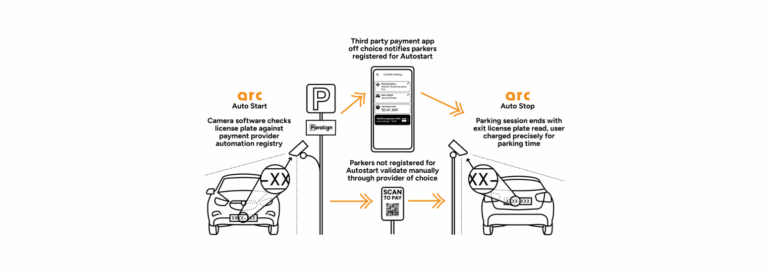
Denver, CO – PRRS, the leading provider of parking compliance solutions, announced the introduction of Autostart, a groundbreaking AI-powered parking management technology designed to transform the way drivers access and pay for parking. Powered by Paralign’s ARCFlex software and leveraging advanced AI vision, Autostart offers an open network, precise payment activation for gateless, free-flow parking facilities, capturing and verifying license plate data the instant a vehicle enters and exits a facility and automatically charging drivers for the exact amount of time that the parking session lasted via your preferred payment platform. Unlike other payment networks serving the parking industry, this is an open network, which allows parking owners and operators to choose their preferred payment provider for collecting parking fees. “Autostart is a game changer when it comes to parking,” said John Conway, Co-Founder and Chief Business Development Officer for PRRS. “Ticketless parking enables a more efficient, cost-effective, and driver-friendly experience, but it has always been challenging to manage payments fairly and accurately. Autostart solves that problem and makes free-flow parking work for any parking facility.” Autostart provides unmatched convenience and accuracy, including: Instant Vehicle Recognition: The system’s AI vision technology automatically detects and verifies license             plate data upon entry and egress with 99.88% accuracy. Effortless Payment: If the driver is pre-registered with the facility’s preferred payment provider, the system  automatically processes the payment—eliminating the need for tickets, cash, or manual check-ins. Flexible Options for All Parkers: Drivers who aren’t registered with the facility’s preferred payment app can still easily register with that app and pay manually. Real-Time Notifications: For registered users, the facility’s payment provider’s app of choice instantly notifies them when a parking session begins. Precision Billing: Upon exit, Autostart reads the license plate again and activates the payment precisely for the duration of their stay via the facility’s preferred payment app. ARCFlex is already integrated with more than 45 parking payment providers and PRRS is migrating payment providers to Autostart, making it one of the most interoperable and user-friendly parking solutions available. “Until the introduction of Autostart, drivers parking in ticketless parking lots and garages had to pre-pay for a set amount of parking,” said Conway. “The problem is that people don’t always know how long they will park. Meetings run long or people just lose track of time. When that happens parking owners have had to treat overstays as an enforcement issue, sending notices for noncompliance fees. Drivers hate receiving notices for $50 or more. Autostart minimizes this unpleasant pain point.” The launch of Autostart underscores PRRS’ commitment to improving the compliance of facility and simplifying the payment process in free-flow parking facilities and reducing the need to issue notices of noncompliance. More information about Autostart can be found here. PRRS’ main focus is making customer journeys and experiences in parking better while improving compliance with facility rules. With Autostart and the facility’s preferred payment provider, parkers have less hassle to perfectly choose parking times, payment providers have more successful payments, and landowners have improved compliant use of their facility. It’s a win-win-win for all parties! About PRRS Parking Revenue Recovery Services (PRRS) is the leading provider of fully-integrated parking compliance and customer support services to the parking and other industries. PRRS today provides services to over 600 parking locations and proudly represents national, regional, and local parking operators throughout the United States. Our client owners and parking operators use our monitoring and compliance services in all types of properties, including commercial lots and garages, municipal facilities, college and university facilities, airports, hospitals, commercial properties, and residential buildings. PRRS creates exceptional value for its parking operator clients through increased overall customer compliance, enhanced visibility into operating activity and usage, while delivering exceptional customer service. For more information, please visit https://prrsparking.com. About Paralign Paralign is a technology leader dedicated to creating smarter, more efficient parking solutions. With a focus on innovation, seamless integration, and user experience, Paralign delivers cutting-edge products that enhance mobility and improve operational performance for parking owners and operators worldwide, including commercial campuses, residential complexes, colleges and universities, industrial sites, resorts, and airports. For more information, please visit https://paralign.co.

An aerial view of the lines of parked cars. Heavy traffic in the parking lot. Searching for spaces in the busy car park. Cruising for parking in dormitory area. Difficulties of parking in the city.
Data Digital Parking Tech Enforcement Finance Legal Parking Facilities Parking Lots Planning Technology

Ungated Environments: Best Practices for Parking Payment Providers

As digital payments surge in ungated parking environments, ensuring clarity, consistency, and compliance has become more vital than ever. This white paper outlines key best practices for parking operators and payment providers to prevent consumer confusion and mitigate legal risk.

In-Parking-Automotus-Partnership Graphic
Curb Management Data IPMI & Member News Technology Vendors/Products

In-Parking Announces Strategic Integration with Automotus to Enhance Curb and Parking Intelligence

In-Parking, a leading provider of AI-driven parking intelligence, is proud to announce a new strategic integration with automated curb management pioneer Automotus. This collaboration will enable municipalities, airports, campuses, and operators to unlock a new level of real-time visibility, automation, and data-driven decision-making at the curb and beyond. The integration brings together In-Parking’s advanced analytics platform, SIGHT, with Automotus’ curbside computer vision technology to create a powerful, unified system for managing mobility, optimizing space, and improving compliance. With this partnership, customers benefit from seamless access to enriched data streams, performance dashboards, and automated enforcement workflows that improve safety, reduce congestion, and generate measurable returns. “Our mission is to turn every parking asset into an engine for smarter, more efficient communities,” said Santiago Morales, CEO of In-Parking. “Partnering with Automotus means organizations will gain deeper insights at the curb, backed by automation and transparency, that drives better outcomes across the board.” With this integration, municipalities will get visibility into loading zones, bike lanes, and short-term parking activity. Further, parking operators can automate compliance checks and payment processes. Other organizations from airports to college campuses and beyond will be able to manage multiple zones and user types with precision and adaptability. This collaboration reflects a shared commitment to creating smarter infrastructure and empowering stakeholders with data that delivers clarity, accountability, and progress. To learn more about the integration and how it can benefit your operation, visit www.in-parking.com. About In-Parking In-Parking is a leading provider of AI-driven parking intelligence solutions, empowering clients with actionable insights to optimize parking operations. With a commitment to innovation and excellence, In-Parking delivers cutting-edge technologies that transform the way parking assets are managed and utilized. About Automotus Automotus is the leader in automated curb management, working with cities to make our communities safer, healthier, and more accessible by addressing the rise in commercial vehicle congestion and emissions. Automotus has developed a first-of-its-kind computer vision technology deployed at the curb to enable automated Smart Loading Zones, helping cities, airports, fleets and small businesses manage curb activity, make data-driven decisions and incentivize EV adoption—all without the need for a parking app or kiosk.

rezcomm, simply innovative ecommerce logo
Airports Data IPMI & Member News Technology Vendors/Products

From Prediction to Autonomy: Rezcomm Maps the Future of AI in Travel

Rezcomm has launched a new animated video showcasing its advanced AI capabilities and vision for the future of travel. The video, titled “Rezcomm AI: Smarter Journeys, Seamless Experiences,” brings to life how predictive automation, dynamic pricing, and barrier-free access can help airports and travel hubs deliver frictionless customer experiences and maximize revenue. As creators of the plug-and-play marketplace trusted by airports, venues, and travel hubs globally, Rezcomm continues to lead in AI-powered innovation. The launch builds on Rezcomm’s story, “Advanced AI and Analytics Set to Change the Future of Aviation,” which introduced the industry to Rezcomm’s generative AI chatbot, sentiment analytics, and privacy-first personalization. This release demonstrates how those capabilities have matured into a cohesive intelligence layer that not only anticipates demand but will soon act autonomously. Watch the animation here: https://youtu.be/-JBGjJzkD74 Key Highlights Predictive intelligence: AI models forecast demand and recommend actions in real time. Operational efficiency: Dynamic pricing, capacity management, and automated communications - all fully integrated. Frictionless access: Barrier-free entry through AI-enabled cameras, QR codes, and smart rules. Built for scale: Secure, cloud-based infrastructure designed for high-volume environments. Leadership Commentary Marc Ive, Chief Executive Officer, Rezcomm, “We promised AI and analytics would reshape aviation - this shows that reality taking shape. AI should remain invisible to travelers but deliver real impact for operators: higher revenue, fewer headaches, better experiences.” Victoria Wallace, Chief Digital Officer, Rezcomm, “The next shift in digital isn’t more tools - it’s smarter coordination. AI allows us to unify fragmented systems, act on data instantly, and drive meaningful change in how guests experience travel. It’s about being responsive, predictive, and future-ready - all at once.” Alwyn J Veliyeth, Chief Technology Officer, Rezcomm, “We’ve embedded AI across every service. The result is a secure, cohesive architecture that monitors 24/7, predicts what’s next, and will soon act autonomously - without adding complexity or risk.” About Rezcomm Your customers expect joined-up services. With Rezcomm Marketplace, your platform delivers exactly that - seamless, personalized experiences across digital and physical touchpoints. Originally built for airports, Rezcomm now powers travel hubs of all kinds. Our modular, AI-driven platform combines ecommerce, CRM, reservations, BI, and marketing. By giving organizations full data ownership and rich predictive analytics, Rezcomm helps them personalize every interaction, automate operations, and unlock new revenue at scale. Rezcomm supports clients globally and holds industry-leading certifications, including PCI DSS Level 1 Version 4.0 and Cyber Essentials Plus. Learn more at rezcomm.com. For press or partnership enquiries, contact Sarah Tull, Director of Communications, at sarah.tull@rezcomm.com.

parking pay with app, phone in hand, vector icon
Data Digital Parking Tech IPMI Blog Parking Facilities Parking Lots

Rethinking Parking Through Behavior

Parking has long been managed through fixed rules: pay before you stay, don’t exceed the time limit, and expect a citation if you do. But that model rarely reflects how people actually behave. The shift toward behavioral parking is about bridging that gap—creating systems that respond to real usage rather than rigid expectations. At the heart of behavioral parking is one simple idea: charge based on how people actually use the space. Instead of guessing how long they’ll stay or rushing back to feed a meter, drivers park and go about their business. The system tracks their actual behavior—start time, end time, duration—and charges accordingly. This shift solves a long-standing issue: underpayment and non-compliance that doesn’t always come from bad intent, but from confusion, unpredictability, or inflexible systems. Rather than focusing on enforcement and punishment, behavioral models recover revenue by adapting to the parker—not the other way around. In environments like universities, city centers, and hospitality, where stay durations vary widely, this approach offers fairness and financial sustainability. Operators gain more accurate data, fewer disputes, and ultimately, better compliance without increasing friction. Behavioral parking is not just about technology—it’s about trust. When people feel that parking is transparent and reasonable, they're more likely to engage honestly with it. And when systems are built around real-life behavior, everyone benefits….. We’re no longer just managing space. We are managing people…and adjusting to real behavior to reduce violations. Trystan Henry, PECP, is the Vice President of Business Development for ParkEngage. Trystan can be reached at trystan.henry@parkengage.com.

Illustration of people holding hands and climbing a mountain taking a red flag to plant at the top.
Data Design Magazine Planning Technology

Leadership Development

What role does leadership development play in creating resilient, future-ready teams in our industry?

GPS Map to Route Destination network connection Location Street Map with GPS Icons Navigation
Data IPMI Blog Mobility Technology

From Chaos to Clarity: How Digital Maps Elevate Parking & Mobility

Finding a parking space shouldn’t be a daily challenge. Yet drivers in urban areas waste countless hours circling for parking spots. This costs cities billions in emissions and lost productivity. About 30% of urban traffic comes from people searching for parking. This results in congestion, frustration, and noise and air pollution. Smart parking technologies and digital mapping are transforming this struggle into a seamless experience. For example, some IoT-enabled maps have directed drivers to open spaces and cut congestion by up to 40%. At UCLA, color-coded digital pathways streamlined foot traffic, reducing bottlenecks at entry gates. But it doesn’t stop there. Real-time parking sensors are now guiding drivers inside garages, making the process far less stressful. Admins have real-time insights, tracking traffic flow, monitoring dwell times, and space closures. For visitors, their journey starts at home. Smart parking technology and digital mapping gets them to their destination, eliminating the guesswork. Some wayfinding apps allow users to mark where they parked, helping them easily navigate back to their vehicle after an event, appointment, or meeting—eliminating common frustrations and saving time. Most facilities rely on disconnected systems. Newer platforms aim to unify these capabilities across kiosks, mobile apps, desktops, and web portals. Integration with tools like payment processors, databases, and ticketing systems helps ensure that parking, mobility, and visitor engagement work together as part of a smart, connected experience. The result? A smoother commute, faster parking, and a better experience for everyone. Join the Discussion How are you tackling parking chaos? Learn more by clicking here. Ally Spinu is the Vice President of Business Development for Vicinia.io. Ally can be reached at ally@vicinia.io.

Louisville Blog picture - how to say "Louisville" many ways
Community Data Events IPMI Blog Technology

What We Learned at IPMI 2025 - Data, Drones, and Game Day Drama

The International Parking and Mobility Institute (IPMI) Conference is always a chance to spot what’s next in parking and mobility (and maybe a little of what’s not working yet). This year was Peter Richards' 5th year attending (and 1st since he founded Parkicity), and it delivered everything from live drone feeds at NFL stadiums to lessons on permit data pitfalls. Here are a few key takeaways from IPMI in Louisville. I've been saying it wrong all this time! Permits, Pilots, and Parking Near Stadiums On a tour near the Louisville City FC soccer stadium, we heard about a Residential Permit Parking (RPP) program that was launched - and then quickly shut down - because residents said they weren’t notified. But they were. The area, once home to a car junkyard, now hosts 2,200 gravel lot spaces and has big redevelopment plans for retail and apartments. But enforcement and event planning challenges remain. People park for free far from the stadium, and attempts at event programming (like concerts) have literally torn up the turf. It should also be noted that Louisville is a multi-vendor paid parking app, meaning visitors have the choice of their favourite app. Pick an app, any app From LPR to Insight: The Dirty Work Behind Clean Data A major thread at the conference was data and how to collect occupancy, 24/7 or periodically. One presentation highlighted the benefits but also the complexity of turning license plate recognition (LPR) and camera data into useful information. The raw feeds - LPR scans, citations, permits, payment transactions, even drone images need serious cleanup: Enforcement schedules can skew what’s captured Sensor coverage is patchy, especially beyond pay stations License plates need fuzzy matching (is that a Z or a 2?) Metadata like vehicle type or duration is often missing Privacy measures must anonymize plates before analysis One theme emerged: “Data should inform decisions, not lead them.” Cities need “before and after” metrics - occupancy, permits issued, citation volume, and compliance - to prove that a permit or pay program solves an actual problem. Hayes Valley’s “Pay or Permit” program in San Francisco came up as a model, built on three pillars: Most parkers aren’t local Most non-residents are overstaying Occupancy is consistently high Toronto’s Parking Tech and EV Future The City of Toronto shared its evolving mobility landscape - and how parking is still part of the story. A few standout stats and ideas: One lot near Spadina added Purolator parcel lockers and increased revenue by 33%. Multi-functional lots add value 50% of EV charging users lived within 1km of the charger, 57% of users live within 5 km They’ve processed 50,000 new EV transactions Long-term goal: reduce from 3,100 to 2,000 meters - but keep them for the next decade One big idea or dream floated by the TPA VP of Operations: a future monthly bundle for parking, transit, and bike share access. Not here yet - but the bundling / Mobility as a Service joint offering conversation is getting louder. Digital Curb Challenges from Seattle to Boston Cities are still figuring out how to digitize the curb. A few shared challenges: Cameras are tricky to deploy due to mounting, power, and departmental silos Cyclomedia and Cartegraph are used in Boston, but 20% of signs were missing from digital records Trucks and passing vehicles can feed false data into sensors or AI Even with real-time availability, Minneapolis noted delivery drivers likely wouldn’t use this information - routes, schedule, and habits matter more Seattle’s commercial load zone data showed 80% of vehicles were parked illegally, underscoring that enforcement is essential - especially for small businesses that rely on load zones for survival. It was stressed that the management of these commercial loading zones is a key factor to the value of the permit and if they would actually buy the monthly permits Seattle released the CurbIQ digital curb inventory and real-time information of these load zones, and it's super cool: https://seattle.curbiq.io/public-default/ Brian Hamlin from Seattle DOT showing up their real-time public map link NFL Game Day Parking is a Logistics Masterclass Walter P Moore walked us through the logistics of managing 26,000 spaces on NFL game day at the Houston Texans' NRG Stadium: 21,000 spaces are used by fans, the rest for staff, media, and other “back of house” roles Rideshare lots, pedestrian plans, and cashless mobile passes are all part of the playbook “Eyes on approach and egress” with roaming vehicles is key Staff use active guidance to manage entry and exit flow Most fans are parked 15 minutes after kickoff, and the lots are cleared within 1 hour after the game Could Parkalytics and their drone parking surveys support live feed monitoring or drone mapping here in the future? Something for event management planners to consider. Ushering in the New Curbside Management Era: How to Transition from Parking to Curbside Management The Curb Super Group! This municipal workshop was led by experts from Minneapolis, Miami Parking Authority, Washington DC, Fairfax County, City of Richmond (and Parkicity), and centered around various burning questions and issues municipalities are having at the curbside, from policy and regulations, to simply digitizing and mapping their curbs. Despite various sized municipalities, the issues were similar - staffing, budgets, politics, prioritization, coordination, data ownership, and communication Cities want to digitize their curb, but need internal champions Solutions discussed included budgeting for curb-related digitization and studies, using software to aid the process, and starting small with pilots Final Thoughts There’s no single path to modern curbside management, but the ingredients include items such as strong data foundations, clear goals and objectives, city buy-in from top to bottom, smart tech applications, and responsive operations. Open Mobility Foundation bike ride Have questions on any of these takeaways or want to test out some of these strategies in your city? Let’s talk. Peter Richards, P.Eng., is the President and Principal Consultant for Parkicity. Peter can be reached at pete@parkicity.com. This blog is republished with permission from Parkicity: https://www.linkedin.com/pulse/volume-8-what-we-learned-ipmi-2025-data-drones-game-day-drama-5jxjc/