
By Scott Rohde, PECP, PTMP
In this blog, I hope to present some information and guidelines regarding temporary traffic control. Typically, we think about traffic control in the context of police officers, construction crews or those involved in flagging operations. But as parking professionals we have to consider major events (planned or unplanned) or special event parking also include traffic getting to the parking space.
Most major event venues in universities do not have unlimited resources to hire significant numbers of police to direct traffic. Police of course are best suited to direct traffic on roadways and approaches to the parking area. But what about when our customers made it off the highway?
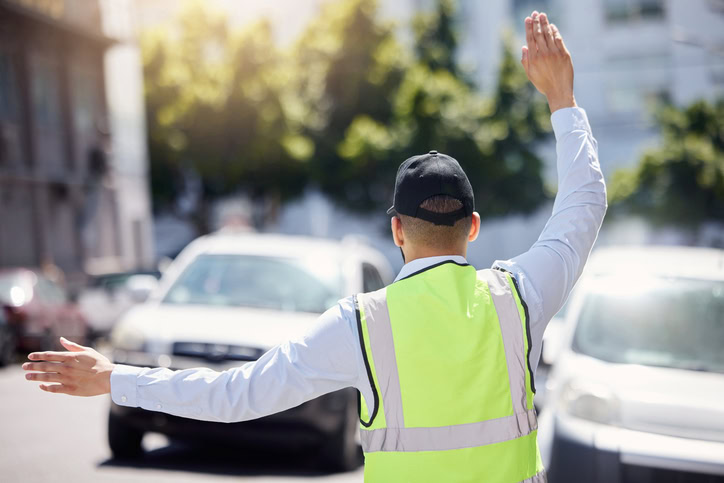
Many operations have tried electronic signage or even standard sandwich boards to offer direction. My experience is this typically confuses drivers and is not a good substitute for a trained human being offering visual guidance. The advantage is that the person controlling the traffic flow can spot potential hazards quickly and take remediation efforts. They also can respond to questions promptly and give feedback in a time frame that does not routinely disrupt traffic flow.
Every situation is different so every organization may not need this type of planning. Who was to know that a primary parking lot at an elementary school would turn into a drive-thru covid vaccination facility serving over 2,000 people a day……. When school officials told facility staff the lot was going to be used, they were charged with “making it happen”.
Even taking some time to examine your MOU’s and thinking about ” outside the box possibilities” will make you a better parking manager. I’ve listed a few ideas that I think every manager should at least think about and talk about with their senior staff about. It might form the basis for future in-surface training or even find its way into a planning document that might just come in handy.
Above all, a basic plan for temporary traffic control should be an integral part of every parking manager’s thought process through design and execution.
Here are some basic principles to start the discussion:
Staff should be able to provide clear and positive guidance to driver’s bicyclists and pedestrians as they travel through the traffic zone.
Make sure you have at least basic traffic control equipment in good shape such as cones, barricades flashing placards and accessory lighting both fixed and handheld. If you don’t have it, where could you get it? It’s very probable you could rent some of this equipment on a short-term basis. Have resources established before you name them.
Train all personnel and staff in basic aspects of traffic direction and control. This includes BASIC hand signals and use of adjunct devices like portable, stop signs or slow signs.
Be sure your plan includes keeping the public well informed. This would integrate well with your communications officer in terms of getting information out to the neighborhoods so drivers can make alternate arrangements to avoid the area if possible.
Obviously, this blog is just to get people thinking. Doing the actual work is time consuming but surprisingly can energize people and give them some ownership in being potential problem solvers. Great parking experiences =great customer service.
Scott Rohde, PECP, PTMP, is the Director of Public Safety for Wesleyan University. Scott can be reached at srohde@wesleyan.edu.