Parking Facilities

IPMI & Member News

Multi-level parking garage. Indoor car park building. Urban parking structure. Multistory car park. Concrete parking garage. Vehicle parking facility. Building construction. Modern architecture.
Finance IPMI Blog Parking Facilities Transit University

To Build or Not to Build a Parking Deck

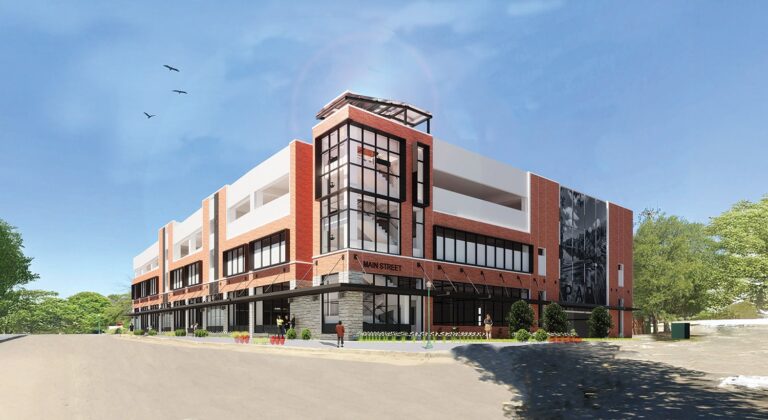
To build or not to build a parking deck? Or is the real question, do perspectives need to shift? It’s easy to say, “Build a deck! This will solve all of our parking problems!” and many times, this is the solution that frustrated students give. The question of building a parking deck has come up at our university many times over the years. I have a stack of plans that never came to fruition that I inherited. The last attempt to build a deck was in the spring of 2020. We were in the process of awarding the bid when campus closed due to COVID-19. Financial concerns and enrollment uncertainty scraped those plans, but the question of whether we will build a parking deck continues to come up. We recently received this question from our student senate in a transportation advisory committee meeting. Our university is a suburban campus with a robust public transportation option as well as ample parking on the perimeter of campus and in remote lots. We have plenty of parking spaces for everyone; we just don’t have everyone’s ideal parking area. Parking in these areas requires people to take another method of transportation, whether it’s biking, walking or taking public transportation to reach their destination. This requires a shift in perspective for many people that are not familiar with public transportation or are used to parking close to where they need to be. We explained to the student senate the costs associated with parking decks and how that would directly impact permit prices. We also explained that there is ample parking, so justifying the cost of building a deck and in turn raising permit prices is counterproductive and not fiscally responsible.

Bendheim logo
IPMI & Member News Mobility Parking Facilities Technology Transit Vendors/Products

Bendheim Launches Groundbreaking GripGlaze™ Exterior Glass System

New York, NY  — Bendheim, a global leader in specialty and sustainable architectural glass solutions, announced the introduction of  GripGlaze™, a groundbreaking low-profile glass compression clip system that expedites and simplifies the canopy installation process. Specifically engineered to elevate aesthetics and simplify canopy installations, the innovative new clip system requires no special tools to lock in large, expansive glass panels. Without any need for notches or holes, Bendheim’s no-drill canopy glass system is non-penetrating, with clips mounting directly to the steel structure. “This technology is perfect for parking facilities and other mobility infrastructure,” said Said Elieh, Bendheim’s Vice President of Innovation. “Canopies are important design features for parking structures, ride share waiting areas, and pick-up and drop-off areas at airports, transit, and other transportation hubs where users often need protection from the elements. This groundbreaking technology dramatically lowers the cost of building protective canopies, while also reducing the amount of time required to build them.” A breakthrough in design and performance, GripGlaze™ is precise, secure, and fully tested — and installs in a fraction of the time and at a fraction of the cost compared to traditional glazing methods. Up until now, when working on canopy projects, glaziers often have to operate with incomplete or missing specifications. In order to fulfill the job, they have to develop their own approaches, which leads to confusion and inconsistency, and affects a project’s aesthetics and pricing. Drastically reducing installation efforts and expenses, GripGlaze™  is set to replace traditional canopy installation methods, such as spider fittings, glass stand-offs, and point-supported systems. For more information about GripGlaze™, please visit https://bendheim.com/system_product/gripglaze-canopy-system/ About Bendheim Bendheim is one of the world’s foremost resources for specialty architectural glass. Founded in New York City in 1927, the family-owned company offers a virtually unlimited range of customizable glass solutions for interior and exterior building applications. Through its commitment to Building a Clear Future, Bendheim is actively engaged in promoting sustainable practices in architecture and design. Bendheim develops, fabricates, and distributes its products worldwide. The company maintains production facilities in New Jersey and a design lab in New York City. For additional information, please visit Bendheim.com. PRESS CONTACT: Bill Smith Smith Phillips Strategic Communications (603) 491-4280 bsmith@smith-phillips.com

Trendy halftone collage. Unlocking potential. Brand story concept, concept development, storytelling message, learning. Vector illustration
Accessibility IPMI Blog Parking Facilities Parking Lots Training/Education

Politics of Parking

I always knew there was an undercurrent of politics when it came to parking, but until I had to manage those politics I was pretty far removed from it. I’m still learning how to navigate this in my newer role and I’ve had to put my own agenda and thoughts on parking aside. It seems to be a constant battle to get everyone on the same page regarding how parking is run efficiently and for the good of everyone. Why is parking such an afterthought when that is the very first interaction or introduction to a space, place or event? Why do people believe that they shouldn’t have to pay for parking when there is a cost to have parking available, safe and accessible? Why do some feel that their event is more important than the student trying to get to class on time when we exist as an institution to educate students? Education is key when it has come to parking, but with a new class of students every year and turnover in leadership among our staff and student representatives this has proved to be a challenge to reach everyone and maintain consistency. I once was in a training, and someone mentioned that we, as parking professionals, are the biggest advocates for others. I’ve never found this to be more true since I stepped into my current role. Whether it’s the person that doesn’t qualify for accessibility accommodations according to their doctor but is not capable of using stairs or maneuvering inclines or bumping students to the perimeter of campus to accommodate construction. I will continue to advocate, share my knowledge about parking and hope that I am heard, but man some days are harder than others when it comes to navigating the politics of parking. Meredith Garrett, CAPP, is the Assistant Director of Public Safety, Parking & Transit Services for Kent State University. Meredith can be reached at mgarre12@kent.edu.

Vector Illustration of various colorful cars parked in a parking lot top view.
IPMI Blog Parking Facilities Parking Lots Planning

The Public Service Shift – from Parks & Rec to Parking

Like so many others in the industry, my parking career began as a backup option. Having worked as a part-time supervisor while an undergraduate with Virginia Beach Parks & Recreation, followed by a stint with Raleigh NC Parks & Recreation after graduating with a degree in geography, I felt ready to take on any Park Management or Planner position in the southeast or mid-Atlantic. But the opportunity didn’t surface, and the monthly student loan payment couldn’t pay itself, so I took a parking facility management position with a private operator. That holiday season as a newly employed manager in the workforce I recall connecting with a college friend at a holiday party and seeing the confusion on his face when I mentioned the original goal of working in Parks & Rec yet embracing the opportunity in Parking. His response? “One is fun, one is not. So how long do you plan to stick around?” Down the road a few years later in a different parking role and city, I reflected on my work experience while also envisioning career growth and whether the Parks & Rec field remained a goal. I had a conversation with my previous supervisor in this role and she provided memorable input, to this effect of “parking may not be glamorous however there’s room for advancement and opportunities to be creative in this industry, and if you put in the time and dedication you will carve a serious niche”. Then I reflected on the parallels with Parks & serving the public and maintaining customer satisfaction, keeping facilities pristine, managing spaces, and partnering with other departments/organizations, among others. Do I regret my decision to remain in parking? Most days, no. I’ll also take dealing with periodic frustrated parkers over the daily animated skateboarding and dog park patrons any day of the week! Zach Pearce, PTMP, is an Associate Director of Operations for Old Dominion University. Zach can be reached at zpearce@odu.edu.

The Milwaukee skyline sits behind the view of the Milwaukee River
Airports IPMI Blog Municipal/Cities Parking Facilities

The Largest Building in Wisconsin Might Surprise You

When you think of the largest buildings in any city, your mind probably goes to soaring skyscrapers, massive stadiums, or sprawling airports. But in Wisconsin, the largest building by square footage isn’t a tower or arena—it’s actually the Parking Garage at Milwaukee Mitchell International Airport. This six-story, 8,000-space post-tensioned (P/T) structure was built in three phases. The Red Section, closest to the terminal, was originally constructed in 1977. A 1989 expansion, known as the Blue Section, added 126,000 square feet per floor along the western edge, and a 2002 expansion, the Yellow Section, extended the garage along the northern side, adding another 209,000 square feet per floor. Altogether, the garage covers more than 3.5 million square feet, making it the largest building—by square footage—in the entire state of Wisconsin. For comparison: U.S Bank Center (Milwaukee): Tallest building in Wisconsin – 42 stories, 1,077,607 sq ft Northwestern Mutual Tower and Commons (Milwaukee): 32 stories, 1,100,00 sq ft Clinical Services Center at University of Wisconsin-Madison: 1,897,439 sq ft Lambeau Field (Green Bay): 1,900,000 sq ft During these expansions, a total of six elevators were added: two in the 1989 section and four more in the 2002 expansion. The 2002 project also introduced an enclosed pedestrian skywalk on the third level, featuring two sets of moving walkways. This climate-controlled corridor connects the garage to the terminal, offering comfort and convenience for travelers during Wisconsin’s hot summers and frigid winters. For most of the year—aside from peak travel periods like Spring Break—this massive structure has ample capacity to accommodate nearly all travelers who choose to park there. So next time you’re planning to park at MKE, choose the garage and take a moment to look around and appreciate the sheer scale of this remarkable facility. You can proudly say, “I’m standing in the largest building in Wisconsin!” Vincent Campagna, PTMP, is a Manager, Parking & Ground Transportation for Milwaukee Mitchell International Airport. Vincent can be reached at vcampagna@mitchellairport.com.

Generated AI image in front of a blurred parking lot, of a sign indicating that there are zero parking spots available
Magazine Parking Facilities Parking Lots

Your Office is Back But Your Parking Spot is Missing

How Parking Guidance Tech is Saving Sanity in the Return-to-Work Era

Accessibility DEI Digital Parking Tech Magazine Mobility Parking Facilities Planning Technology

November 2025 | Accessibility & Transportation Equity

Accessibility & Transportation Equity

Aerial view of a parking garage near office and residential buildings
Airports Health Care Magazine Parking Facilities Parking Lots University

Parking is Parking, Right?

Large-scale parking operations face unique operational challenges due to both their environment and the high turnover of users.

Airports Digital Parking Tech Health Care Magazine Mobility Parking Facilities Planning Technology Transit University

October 2025 | Campus & Large-Scale Operations

Planning for Campuses & Large-Scale Parking Operations

Entrance to an indoor parking garage
Health Care Magazine Parking Facilities Parking Lots Planning

Catalyzing the Transformation of Parking Operations

Miami’s Public Hospital Uplifts Patients and the Community

gtechna logo - Insights on how Galveston Established a Precedent in Texas State Laws Presented by gtechna
Enforcement Municipal/Cities Parking Facilities Technology

Curb the Chaos: LPR and Ticket-by-Mail Innovations in Hallandale Beach Presented by gtechna

Parking lot flood
IPMI Blog Parking Facilities Parking Lots University

Public Safety at the Forefront of Robust Parking Operations

Attractive and attentive parking and transportation management techniques will display public safety initiatives best servicing our communities by providing dependable access in well maintained facilities. Safe parking destinations demonstrate consistent cleaning and equipment upkeep, lighting functionality, clear wayfinding signage and pedestrian paths, and surveillance. As it relates to transportation, safe bus stops are defined by strong visibility, clear sidewalks, positioning out of direct vehicular traffic, and signage providing the user real time tracking. Depending on location, many of us in the industry experience periodic or routine disruptive weather events, and lack of preparation can cause for costly and potential disastrous situations. We find ourselves frequently adjusting lot restrictions and transportation programming at Old Dominion University, a University in the coastal city of Norfolk, Virginia, facing severe sea level rise and constant tidal flooding.  This past August with the effects of Hurricane Erin and flooding, the department closed a popular residential lot and large portions of a prime commuter lot and dedicated specific garages on campus for University community use during the impact. Communication through social media in tandem with departmental updates assisted with providing this information in a relatively short time frame, as well as any updates to transit routes and timing. I’ve found since last Spring through involvement with the neighborhood civic league within a portion of our University blueprint increases relations with the surrounding business and residential community. Highland Park is a diverse neighborhood described as residential, commercial, industrial, and educational, with the part of campus containing our Arts District, a 9,500 multipurpose event venue, and active restaurants. In these meetings with collaboration from Old Dominion University Police, I’ve been able to share updates around University facilities, upcoming events with increased traffic through the neighborhood, changes to programming with permitting and enforcement, field questions, and work towards solutions. This is an invaluable experience aimed to better our community and provide transparency between the University and neighborhood. Zach Pearce, PTMP, is an Associate Director of Operations for Old Dominion University. Zach can be reached at zpearce@odu.edu.