Micro Mobility

IPMI & Member News

Drone Point View of City Street Crossing
IPMI Blog Micro Mobility Mobility Planning Transit

Pedestrian Infrastructure Critical for all Transportation Modes

As communities across the country work to deliver improved and integrated transportation systems, pedestrian infrastructure remains a challenge to develop at a level which allows the overall transportation network to operate optimally. For public transportation, areas with higher densities and interconnected pedestrian facilities provide a network to allow people to move around more easily without relying on a vehicle. These robust pedestrian facilities not only allow promote more use of non-vehicle modes of mobility, but make the entire transportation system safer and more efficient thereby reducing conflicts between vehicles and pedestrians. For those of us who drive, walk, bicycle or use scooters, we know first-hand the different perspective you have when peering out the car windshield compared to walking or biking near and around vehicular traffic. Well-designed pedestrian facilities reinforce that walking and biking are viable options that can get you where you want to go with the hassle of dealing with driving, congestion and parking. Unfortunately, pedestrian facilities still lag behind in many communities where lack of priority and funding hampers their development. Since there can be various governmental jurisdictions involved with streets and right-of-way, it’s imperative for localities to have a structure in place to ensure pedestrian facilities can be planned and executed in a coordinated manner.  By championing best practices involving a multi-modal complete streets design approach, progress can be made to greatly enhance a community’s overall transportation system. Mark Hairr, PTMP, is an Executive Director for Wave Transit. Mark can be reached at mhairr@wavetransit.com.

Compliance Related Words Written on Wood Blocks Sitting on Wood Surface
Curb Management IPMI Blog Micro Mobility Mobility Municipal/Cities Policy

Policy Corner

If the past several years revealed anything about urban mobility, it’s that the curb has quietly become one of the most politically charged, economically valuable, and publicly visible pieces of city infrastructure. Leaders from Austin, Los Angeles, and Washington, D.C. participated in IPMI’s Building Blocks webinar, where they shared how curb space has transformed from simple parking real estate into a multi-use frontline for transportation, commerce, and public life in their cities. In the not-so-distant past, the curb was a brief pause. A moment between where we were and where we were going. We parallel parked the car, checked for signs, maybe paid a meter, then went on to our destination. Much has changed. The once quiet edge of the street is now a full-blown stage for rideshare zones, sidewalk cafes, e-commerce deliveries, bike lanes, EV charging, micromobility, and bus priority projects. As Ken Hustings noted, curb space has become so valuable that a meter rate increase in Los Angeles was not only acceptable; it helped the city preserve staff positions during a fiscal crisis. The public’s relationship with the curb shifted in a very real way during the pandemic. As downtowns emptied and front doors became loading docks, people noticed just how much work the curb was doing behind the scenes. Take-out, package deliveries, and temporary restaurant patios all depended on it, and when it wasn’t managed well, the impacts were hard to ignore. David Lipscomb, Washington, D.C.’s curbside manager, recalled that this moment was eye-opening for residents. A minor inconvenience had quickly become a safety and access issue as delivery vehicles stacked up, cafe tables spilled onto sidewalks, and curb space was pushed to its limits. The public began paying attention to what mobility professionals had long understood: unmanaged curb space creates chaos. Awareness is just the first step. Turning that awareness into better outcomes requires updated policies and a different kind of leadership. Today’s parking and mobility professionals aren’t just managing assets; they’re also storytellers, educators, and coalition builders. Joseph Al-Hajeri, Austin’s Park Enterprise Manager, described his role as “getting the public to nerd out” about curb management using data, pilots, and transparent communication so that complex policy becomes shared understanding. In today’s rapidly evolving mobility landscape, the curb has become the new City Hall: a high-stakes, high-visibility arena where decisions play out block by block. And those who manage the curb are emerging as some of the most influential communicators shaping urban policy and public understanding. Maria Irshad, PTMP, MPA, is the Deputy Director for The City of Houston (ParkHouston). Maria can be reached at Maria.Irshad@houstontx.gov.

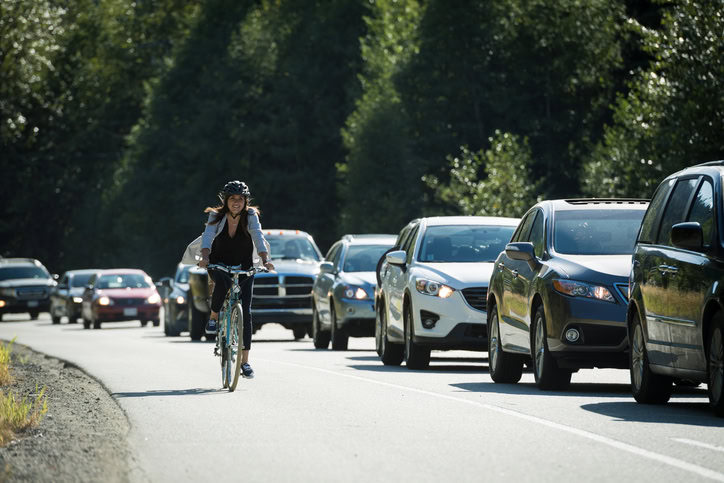
Woman commutes by bicycle past traffic, Whistler, B.C.
IPMI Blog Micro Mobility University

What Do You Mean Bikes Don’t Have to Stop at Stop Signs?

In 2023 my home state of Minnesota adopted the “Safety Stop” or “Idaho Stop” for bicycles.  This allows bicycles to treat a stop sign like a yield sign.  So if no one is coming, the bike can roll through the intersection.  It was interesting to hear the feedback from regular vehicle commuters who’s first reaction was often along the lines of, “That can’t be safe.  Why do bicycles get to break the law?”  While there is a good amount of data to show that overall this is safer for cyclists, another advantage is better flow for regular vehicles.   When presenting information to groups of people that you are trying to convince it is helpful to frame it with the benefits to the individual person.  Someone that hasn’t commuted on a bicycle and maybe hasn’t ridden one since childhood probably doesn’t think much about how traffic flows with bicycles.   So the next time someone says bikes should obey all of the traffic laws of a car, ask them to think about a situation where they are behind a bike. With a safety stop, the bike is able to proceed through the intersection and is out of their way before they need to navigate the intersection.  They don’t need to wait behind the bike as it stops, then gets going again, possibly a little more wobbly for a few feet until they are out of the way and you are able to navigate the intersection. For thoughtful motorists, understanding the positive benefits to themselves and overall traffic flow can help turn them into allies. Ben Schnabel, PTMP, is an Assistant Director for Parking Operations at the University of Minnesota. Ben can be reached at schna015@umn.edu.

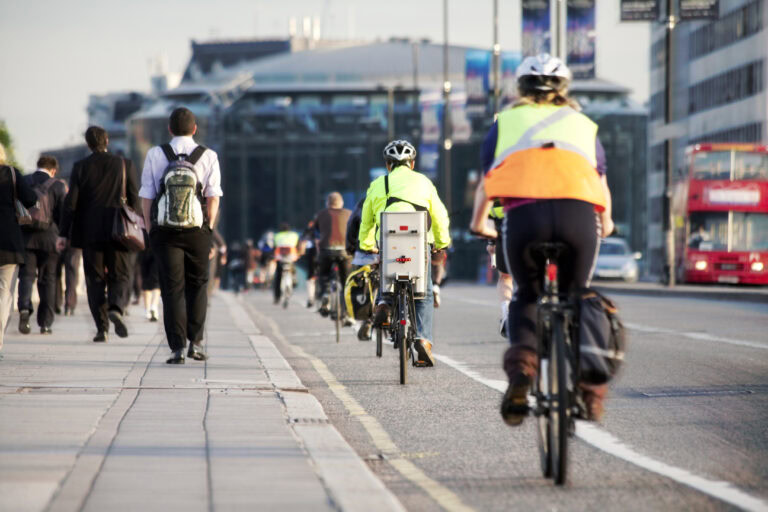
Commuters on the sidewalk, bikers on the biking lane, double decker bus in the background
IPMI Blog Micro Mobility Policy Technology University

Building Responsible Micromobility Programs on Campus

As described by the McKinsey Center for Future Mobility several months ago, micromobility—bikes, scooters, and other personal transport devices—is reshaping transportation. Students appreciate the convenience and sustainability these options provide, but as adoption grows, so do concerns about pedestrian safety and infrastructure gaps. How do we balance innovation with responsibility? Recent studies show accident rates on campuses are climbing, often linked to distracted riding and unclear infrastructure for separating pedestrians and riders. According to a survey published by UPCEA Cener for Research and Strategy, liability and insurance coverage remain gray areas, especially when accidents involve bystanders. Add behaviors like riding under the influence or speeding, and the risks multiply. At Old Dominion University, policy emphasizes pedestrian right-of-way and mandates the responsible operation of micromobility devices in designated areas. Riders must follow traffic rules, maintain safe speeds, and dismount in congested zones. Helmet use is strongly encouraged, and headphones are permitted only on one ear for safety. Other universities have introduced designated lanes and scooter corrals to reduce conflicts - steps worth considering as we design safer systems. As parking, transportation, and mobility professionals, we have an opportunity to lead. What do you think—should universities focus on stronger rules, better infrastructure, or more rider education? What’s been successful on your campus? I would love to hear your ideas and experiences to help create programs that keep everyone safe and make sustainable transportation even easier. I'd like micromobility to become a welcome and respected program in the overall campus community. Lisa Copeland, PTMP, is the Associate Director for Data and Administration at Old Dominion University. Lisa can be reached at lcopelan@odu.edu.

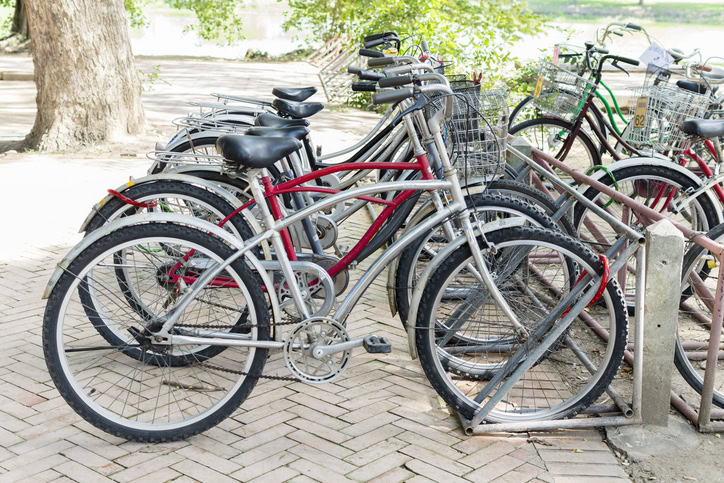
Bicycle parking
IPMI Blog Micro Mobility Planning University

Implementing University Bicycle Collections During the Summer Break

Summer bicycle confiscations at our University, and many others, serve as an annual project with the intention of removing all abandoned bicycles from students previously living on campus. Like many annual tasks and projects, I found this summer’s bicycle collection to be a terrific opportunity to update processes which involved internal and cross departmental collaboration.  This involved: 1)Examining a current policy and making updates to enhance the process identify and label all bicycle racks and changes to infrastructure, plot on a map Detail a tagging, removal, and storage process with a noted timeline, and identify staffing and equipment requirements 2)Create mechanisms for notification to the student and faculty/staff bodies, and  University departments physical tag serving as a notice with a removal date, with a timeline in the range of 1-2 weeks e-communications (University announcements, social media, mass emailing) share with Police, Student Affairs, Housing & Residence Life, Recreation, Athletics, etc. for awareness and promotion 3)Implementation List communication method(s) for students so bicycles are not erroneously collected; this can include a departmental main email address and/or phone number or a direct contact store the bicycles in a secured location accessible by the department and in an organized manner record all bicycles removed and placed in storage (make/model/color/serial number) store bicycles for determined length of time then remove (University approved auctions, donations, etc.) Bicycle collections help keep our campuses cycling infrastructure organized and accessible for future use, promoting non-vehicle commuting which we hope to see grow Zach Pearce, PTMP, is an Associate Director of Operations for Old Dominion University. Zach can be reached at zpearce@odu.edu.

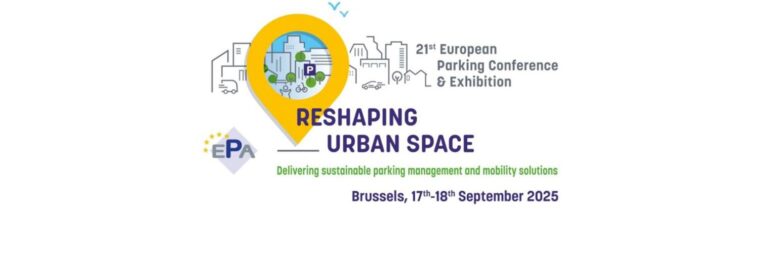
21st European Parking Conference & Exhibition EPA
Micro Mobility Mobility Parking Facilities Parking Lots Policy Smart Cities Training/Education

European Parking Conference & Exhibition

Organized by the European Parking Association (EPA) from its new base in Brussels, the 21st European Parking Conference & Exhibition is the next edition of the sector’s flagship biennial event.

Electric Vehicles Magazine Micro Mobility Planning Smart Cities

The First/Last Mile Challenge

Leveraging Micro-Mobility in Communities

Screenshot of 3 men demonstrating multiple modes of transportation - a bicycle, a wheelchair, and a scooter
Magazine Micro Mobility Planning Technology

The Changing Face of Our Industry

IPMI’s new year is off to a fantastic start, and we couldn’t be more excited about what lies ahead.

Teal "Ask the Experts" header graphic
Magazine Micro Mobility

How is your organization integrating micromobility into your plans?

Micromobility continues to become a more vital part of our communities—yet trends seem to come and go. What micromobility modes do you see making it in the long view? How is your organization integrating micromobility into your current and future plans?

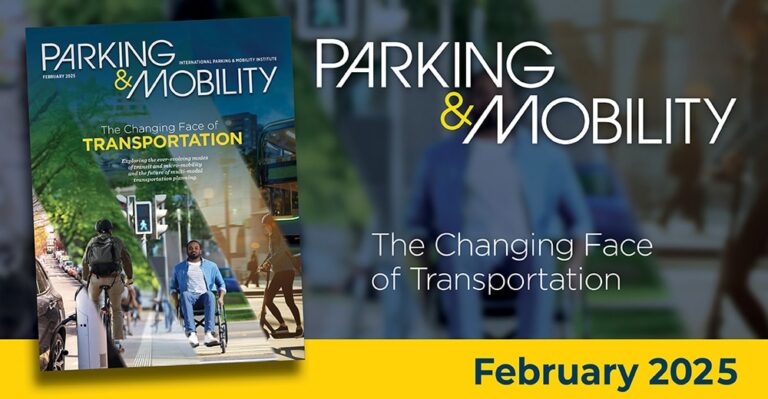
Parking & Mobility The Changing Fact of Transportation Banner, February 2025
Electric Vehicles Magazine Micro Mobility Mobility Smart Cities Transit

February 2025 | Changing Transportation

The Changing Face of Transportation: Exploring the ever-evolving modes of transit and micro-mobility and the future of multi-modal transportation planning.

University at Buffalo Transforms Campus Parking with Modii’s Digital Solutions
Digital Parking Tech IPMI & Member News Micro Mobility Technology University Vendors/Products

University at Buffalo Transforms Campus Parking with Modii's Digital Solutions

University at Buffalo Transforms Campus Parking with Modii's Digital Solutions

Man driving an electric scooter wearing a suit
Magazine Micro Mobility Municipal/Cities Transit

Going Micro

Micro-transit helps public agencies improve transportation services while repurposing real estate assets for high-value uses.