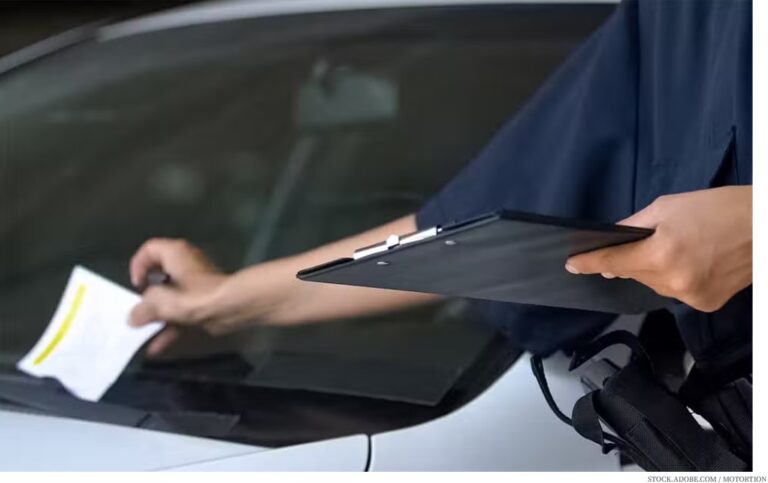
Moving from Parking Punishment to Proportionality
Rethinking Parking Fines for Fairness, Impact, and Equity
IPMI & Member News
Rethinking Parking Fines for Fairness, Impact, and Equity
Park Loyalty has expanded its footprint in the transit sector with the launch of Enforce Pro and Process Pro at seven Long Island Rail Road (LIRR) commuter parking locations. The LIRR is the busiest commuter railroad in North America, transporting nearly 250,000 passengers every weekday. For many riders, the journey begins and ends in a commuter lot, placing great importance on efficient and connected parking management in creating a convenient travel experience. Smart Enforcement Designed for Transit Agencies This deployment reflects Park Loyalty’s continued ability to deliver omnichannel enforcement solutions that adapt to any type of parking agency, from municipalities to universities, operators, and major transit authorities. It also builds on Park Loyalty’s work with another leading transit authority, SEPTA (Southeastern Pennsylvania Transportation Authority), where our enforcement system has already helped streamline their parking operation. [SEPTA case study] As part of the LIRR rollout, Park Loyalty introduced an additional way to validate vehicles: in addition to license plate recognition, Enforce Pro can now scan the New York State registration stickers that are displayed on every windshield. This feature provides multiple options for compliance validation, while also auto-populating detailed vehicle information such as make, model, color, and VIN, adding speed and accuracy to the enforcement process. The deployment also integrates with T2 Systems meters and Parking Base for permits and scan-to-pay, providing a connected ecosystem that simplifies operations for the LIRR and improves the parking experience for commuters. Park Loyalty thanks the Long Island Rail Road and our integration partners for their collaboration on this successful launch, which underscores our role as a trusted partner in delivering smart enforcement and processing solutions across the parking industry.
The parking and mobility industry has never had a soundtrack—until now. Mobility Fever Dream, the debut concept album by Brooke Krieger, drops October 24, 2025, on all major streaming platforms. Created as a cultural time capsule, the album transforms the language, challenges, and humor of modern mobility into a fast-paced, satirical, and surprisingly human musical experience. Divided into four acts, Mobility Fever Dream explores everything from the relentless pace of conferences and RFP cycles to the tech-fueled evolution of AI, EV, and AV integration in our cities. The sound stretches across pop, hip-hop, country, and even K-pop—because the mobility space, like the album, refuses to fit neatly into one category. “This project started as a joke between colleagues about how wild our industry has become,” says Krieger. “But the more I thought about it, the more I realized: the mobility industry is art in motion. It deserves to be heard as much as it’s seen.” A Four-Act Journey Through the Industry’s Chaos With track titles like “Buyout Season,” “The Parking King (RIP Donald Shoup),” “Curbside Hero,” and “Free Parking? Babe, That’s So 2003,” the album blends wit and insight—offering a rhythm-driven reflection on automation, open-market innovation, and the culture of parking itself. Each act mirrors a stage of the industry’s evolution: Act I: The Fever Dream — The nonstop world of trade shows, funding rounds, and caffeine-fueled innovation. Act II: The Streets — Where policy, enforcement, and the human side of parking collide. Act III: The System Reloads — Technology, apps, and automation take center stage. Act IV: The Vision — A nod to the future we’re building—connected, autonomous, and a little bit chaotic. And as a bonus track, the album closes where it all began: “Artificial Intention”—a sultry nod to our industry’s collective fascination with artificial intelligence and automation. Satire, Sound, and the Soul of a Sector Released under Curb Culture Media, Mobility Fever Dream isn’t just an album—it’s a mirror. It celebrates the dreamers, engineers, planners, operators, and innovators who make cities more livable every day. “I wanted to create something that makes people in this space laugh, nod, and think, ‘Yep, that’s us,’” says Krieger. “Because behind every citation, every app, every RFP—there’s a story worth singing.” Mobility Fever Dream challenges how we talk about mobility, reminding us that the future isn’t just about infrastructure—it’s about imagination. Listen for Yourself Stream “Mobility Fever Dream” everywhere October 24, 2025.
In recent conversations with three different parking enforcement officers who recently started utilizing wearable cameras, a harsh reality became clear: there is a void in the existing toolset that officers face when trying to do their job while documenting interactions and staying safe while doing it. Increasingly, officers find themselves stuck in the middle of two groups of people: those who are verbally and physically aggressive or confrontational, and those who make accusations of rudeness or harassment. While radio reports and written reports can provide a starting point, organizations are finding that POV video offers an objective view into what officers face in the field every day. Organizations and Municipalities are shaping the future of safety and efficiency in the industry via: Video with audio transcription – an exact recounting of interactions to cut out the question, “What did they say and how did you respond?” Livestream for supervisors to tap into emergency situations from anywhere, anytime. Safety highlights – real time alerts to see critical situations as they occur. Reporting – standardization of incident reporting through the use of a wearable camera. If you work in an office, you most likely have tools that record video meetings, take notes while you’re speaking to people, and organize your day using technology. Making the same essentials easy and accessible to field workers through wearable technology is proving to be an avenue that provides them with the confidence to do their job while staying as safe as possible. Henry Broback is the Director of Strategic Partnerships for Plix AI Body Cameras. Henry can be reached at henry@plix.ai.
This summer, starting July 1st, the City of Bangor, Maine, launched a parking ticket amnesty program allowing overdue fines to be paid without late fees. The program came ahead of the introduction of The Barnacle, a new windshield-mounted enforcement device designed to replace traditional boots. By the end of the month, more than $9,000 in unpaid parking tickets were resolved, demonstrating the success of a program built on fairness and equity.[1][2] A CLEAN SLATE: THE AMNESTY PROGRAM Recognizing that past violations can snowball into burdensome penalties, Bangor’s July amnesty initiative allowed residents with violations over 30 days old to pay only the original fine, waiving late fees and doubled penalties.[2] To ensure residents knew about the opportunity, the city launched a broad publicity campaign that included announcements on local TV and radio stations, social media posts, updates on the city’s website, and signage in municipal garages and downtown areas. This outreach helped spread the word quickly, encouraging compliance, giving people a fresh start, and generating strong community engagement.[3] THE NEXT CHAPTER IN PARKING COMPLIANCE With the amnesty program wrapping up, Bangor prepared to roll out Barnacle devices for ongoing enforcement. Replacing the traditional wheel boot, the Barnacle attaches to a vehicle’s windshield, making it immediately visible and unsafe to drive until resolved. Drivers receive clear instructions for fast, convenient payment and self-removal.[2][4] “The beginning of August, we are launching what’s called the Barnacle, and the Barnacle is what used to be the boot on a car. So instead of on a tire, it’s going to be on the windshield. And so we wanted people to kind of get their ducks in a row in terms of parking so that they don’t have to receive the Barnacle and we wanted to kind of have that time to be able to explain what the Barnacle is,” said Biguita Hernandez-Smith, Economic Development Officer for the City of Bangor.[3] This approach ensures compliance while minimizing disruption, damage, and wait times. PARTNERSHIPS DRIVING SUCCESS Bangor’s Business & Economic Development Committee emphasized that this success comes from strong collaboration across departments—from finance to code enforcement. Pairing digital tools like the ParkMobile app, a fair forgiveness program, and Barnacle enforcement is helping the city deliver on its promise to make downtown parking easier, more accessible, and more efficient.[5] SETTING A MODEL FOR OTHER CITIES Bangor’s early results show how cities can pairBst compliance and trust. By recovering thousands in unpaid tickets while giving drivers a path to catch up, Bangor is setting an example for other municipalities facing similar challenges. Watch the Full News Story [6] Sources: Bangor Daily News (September 5, 2025). “Bangor recouped $9K in unpaid parking tickets after threatening to use the ‘Barnacle’.” Bangor Daily News. Retrieved September 16, 2025. News Center Maine Staff (July 10, 2025). “Drivers can take advantage of Bangor parking ticket amnesty before the city deploys the ‘barnacle’.” News Center Maine. Retrieved September 16, 2025. WABI Staff (July 8, 2025). “Bangor to grant amnesty in July for parking violation fees.” WABI (local news). Retrieved September 16, 2025. WGME Staff (July 10, 2025). “‘Barnacle’ parking enforcement is coming to Bangor.” WGME 13 News. Retrieved September 16, 2025. Bangor Mike Staff (July 14, 2025). “July 7, 2025 Bangor City Council Committee Meetings.” Bangor Mike. Retrieved September 16, 2025. Bangor Mike Staff (July 8, 2025). “Bangor to Grant Amnesty in July for Parking Violation Fees.” WABI TV5 News. Retrieved September 16, 2025.
Bethlehem, PA — Following the success of its curb management pilot project with Cleverciti, the Bethlehem Parking Authority (BPA) is taking the next step. The two organizations have now extended their partnership to roll out on-street detection, increased enforcement efficiencies, and digital signage for wayfinding—strengthening Bethlehem’s efforts to manage curb usage, traffic flow, parking compliance and the overall mobility experience. Building on a Strong Foundation Earlier this year, BPA and Cleverciti launched a pilot project using Cleverciti’s AI-powered aerial sensors to monitor offstreet availability, occupancy, turnover and compliance in Bethlehem. This pilot has already delivered valuable real-time data, enabling smarter decisions on parking operations. That foundation has proven the value of data-driven curb management for Bethlehem, and now the stakes are rising: to make all of parking more responsive, compliant, and navigable. What’s New: On-Street Detection & Guided Enforcement Under the expanded scope: On-Street Detection: Additional sensors will be deployed along selected streets and to detect when vehicles are occupying curb zones. These will not only monitor if a space is in use, but also capture metadata around duration, turnover, and unauthorized uses (e.g. overstay, loading vs. passenger drop-off vs. parking). Enforcement Efficiencies: With more precise detection data, the BPA can guide enforcement practices toward the broader goal of achieving compliance rather than issuing tickets. Automated alerts will notify officers when violations occur, allowing for more efficient responses. Over time, as patterns of misuse are revealed through data, enforcement strategies can become even more efficient and proactive, reducing the need for ticketing while increasing overall compliance. Wayfinding via Digital Signage One of the most visible changes will be the addition of digital signage across key entry points and thoroughfares: Signs installed at strategic locations will display real-time curb and space availability, guiding drivers toward available areas. The signage will also help with wayfinding: showing directions to nearby parking resources, loading zones, special event zones, or accessible parking. The aim is to reduce cruising, congestion, and emissions caused by drivers circling in search of parking, while sharing impactful information with the community and improving the predictability and experience of arriving in downtown and event areas. Expected Impacts & Benefits: Benefit - What It Means for Bethlehem Improved Compliance / Reduced Violations - Guided enforcement fueled by accurate, real-time detection means fewer illegally parked vehicles, overstays, or misuse of special curb zones. Reduced Traffic Congestion - With wayfinding and visible guidance, drivers waste less time circling, freeing up curb space and easing flow. Better Use of Curb Assets - Data will reveal where curb space is under-utilized or misused, allowing BPA to reallocate, redesign, or manage zones dynamically. Enhanced User Experience - Residents, visitors, delivery drivers, and businesses benefit from clearer information, more reliable parking, and easier navigation. Environmental & Operational Efficiency - Less idling, smarter routing, and more efficient enforcement reduce emissions and minimize overtime or inefficient staff deployment. “These solutions mark another important step in our commitment to providing innovative, data-driven solutions that enhance the parking experience in Bethlehem,” said Steven Fernstrom, Executive Director of the Bethlehem Parking Authority. “Having access to accurate usage data is foundational to creating a more accessible and vibrant downtown for residents, businesses, and visitors.” “Cleverciti is proud to deepen our partnership with the Bethlehem Parking Authority,” said Sonny Samra, Chief Revenue Officer, Cleverciti. “From our initial deployment, we have seen both the challenges and the opportunities for parking in Bethlehem. Adding detection, guided enforcement, and wayfinding signage allows for an integrated approach that creates a closed loop system—where data is continuously collected, analyzed, and acted upon —providing real-time information, actionable insights, and visible guidance, so Bethlehem can deliver a better, smarter mobility experience.” What’s Next As rollout advances, BPA and Cleverciti will monitor metrics such as: Uptake in compliant parking (decrease in violations) Reduction in time spent cruising for a spot Changes in turnover and space utilization in detected zones Operational efficiencies (e.g. enforcement response time, staff allocation) Bethlehem’s journey with Cleverciti shows how modern curb management isn’t just a back-office function, but a visible, interactive experience that shapes mobility, access, and the city’s daily flow. This new phase promises to sharpen that experience for everyone.
Indianapolis, IN — T2 Systems, a Verra Mobility (NASDAQ: VRRM) company, announced the 20-year anniversary of its flagship T2 Flex® cloud-based parking permit management and enforcement solution. Since its launch, T2 Flex has helped modernize parking operations for hundreds of universities, municipalities, and private operators. T2 Systems provides the most comprehensive suite of parking and mobility solutions in North America, serving over 2,000 parking organizations. T2 technology manages millions of parking spaces and processes millions of transactions across hundreds of universities, municipalities, and private operators in North America. T2 Flex was one of the first digital browser-based solutions to solve the problem of fragmented, outdated parking systems that cause inefficiencies, silos, and poor customer experiences. Today, T2 Flex is a cloud-based tool that addresses the needs of large universities and cities that struggle to manage complex, high-volume operations spread across multiple systems with its centralized, enterprise-grade T2 UNIFI® Platform for seamless digital payments, virtual permitting, enforcement, and analytics. The T2 Flex platform enables organizations of all sizes to streamline operations, reduce IT burden, and deliver a better experience for customers and administrators. “Two decades ago, T2 Systems launched Flex to lead a technology shift in parking — delivering the first cloud-based, hosted, comprehensive parking system,” said Zack Harmeyer, Senior Vice President of Product at T2 Systems. “Today, Flex is the most advanced parking management platform available, supporting everything from permit sales to license plate recognition (LPR), mobile enforcement, along with Parking Access and Revenue Control System (PARCS) and real-time data analytics across college campuses, hospitals, airports, and cities throughout North America. This milestone is a testament to our customers and partners who helped guide its evolution and shape the modern parking experience.” The flagship Flex platform continues to evolve with software innovations for residential permitting from T2 Reside™, mobile citation payments with Scan & Pay™, and event or interim parking with T2 Tempo™. The company is advancing the solution with T2 FlexForward™, a scalable, fully cloud-hosted solution with enhanced integrations, streamlined user experiences, and deeper connectivity across the T2 UNIFI® Network, which is already being used by more than 60% of Flex customers to enhance parking operations. With its sleek, intuitive interface designed for today’s users, FlexForward provides a faster, cleaner, and easier system to navigate for complex operations or daily tasks. “T2’s collaborative approach to developing FlexForward ensured that customer feedback directly shaped the product. The result is a platform with meaningful enhancements, from the powerful global search to a more intuitive design that streamlines workflows and improves efficiency,” said Andrew Woloszczuk, Permit Specialist and Adjudications Lead, at Duke University. As the industry’s longest-standing and most widely adopted parking management enforcement solution, Flex powers mission-critical parking operations for more than 100,000 users across more than 400 installations in North America. “T2 has been our go-to parking strategy for nearly 25 years, and we’ve been using the Flex platform for the past 18 years,” said Josh Cantor, Director of Parking & Transportation at George Mason University. “From being the first customer of T2’s Parking Access and Revenue Control System (PARCS), to the integration of collections, pay stations, and license plate recognition, T2 has given us the ability to keep expanding our parking solutions under a single platform.” To celebrate the anniversary, T2 is launching the #Flex20 campaign featuring customer spotlights, historical insights, and product roadmap previews at its annual T2 Connect event, the parking industry’s largest and longest-running customer user conference. About T2 Systems T2 Systems, a Verra Mobility company, provides the most comprehensive suite of parking and mobility solutions in North America, serving over 2,000 customers, including universities, municipalities, and private operators. With industry-leading platforms like T2 Flex®, T2 UNIFI®, and Velocity™, T2 helps organizations manage parking permits, enforcement, access, payments, and mobility with confidence. T2 Flex® and T2 UNIFI® are registered trademarks of T2 Systems, Inc. About Verra Mobility Verra Mobility Corporation (NASDAQ: VRRM) is a leading provider of smart mobility technology solutions that make transportation safer, smarter, and more connected. The company sits at the center of the mobility ecosystem, bringing together vehicles, hardware, software, data, and people to enable safe, efficient solutions for customers globally. Verra Mobility’s transportation safety systems and parking management solutions protect lives, improve urban and motorway mobility, and support healthier communities. The company also solves complex payment, utilization, and compliance challenges for fleet owners and rental car companies. Headquartered in Arizona, Verra Mobility operates in North America, Europe, and Australia. For more information, please visit www.verramobility.com.
Boston, MA – The Boston Transportation Department (BTD), including the Office of the Parking Clerk, is upgrading its digital parking infrastructure with Passport, the most trusted technology partner for innovative curb management solutions. The initiative replaces Boston’s decades-old parking system with a unified, digital platform designed to streamline operations, enhance compliance, and improve service delivery for residents, businesses, and visitors. “As part of our commitment to modernizing city services and improving the day-to-day experience, this move makes parking in Boston simpler, fairer, and more efficient,” said Jascha Franklin-Hodge, Chief of Streets for the City of Boston. “From day one, Passport has worked hand-in-hand with us, learning the nuances of our operations and configuring its platform to support a data conversion of over 30 million records and facilitating the sharing of information across departments. Together, we’ve replaced a 40-year-old system of siloed tools with a flexible foundation that will let Boston embrace whatever the future of mobility brings, while giving residents a more transparent, accessible experience today.” “Our ability to deliver the best experience to our constituents relies on the hardworking teams in the city and technology systems that are reliable and secure,” said Santiago Garces, Chief Information Officer for the City of Boston. “Passport was an incredible partner in making the transition to our new system go smoothly. And, by insourcing the management of phones, network, and equipment, our DoIT team was able to save 42% of the annual costs that were previously outsourced to the previous vendor." Just 72 hours after replacing the city’s former vendor, Passport’s end-to-end platform processed more than $750,000 in payments. Since the launch, Passport has processed over $17 million in curbside payments. BTD teams have embraced the technology with speed, hitting 111% of the previous system’s digital activity and completing over 13,000 constituent-serving actions by day three, from appeals and residential permit approvals to citation payments and hearing scheduling. This rapid rollout and immediate impact highlight Passport’s ability to help Boston move faster, serve better, and deliver a seamless experience city-wide. As part of this system-wide upgrade, the highly used ParkBoston app has returned to its original provider, Passport. The app has been upgraded as a key part of the city’s broader digital parking system transformation. Passport’s integrated solutions bring together parking enforcement, permitting, mobile payments, and data management into a single platform, helping one of the largest American cities: Simplify permitting and ticket appeals with a user-friendly, mobile-accessible system Increase transparency around parking rules, notices, and fees Support better compliance and reduce administrative burden across city departments “Boston joins a growing list of cities rethinking how curb space is managed,” said Khristian Gutierrez, co-founder and CEO of Passport. “This collaboration exemplifies what Passport's platform was built for: partnering with forward‑thinking cities to simplify the complex work of managing the curb, with a solution that evolves alongside them. BTD leadership has a tremendous vision for its curbs, and we’re honored to stand by their side during this digital transformation. With our open, API-first platform as Boston’s new foundation, we’re excited for this journey together, helping the city stay ahead of mobility innovation and deliver a seamless, transparent experience for its community.” “In order to deliver such an ambitious and transformative project, the City of Boston engaged Accenture’s public service practice to provide services that included project management, training support, business process improvement, and change management. Tim Rogers, Managing Director in Accenture’s Public Service practice, said: "We’re proud to collaborate with the City of Boston to drive this significant transformation of its parking infrastructure. By leveraging digital technologies, we're helping to create a more efficient, user-friendly parking system that simplifies enforcement, permitting, and payment processing, ultimately enhancing the overall experience for residents, businesses, and visitors." Passport has processed over $4 billion in curbside payments and supports more than 800 municipalities and private operators across North America. Its platform touches one in five Americans through tools like digital permits, mobile parking payments, and citation management. For more information, including best practices and resources, visit https://www.passportinc.com/. About Passport Passport is the trusted technology partner for over 800 cities and private operators across North America, unifying paid parking, enforcement operations, and payment infrastructure into one platform. By simplifying how municipalities manage and monetize the curb, Passport empowers local leaders to boost compliance, unlock new revenue opportunities, and improve how people move around their communities. Passport helps cities thrive by delivering the tools and insights they need to meet evolving mobility challenges and create community-focused outcomes. Media Contact: Aimee Eichelberger (312) 952-1528 Passport@983group.com
The Town of Camden, Maine, known as the place “where the mountains meet the sea,” has officially launched the complete Park Loyalty platform, including Enforce Pro, Process Pro, and Permit Pro. Camden is one of New England’s most picturesque destinations, attracting thousands of visitors each year for its harbor, downtown, and outdoor recreation. With such a strong tourism presence, parking management is more than a convenience; it is a critical part of supporting local businesses, residents, and the visitor experience. By deploying the full Park Loyalty ecosystem, Camden now benefits from: Enforce Pro for smarter, fairer enforcement. Process Pro for streamlined citation processing and customer service. Permit Pro for a brand-new digital permit program, giving the Town new tools to manage curb space and demand. Together, these solutions create an integrated enforcement and permitting platform that improves compliance, balances parking demand, and provides greater convenience for users. This deployment also includes an integration with Flowbird (Arrive), including meters and their text payment platform, brought to Camden by Butts Ticket Systems (BTS). Park Loyalty is proud to welcome Camden to our growing customer community and looks forward to supporting the Town as it strengthens its parking management strategy in one of Maine’s most beautiful coastal settings. About Park Loyalty Park Loyalty makes parking software simple. Our Pro Solutions platform, including Enforce Pro, Process Pro, Permit Pro, and Rewards Pro, delivers enforcement, processing, permitting, and rewards solutions for agencies of every type. Whether you manage a municipality, university, transit authority, hospital, private operator, or any other parking operation, we offer the flexibility to be the right-fit solution. We are leaders in omnichannel enforcement, supporting your operations whether enforcement is conducted by on-street patrolling officers, through mobile LPR vehicles, or within automated, frictionless parking facilities. Citations can be issued on the windshield, by ticket-by-mail, or as e-citations, it is all supported within the same platform. With proven rapid deployment, an ever-growing integrations partner network, and deep industry expertise, Park Loyalty ensures that no matter how you manage enforcement, we can support you. By connecting frontline enforcement with back-office processing, permit management, and customer engagement, Park Loyalty empowers agencies to increase efficiency, strengthen compliance, and deliver measurable results for their communities. Learn more: parkloyalty.com
Glencoe, IL – The Village of Glencoe, Illinois, is partnering with Passport to upgrade its parking compliance operations. With Passport’s centralized platform, the village will unify enforcement, permitting, paid parking, and payment processing for both physical and digital transactions. Passport’s digital parking compliance and enforcement tools enable cities to collect evidence, issue warnings and citations, and deploy resources more effectively. The platform’s embedded payments solution also allows municipalities to manage, view, and reconcile all curb transactions in one system. In addition, the village will introduce Passport Parking, a mobile payment app that gives drivers a convenient way to pay for and manage their parking sessions remotely. Passport partners with municipalities nationwide to modernize and unify systems through a centralized solution. With expertise in seamless transitions and a focus on supporting local needs, the company helps communities thrive. Visit the company website to learn how Passport’s parking compliance platform streamlines on-street parking and enforcement operations for cities of all sizes. About Passport Passport is the trusted technology partner for over 800 cities and private operators across North America, unifying paid parking, enforcement operations, and payment infrastructure into one platform. By simplifying how municipalities manage and monetize the curb, Passport empowers local leaders to boost compliance, unlock new revenue opportunities, and improve how people move around their communities. Passport helps cities thrive by delivering the tools and insights they need to meet evolving mobility challenges and create community-focused outcomes. Media Contact: pr@passportinc.com