

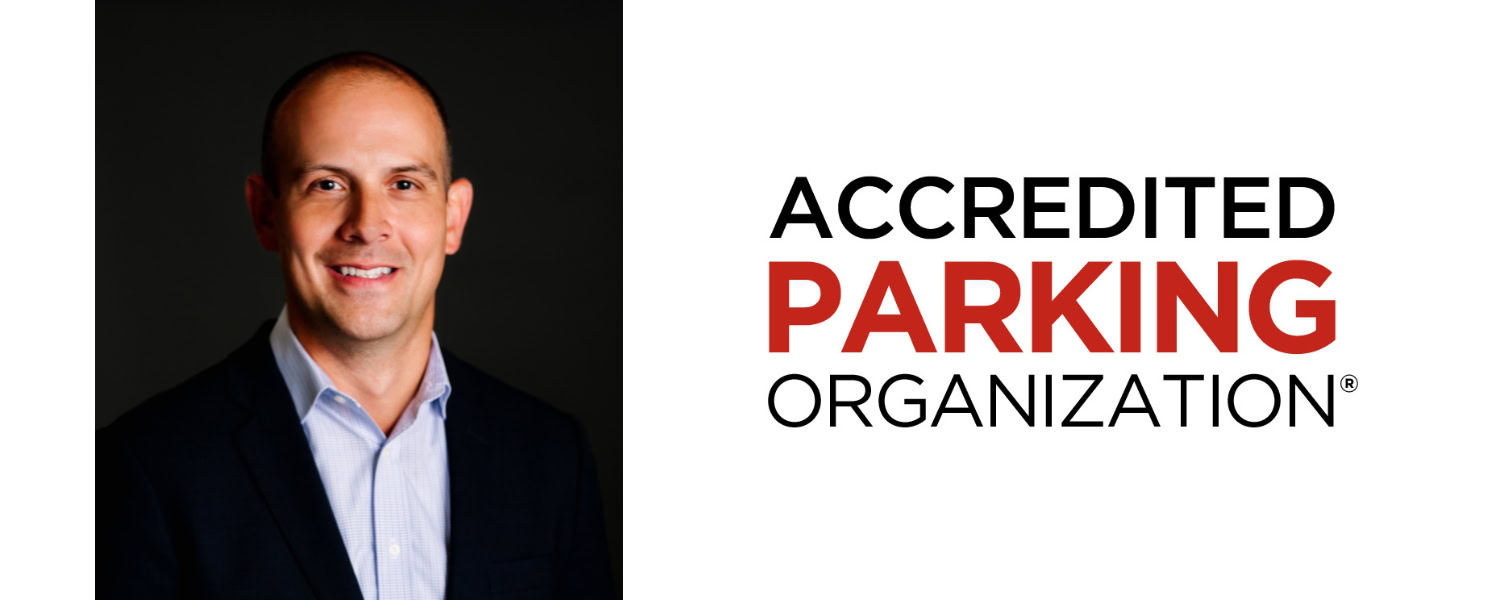
In this Accreditation Board Perspective, Steven Fernstrom, Executive Director of the Bethlehem Parking Authority, shares his unique insights into the evolving landscape of the parking and mobility industry. As a dedicated member of the Accreditation Board, Steven highlights the critical importance of accreditation and professional development in driving operational excellence and community impact.
Serving on the board of the Accredited Parking Organization program and as a leader of an accredited organization gives me the opportunity to view the world through two unique lenses. What I’ve come to appreciate is that accreditation is much more than a credential; it’s a practical framework for improvement.
From the organizational side, pursuing accreditation is not a passive exercise. It requires reflection, discipline, and a willingness to change. The process challenges teams to evaluate, document, and refine their daily work. For us, it wasn’t about checking a box, walking across a stage, or receiving a plaque; it was about becoming better in measurable, sustainable ways. The standards pushed us to elevate performance, strengthen policies, and challenge ourselves to improve.
One of the biggest benefits, often overlooked, is how it brings people together. Accreditation activates your team. It builds camaraderie and real collaboration because everyone is working toward the same goal. Instead of operating in silos, you begin to see alignment across the organization. That shared effort and pride don’t stop once the plaque is on the wall; it continues.
From the board’s side, the responsibility is just as important. The program must remain relevant, rigorous, and fair. The goal isn’t to make it difficult; it’s to ensure the designation means something. That requires continually reviewing standards, listening to the industry, and maintaining a clear, consistent process.
What stands out most is the alignment between these perspectives. When accreditation works, organizations aren’t just checking boxes; they’re improving. And the board isn’t just enforcing standards; it’s guiding a program that reflects the industry’s evolving needs.
Accreditation builds trust with stakeholders, elected officials, clients, and, most importantly, the public. It signals accountability and a commitment to independent evaluation. In today’s environment, that trust is invaluable.
For those considering accreditation, approach it as a catalyst, not a destination. The real value is in the transformation along the way.