

By Margot Zuckerman
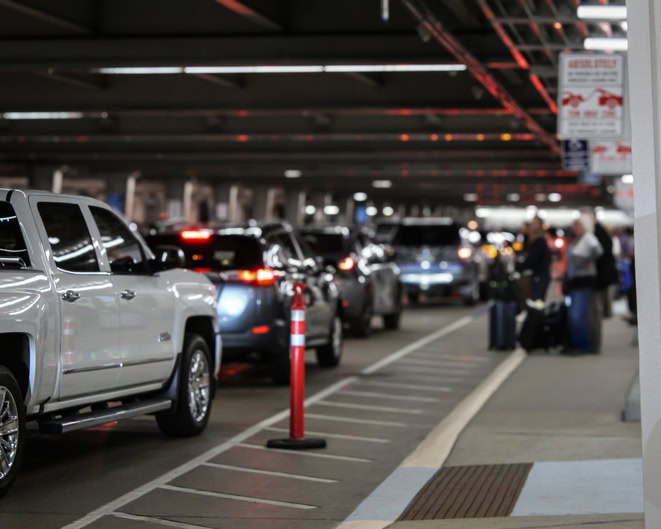
Walk the arrivals level at any major U.S. airport at 6 p.m. and you’ll see the same scene: stopped vehicles, hazard lights blinking, and drivers craning their necks looking for a passenger still at baggage claim. The curb isn’t jammed only because too many cars arrive. It’s jammed because too many cars stay.
Conversations I’ve listened through throughout this year–including at this summer’s IPMI Conference–have zoomed in on the curb as the last major airport asset still priced as if time isn’t money. But, more and more airports are looking to change that through dwell-time based dynamic curb pricing.
What is dwell-time based dynamic curb pricing? A usage model in which the fee to use an airport’s curb increases with how long a vehicle stays. A 90-second drop-off might be free, but camping in the lane during a peak arrival bank could be priced like the most expensive spot on the property.
Who’s doing this today? DFW set the North American precedent, pricing every entering vehicle’s access by time. Since Heathrow introduced a barrierless drop-off charge in 2021, public transport’s share of trips has risen several points, which the airport translates to roughly 1.7 million fewer vehicle visits a year.
You can’t price what you can’t measure. A 2024 Airport Cooperative Research Program report puts an enforcement officer’s reach at 400 to 800 linear feet of curb. At Sacramento International Airport, camera-based curb management cut dwell-limit violations by roughly 73 percent within two months, with no gates and no added staffing.
The window is now. Autonomous fleets, with no driver to move along, will only raise the stakes. Who will be the next airport to price the curb?
You can read more about the challenges, benefits, and practicalities of pricing the airport curb by clicking here.
Margot Zuckerman is Director of Growth & Strategy at Automotus. Margot can be reached at margot.zuckerman@automotus.ai.
Disclaimer: AI tools were used during the research and editing phases of this blog post.